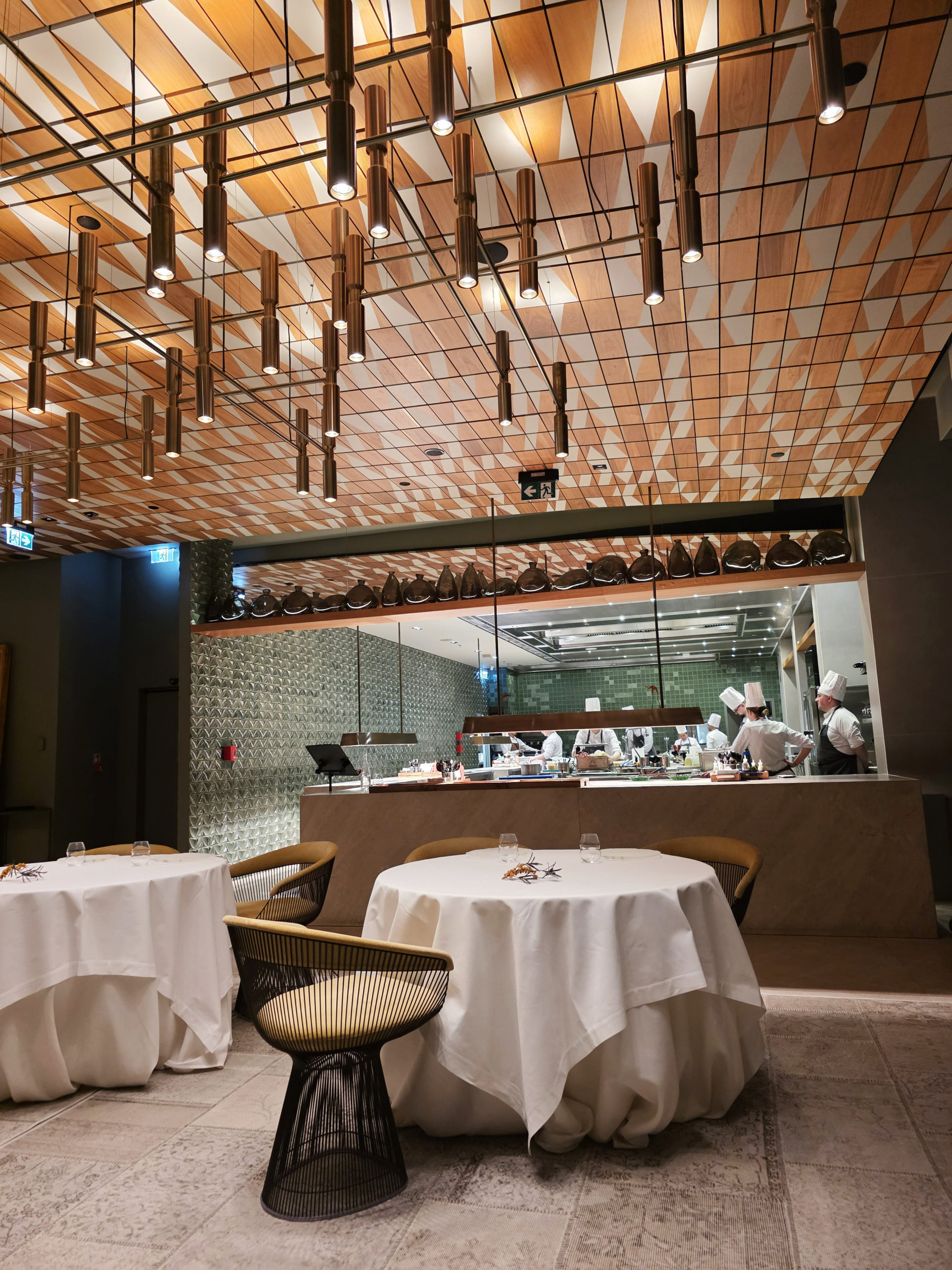
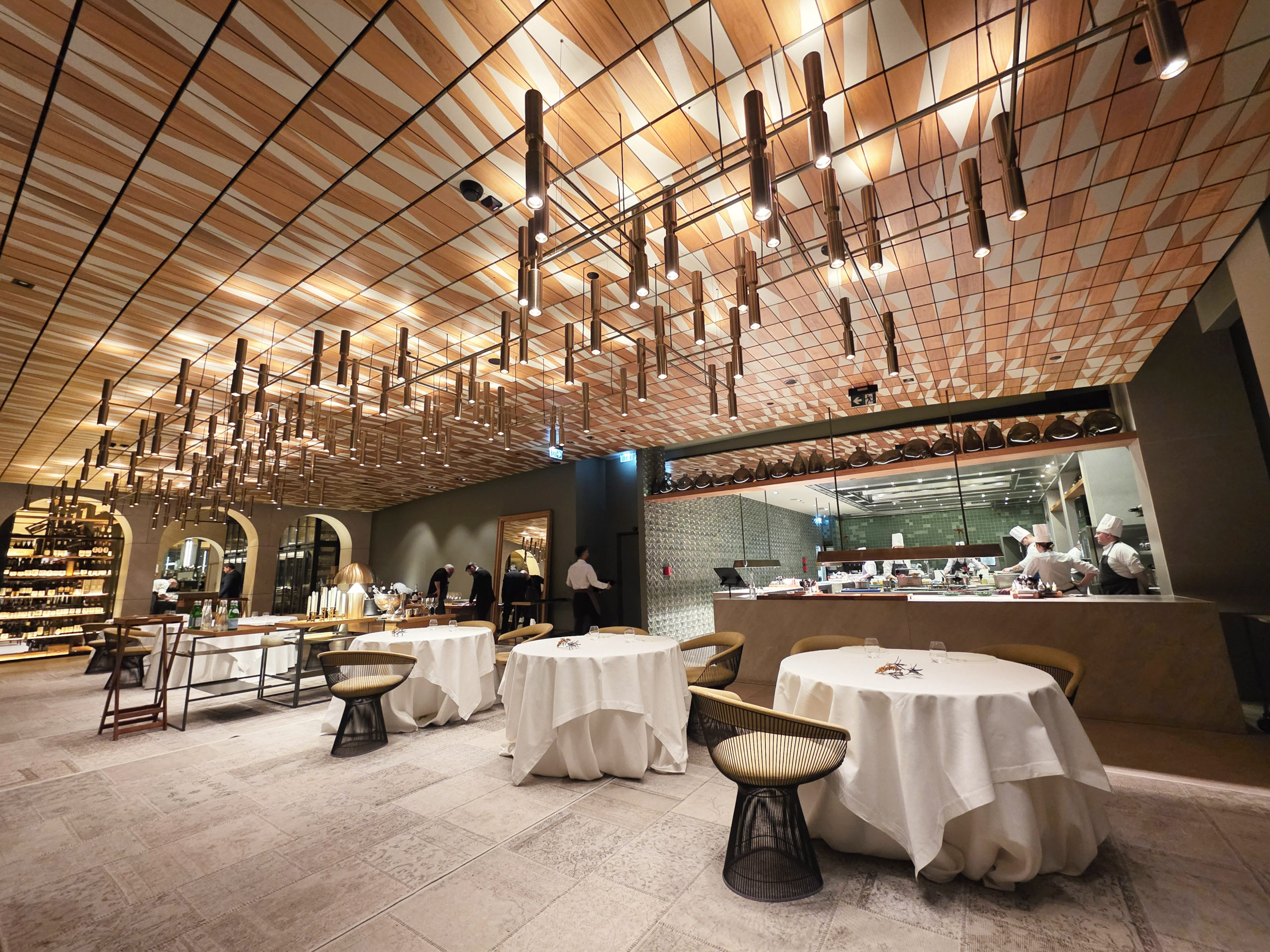
Our review of Arco appeared on our website a year and a half ago. However, with the launch of a new menu that premiered on February 10th, we felt compelled to return. Arco has long been one of our favorite restaurants. We appreciate watching it evolve, shift direction, and open itself to new flavors and new challenges. This time we came back with an entirely fresh perspective, as Chef Antonio Arcieri unveiled his authorial menu, “Utopia.”
This is not an evolution. It is a change of direction. A new concept, new flavor compositions, and a redefined philosophy of building the tasting experience made our return not only justified, but necessary.
Arco remains firmly positioned at the forefront of Poland’s fine-dining scene. Awarded a Michelin star, it consistently builds its identity around a modern interpretation of European cuisine. Technical precision, attention to detail, and a clearly structured tasting narrative have defined the restaurant since its inception. With “Utopia,” Chef Antonio attempts to create a fully personal world — one in which dishes are not merely a sequence of flavors, but elements of a broader idea.
“Utopia” is a story about a gaze. About the kind you linger in. About an eye that does not simply look, but reveals emotion, truth, intention. The inspiration came from Agnieszka, the chef’s fiancée, and from the Pagani Utopia — a work of art on four wheels created by Horacio Pagani. A car that, much like this menu, is a manifesto of craftsmanship, perfection, and uncompromising vision.
The motif of the eye returns like a refrain. An eye you can fall in love with. An eye as a mirror of the soul. An eye symbolizing inner life — sensitivity, spirituality, true intention. In “Utopia,” it is precisely the interior that plays first violin. There is no culinary masquerade here, no spectacle for spectacle’s sake. Instead, there is sincerity perceptible in every detail. Kindness toward the guest. Creativity tempered by humility. And a profound, almost reverential respect for the ingredient.
Because here, it is the ingredients that shine. Not disguised, not overwhelmed, not muted. Complex compositions rest on clarity: each element has its place, its temperature, its texture, its role. Nothing is accidental. Nothing is excessive. Harmony arises not from simplification, but from perfect calibration. Technique is flawless, yet remains in the background — serving the product, never overshadowing it.
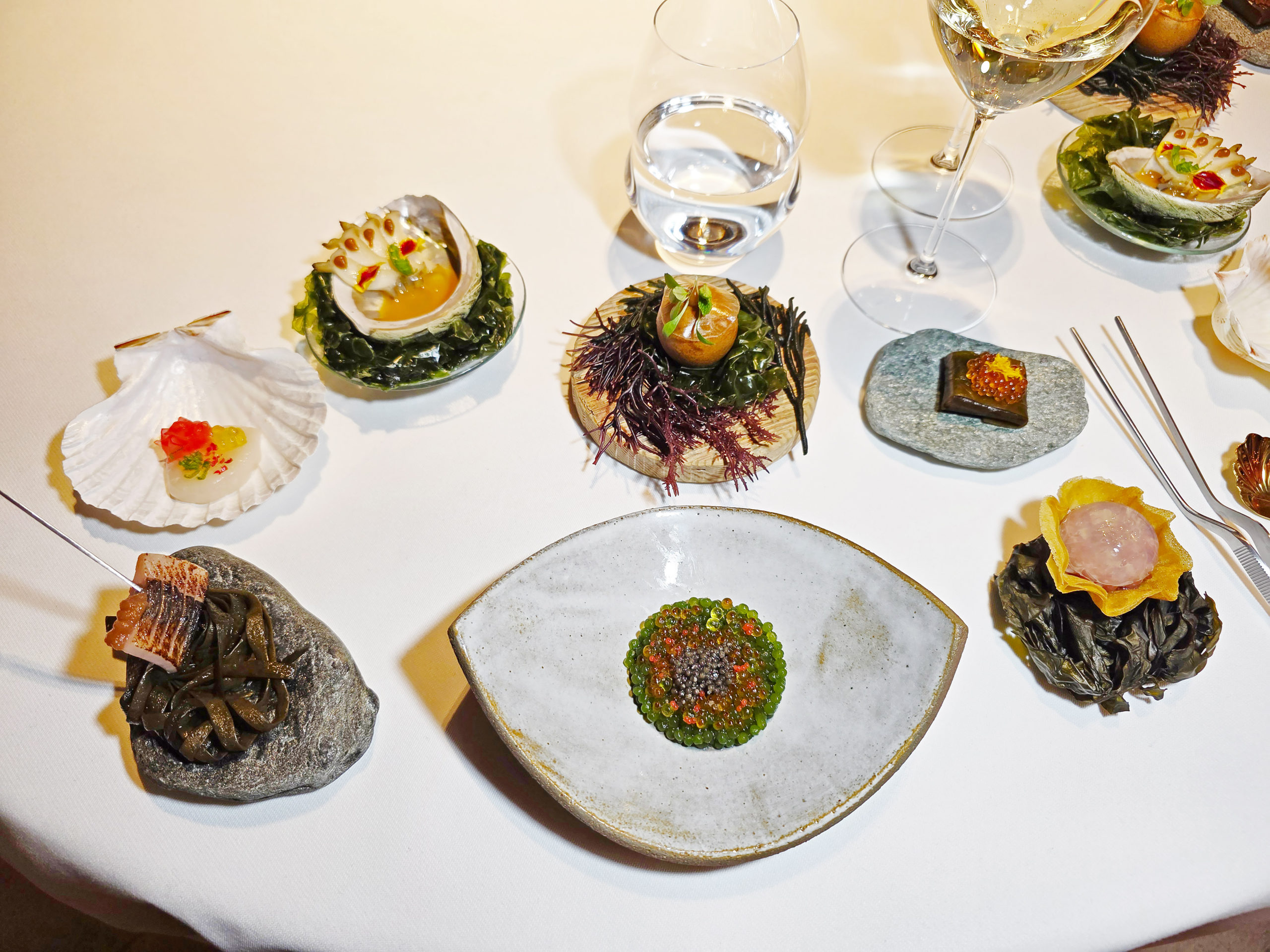
Dinner opens with an impressive sequence of seven seafood-based amuse-bouches presented in creative interpretations, immediately sparking excitement. Served all at once, they fill the table like a small feast — though this is merely the prologue.
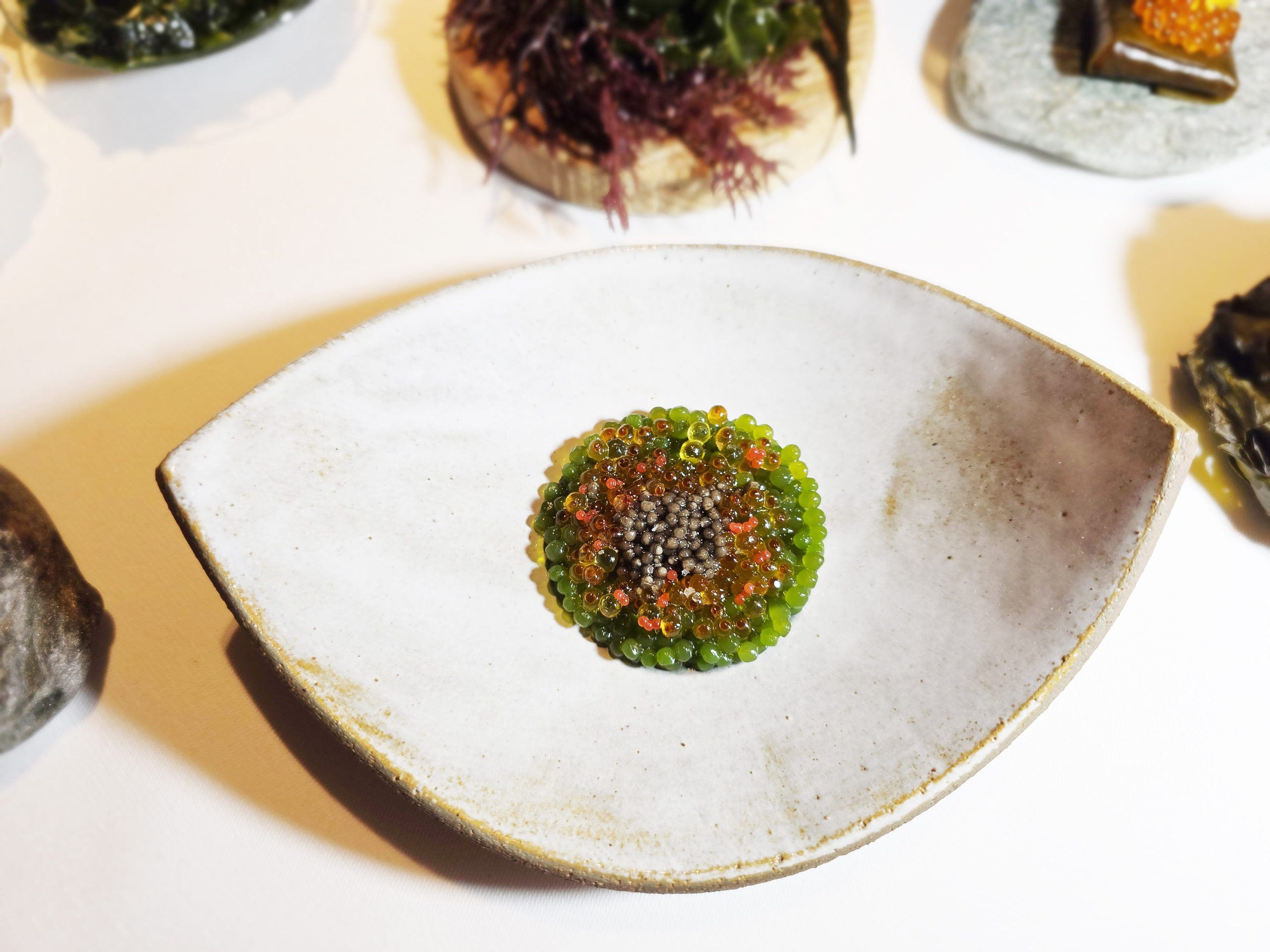
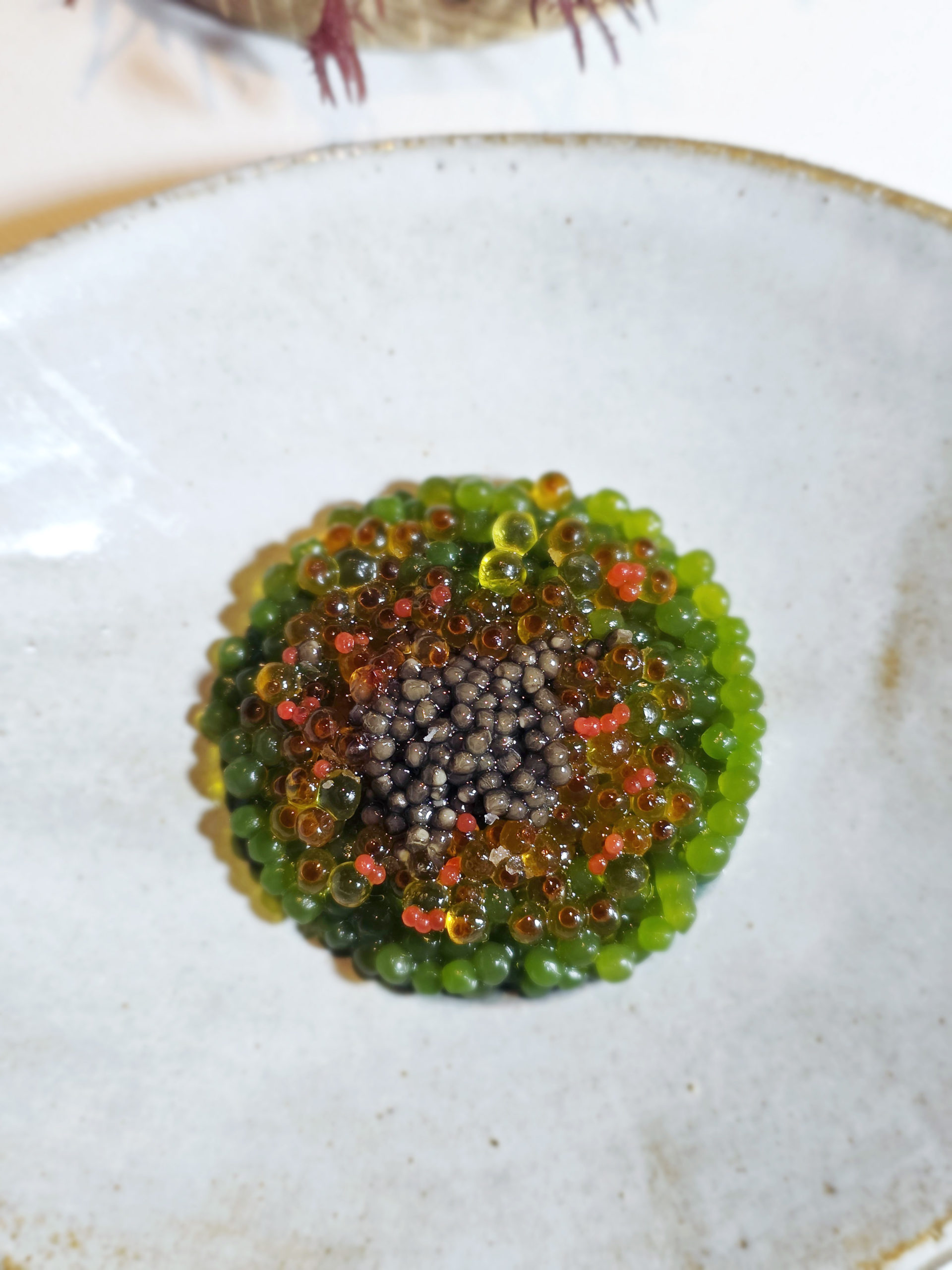
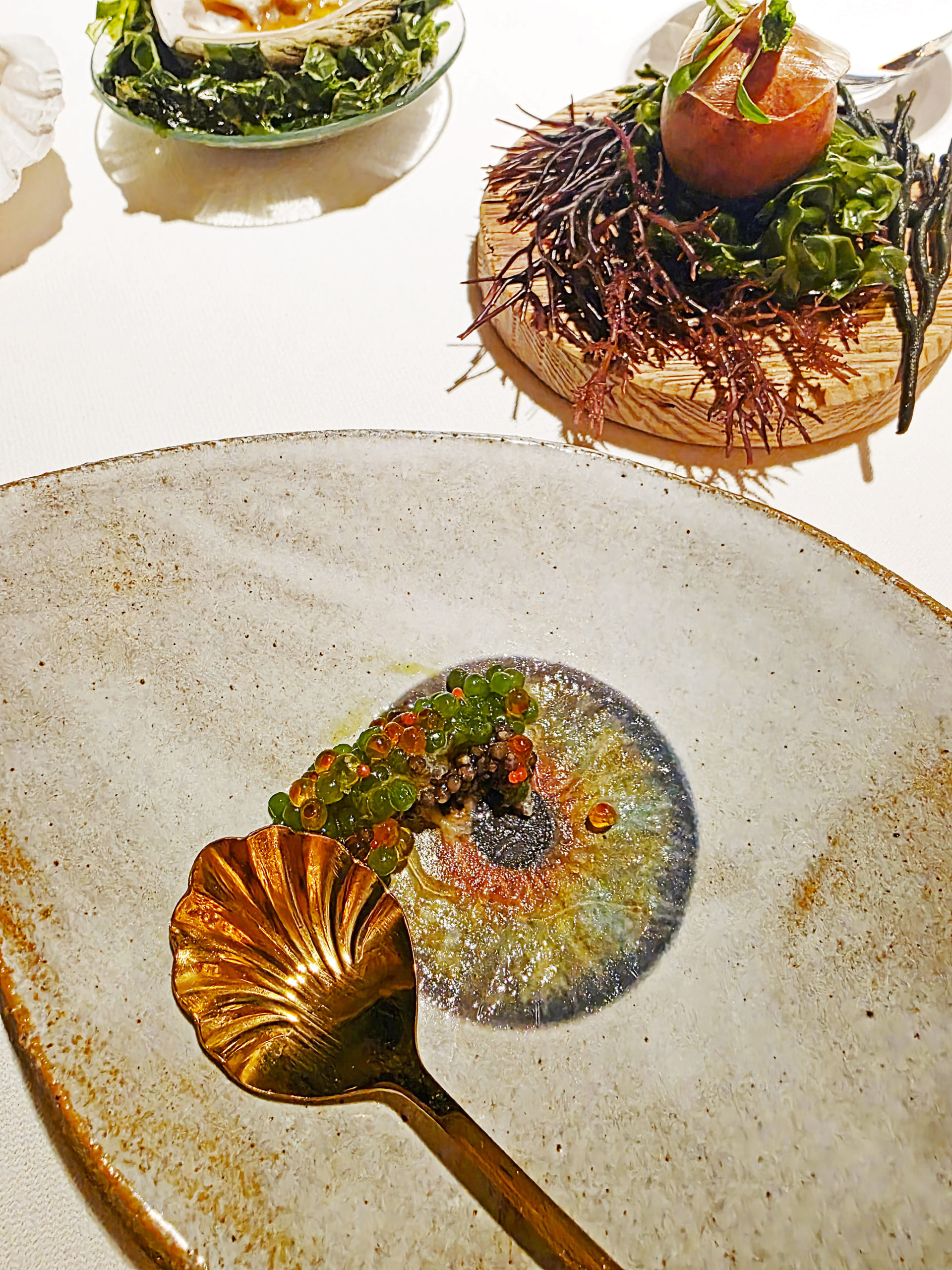
We begin with “The Eye,” a composition of various types of roe — symbols of life’s beginning. Sturgeon caviar, trout roe, crisp tobiko, and delicate seaweed pearls crafted by the chef are arranged in the shape of an eye, echoing the motif printed on the plate itself. As you eat, the roe gradually gives way to the image beneath, and the eye on the porcelain slowly emerges. It is a detail that reveals how deeply every aspect of the experience has been considered.
Subtle notes of lemon emerge quietly, likely from a gel at the base, bringing fresh acidity. The trout roe and codium pearls burst gently between the teeth, while the sturgeon caviar adds creaminess, salinity, and depth of umami. Together they create a captivating interplay of textures and flavors — refreshing, precise, memorable. Of all the amuse-bouches, this was the one that stayed with us most vividly.
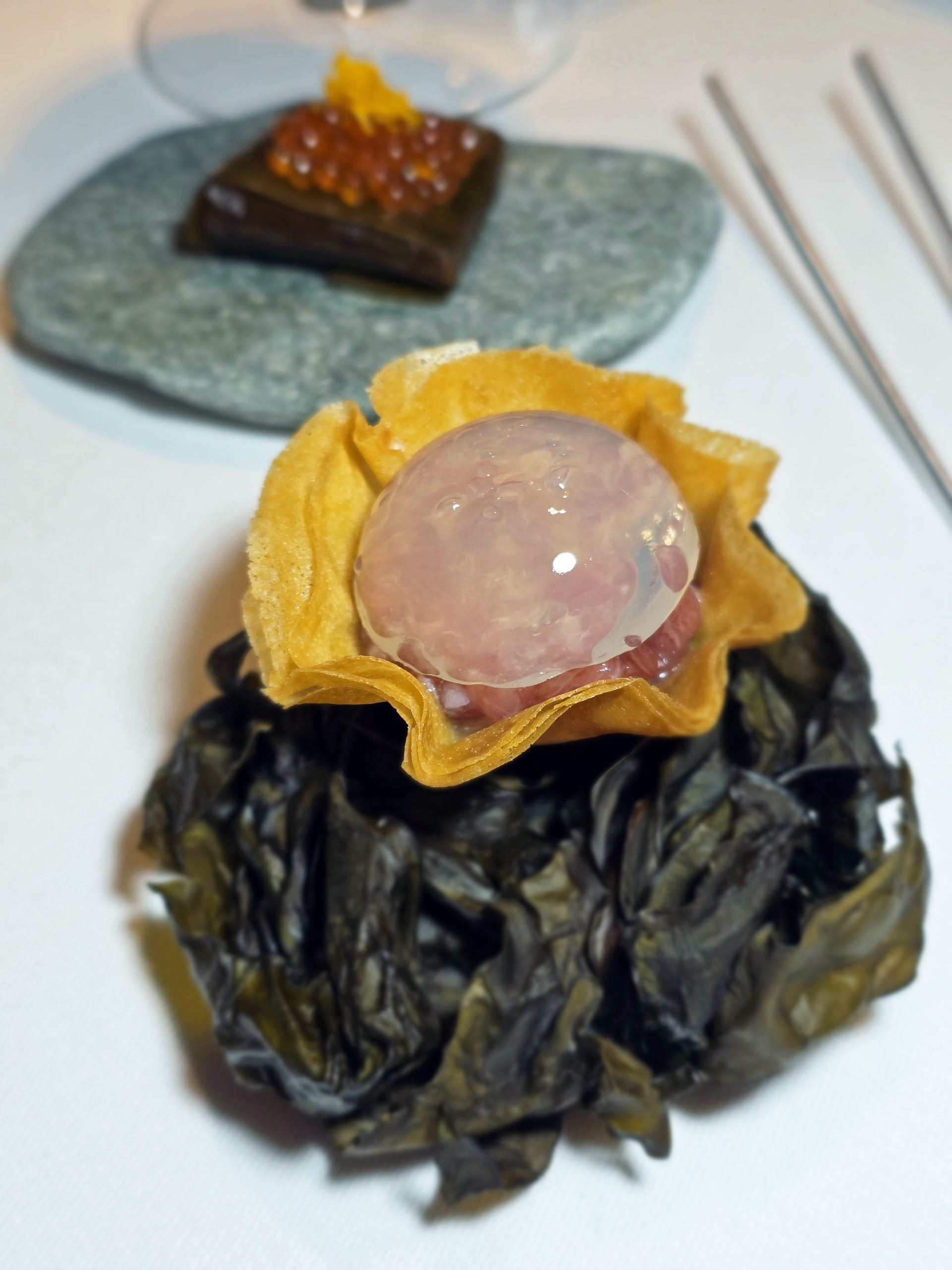
What followed was a reinterpretation of pan con tomate and jamón. Here, Iberian ham played a supporting role. The base was a delicate, crisp brik pastry shell filled with toro tuna tartare enriched with fat trimmed from jamón ibérico — a thoughtful use of what might otherwise be discarded. It amplified the tuna’s umami and lent it luxurious creaminess. A firm tomato-water gel crowned the bite, adding freshness. Crisp, creamy, umami-rich, and balanced.
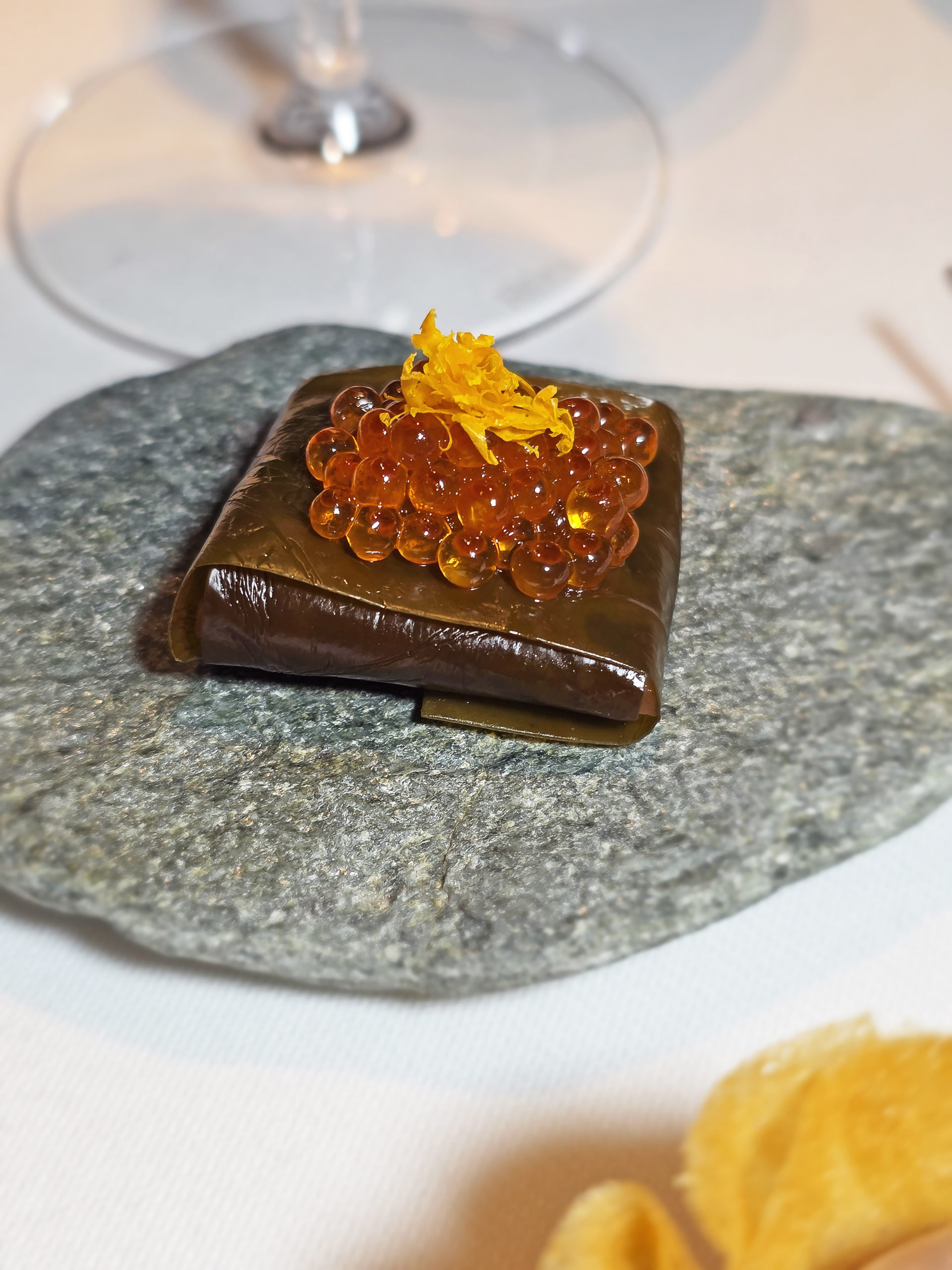
Another offering was a tiny raviolo filled with trout from Zielenica, wrapped in kombu seaweed and topped with smoked trout roe. The pronounced marine depth of the seaweed was lifted by orange, which introduced brightness and a sense of refreshing clarity, giving the kombu an unexpectedly vibrant character. It was yet another thoroughly enjoyable and well-executed bite.
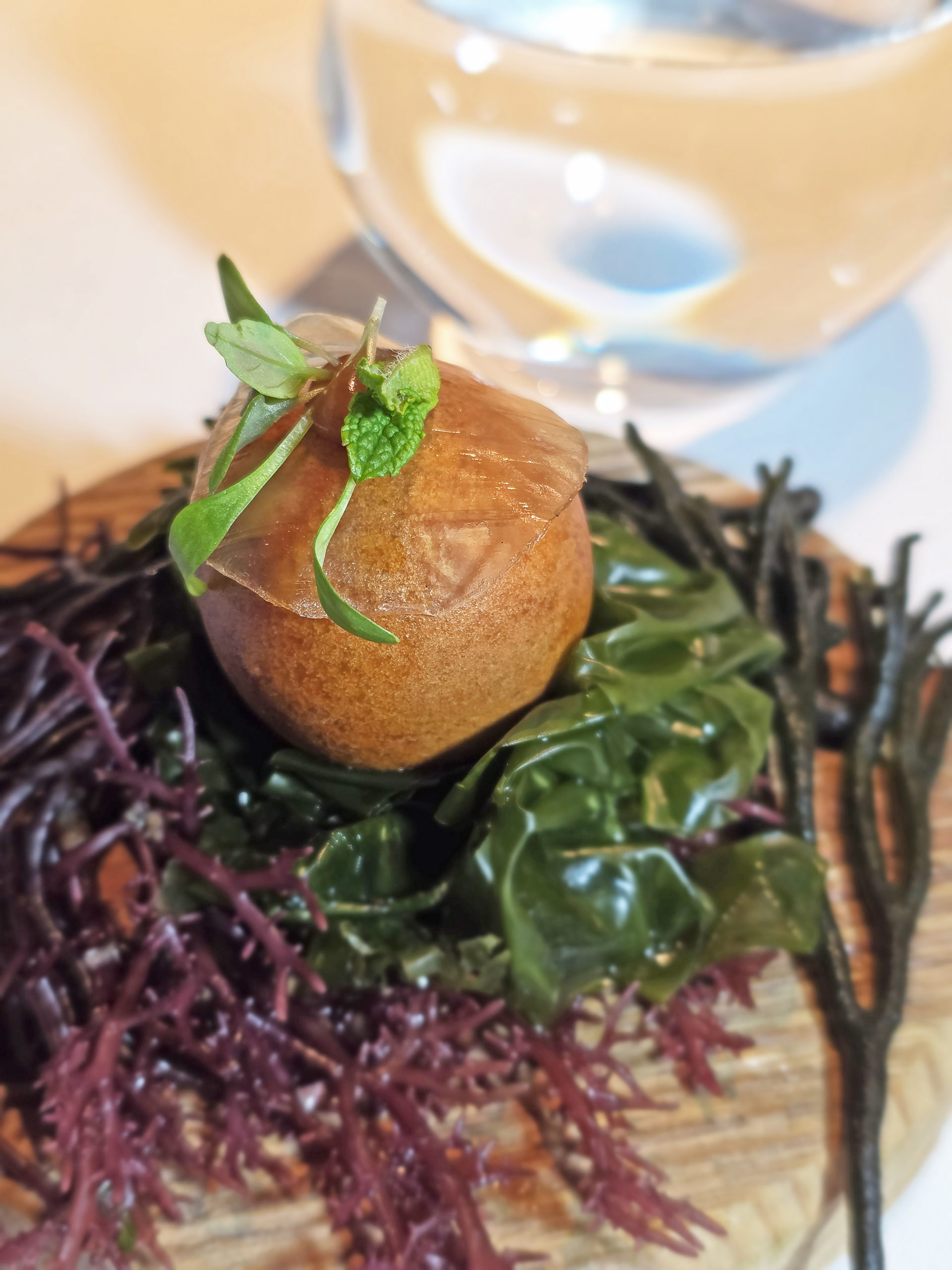
Next, we tried the chilli crab mollete — a round, springy bun filled with crab and a creamy chilli crab sauce. The crab flavor was intense, lifted by a touch of sweetness and a gentle hint of chilli heat. We had encountered it before in another of Chef Antonio’s snacks, yet here it appeared in an entirely new interpretation.
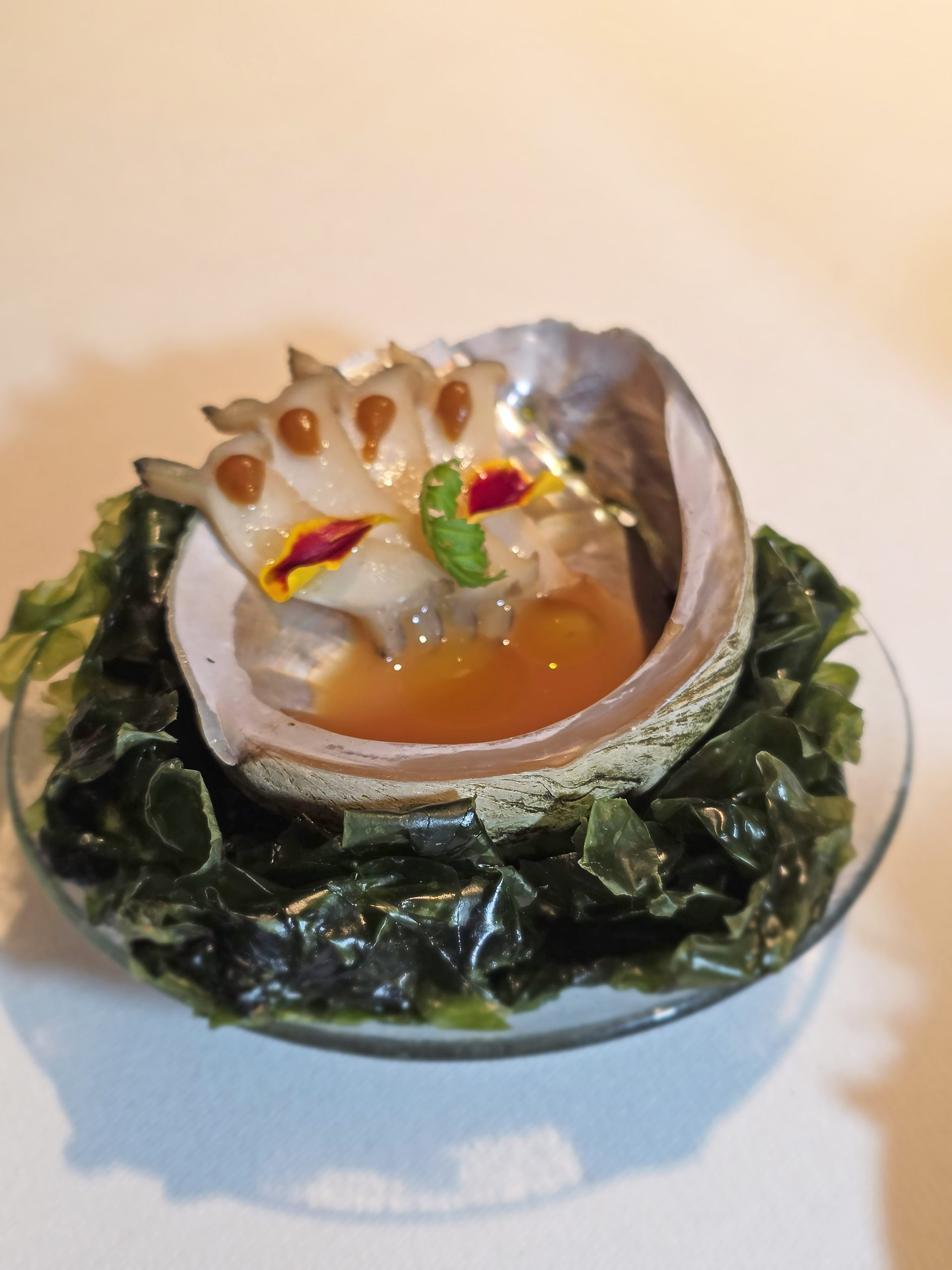
Then came abalone, served in its shell, thinly sliced and paired with a boldly seasoned vinaigrette. Abalone is rarely found in Polish or even European restaurants, and the one served at Arco is flown in from Australia, making it a true delicacy. It was cooked perfectly — tender, never rubbery. Precisely on point. The entire composition was beautifully balanced and left a strong impression on us. It was one of those bites we would happily have enjoyed in a much larger portion.
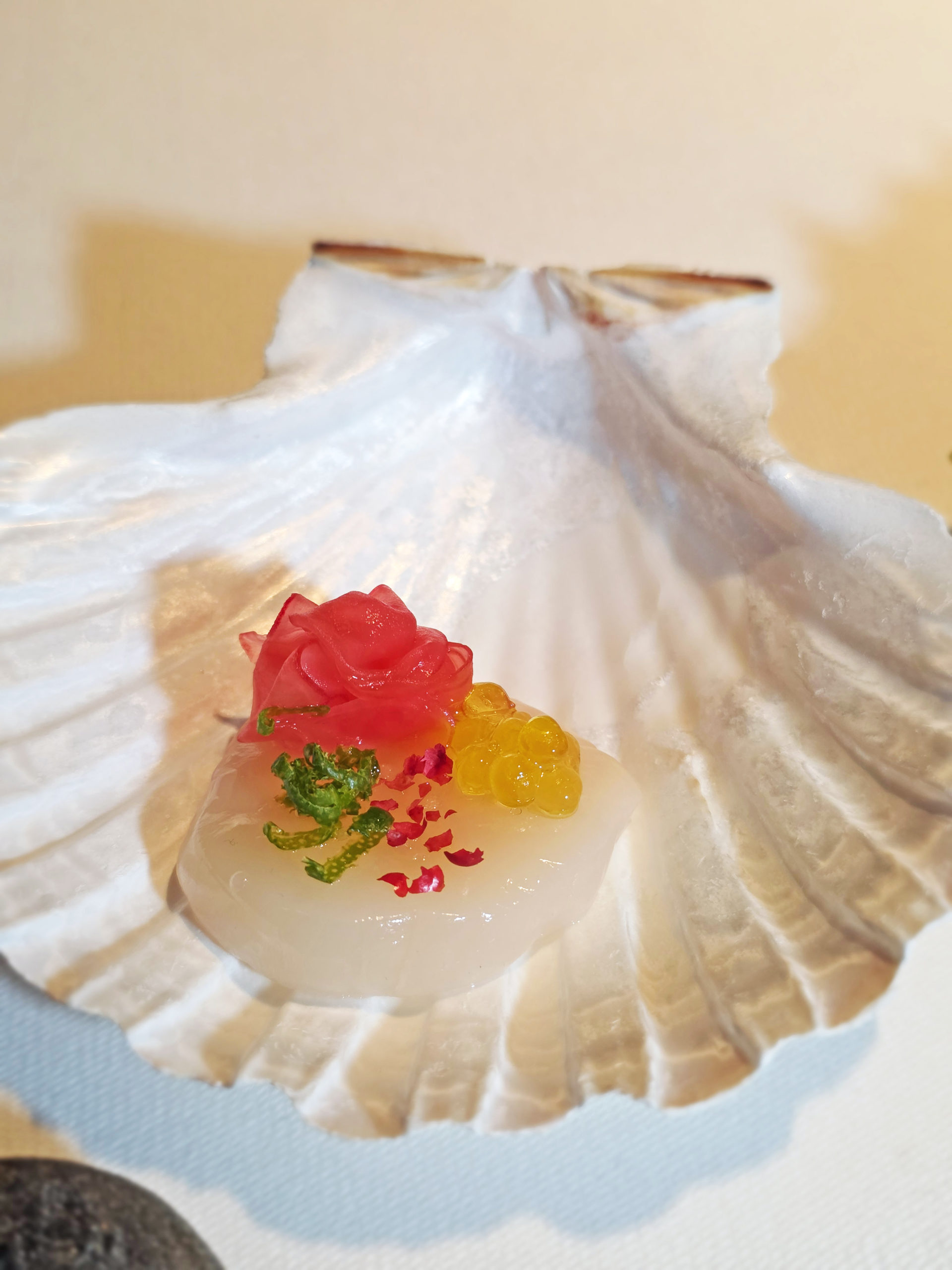
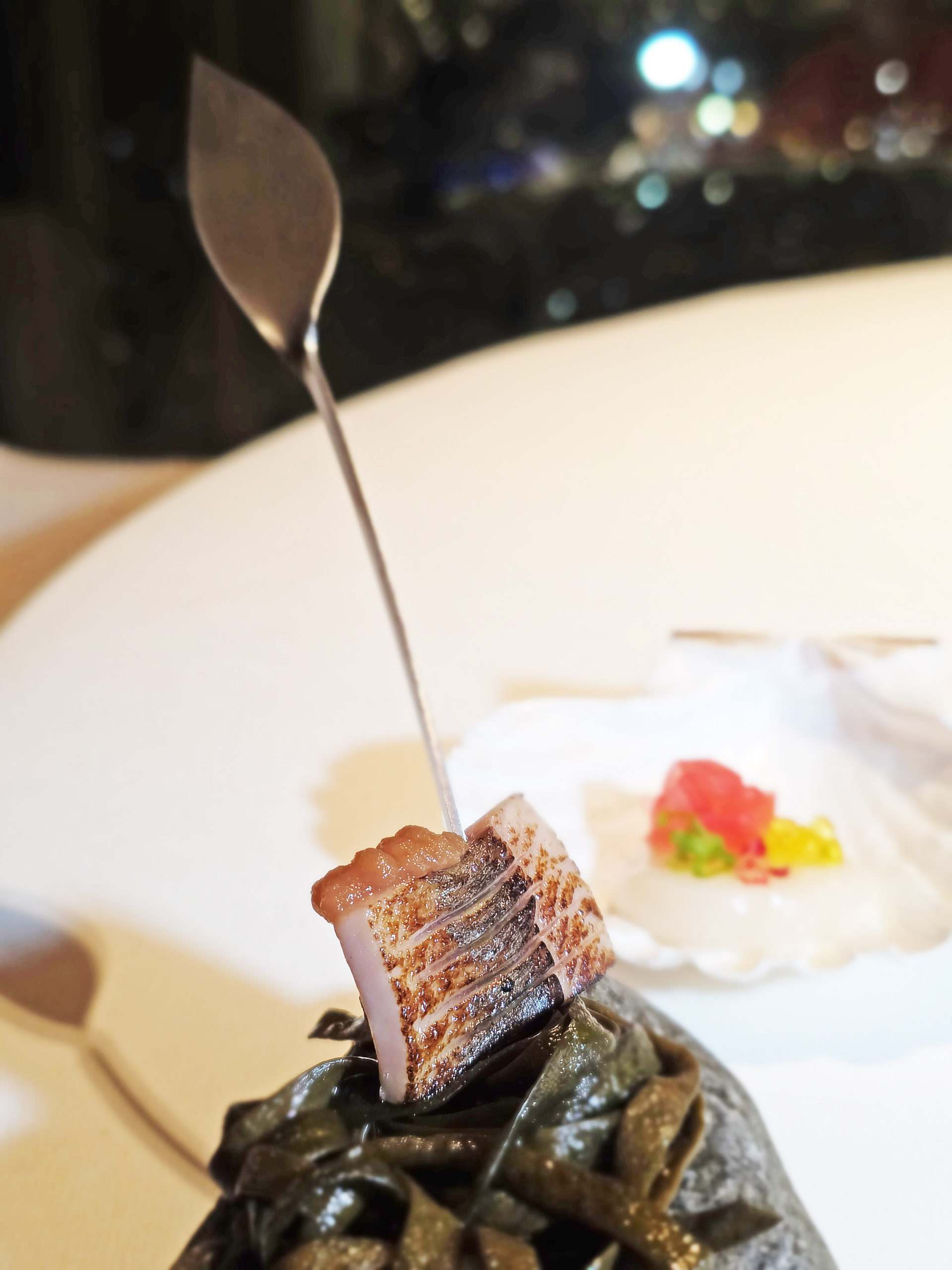
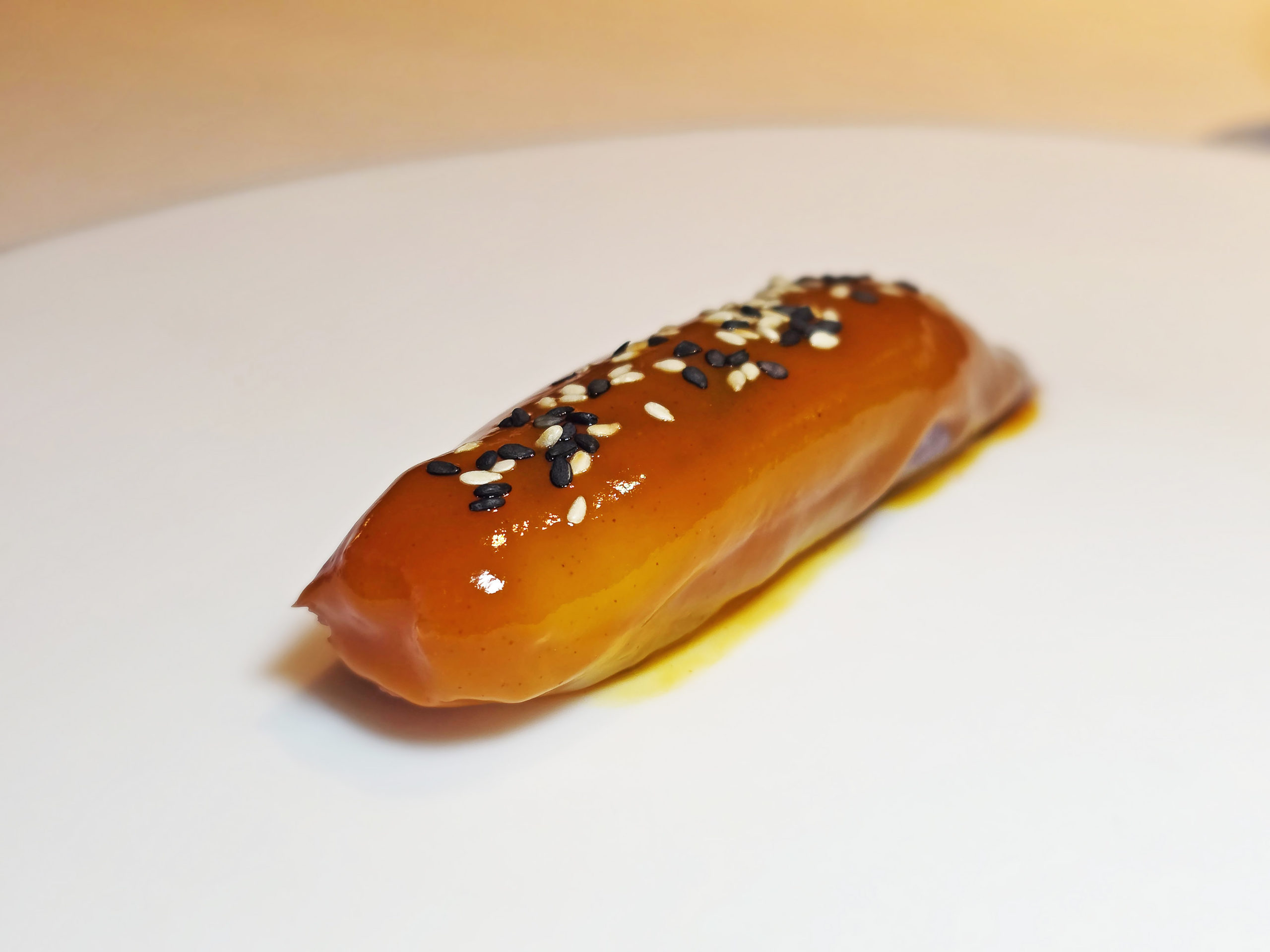
Two final amuse-bouches remained. First, scallop sashimi with roasted pepper, lime, and pickled radish — captivating in its delicacy and in the scallop’s natural sweetness, subtly enhanced by the accompaniments. The last element was herring marinated in umeshu with a touch of umeboshi paste — decidedly the most intense of the seven, and a fitting compositional decision that provided a clear and confident close to the sequence.
This entire opening section of the dinner was carefully executed and simply delicious. Every element had its place and purpose, and after finishing the first act of “Utopia,” we joked that we would gladly have the whole sequence served again — such was the strength of this beginning.
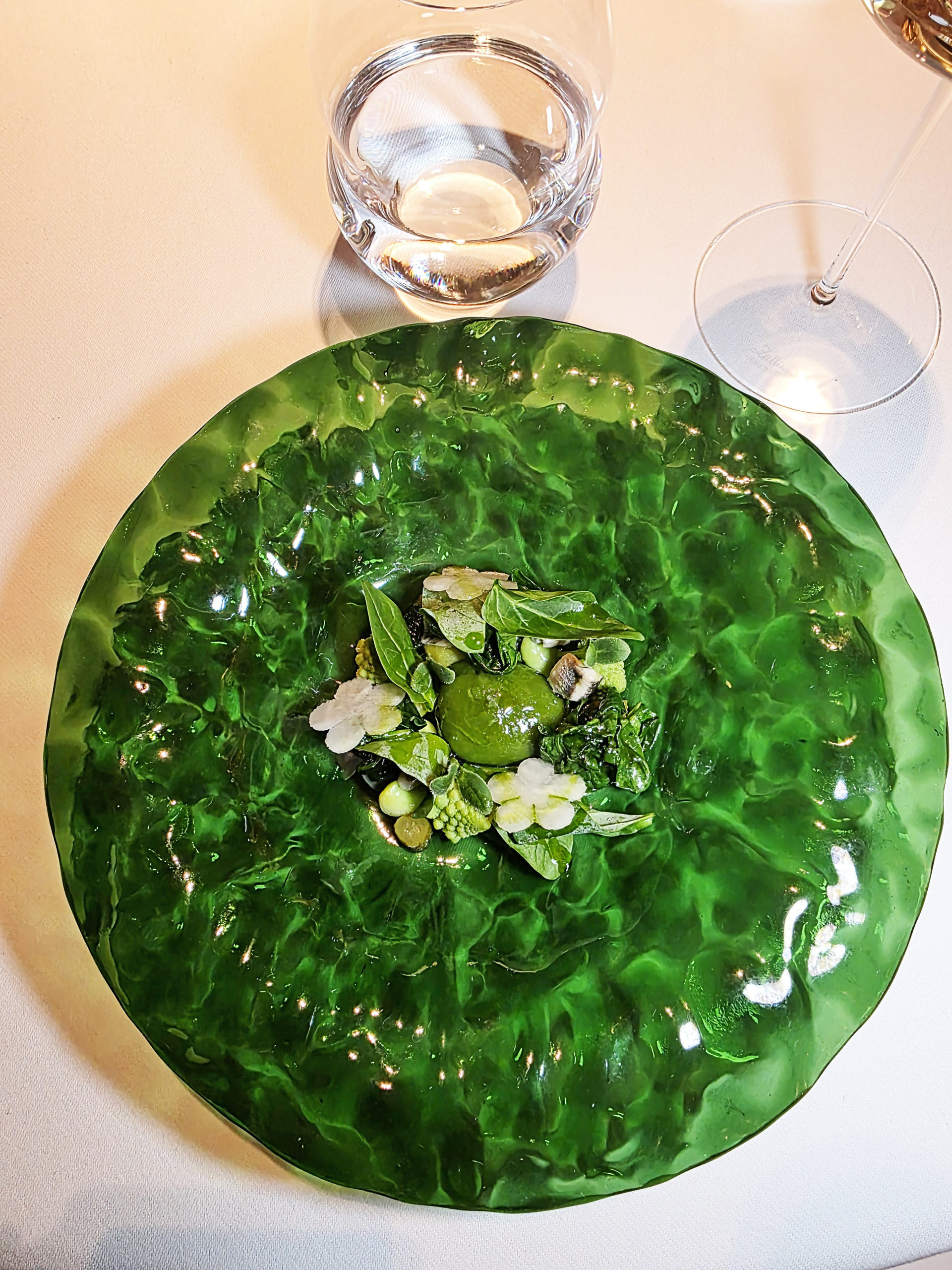
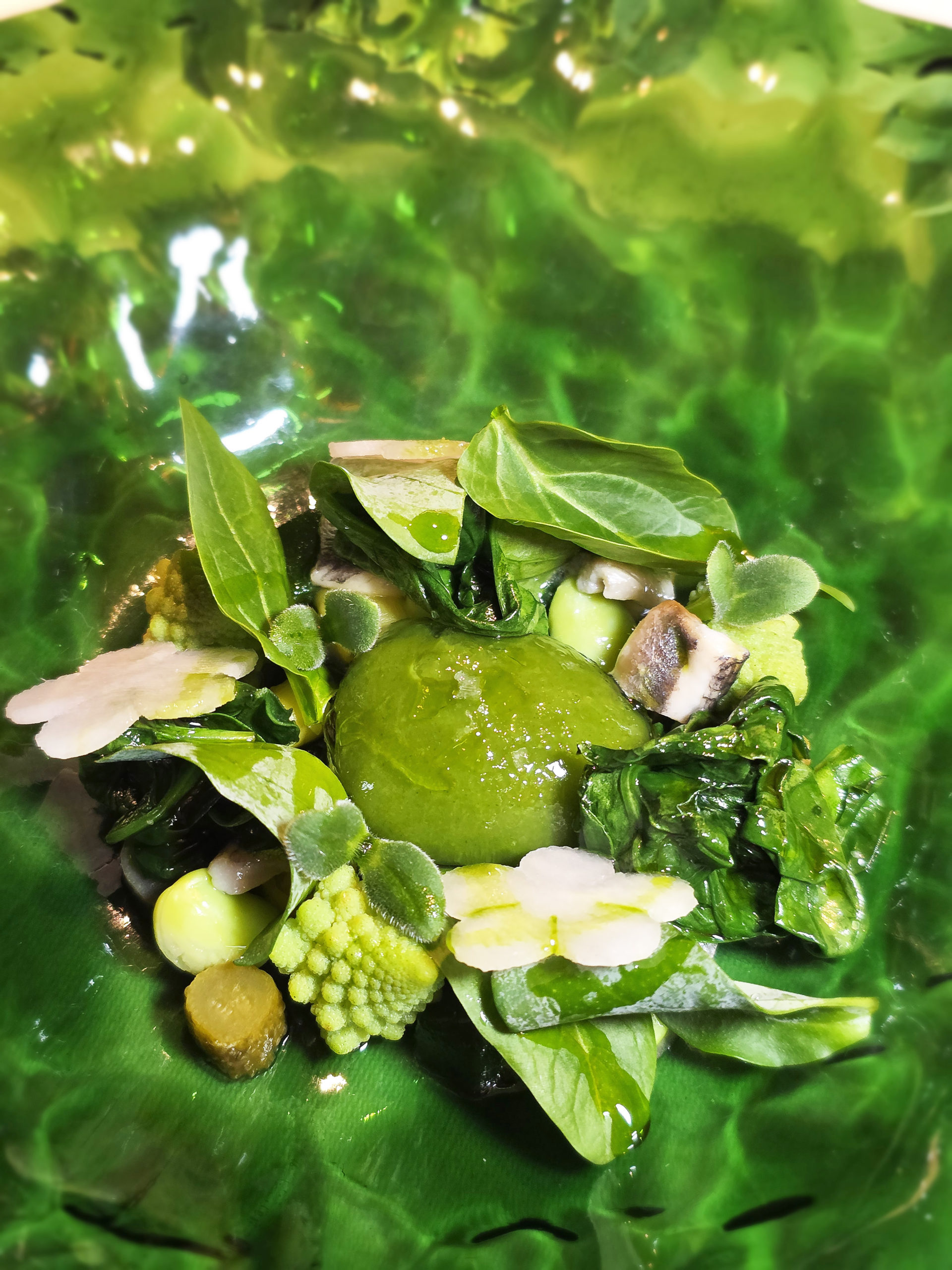
After this elaborate introduction, we moved on to a dish described on the menu as “All Green.” The composition explored different textures and shades of green: spinach, oyster leaf with its saline note reminiscent of oysters, pickled peppers bringing acidity and gentle heat, marinated boquerones, kohlrabi flowers, and beans. At the center sat a zucchini sphere designed to be crushed and used as sauce. There was crunch, freshness, vegetal juiciness, botanical minerality — reinforced by tomato-water gels that refreshed the palate. And those marinated boquerones, which truly completed the picture. A thoughtful, complete dish.
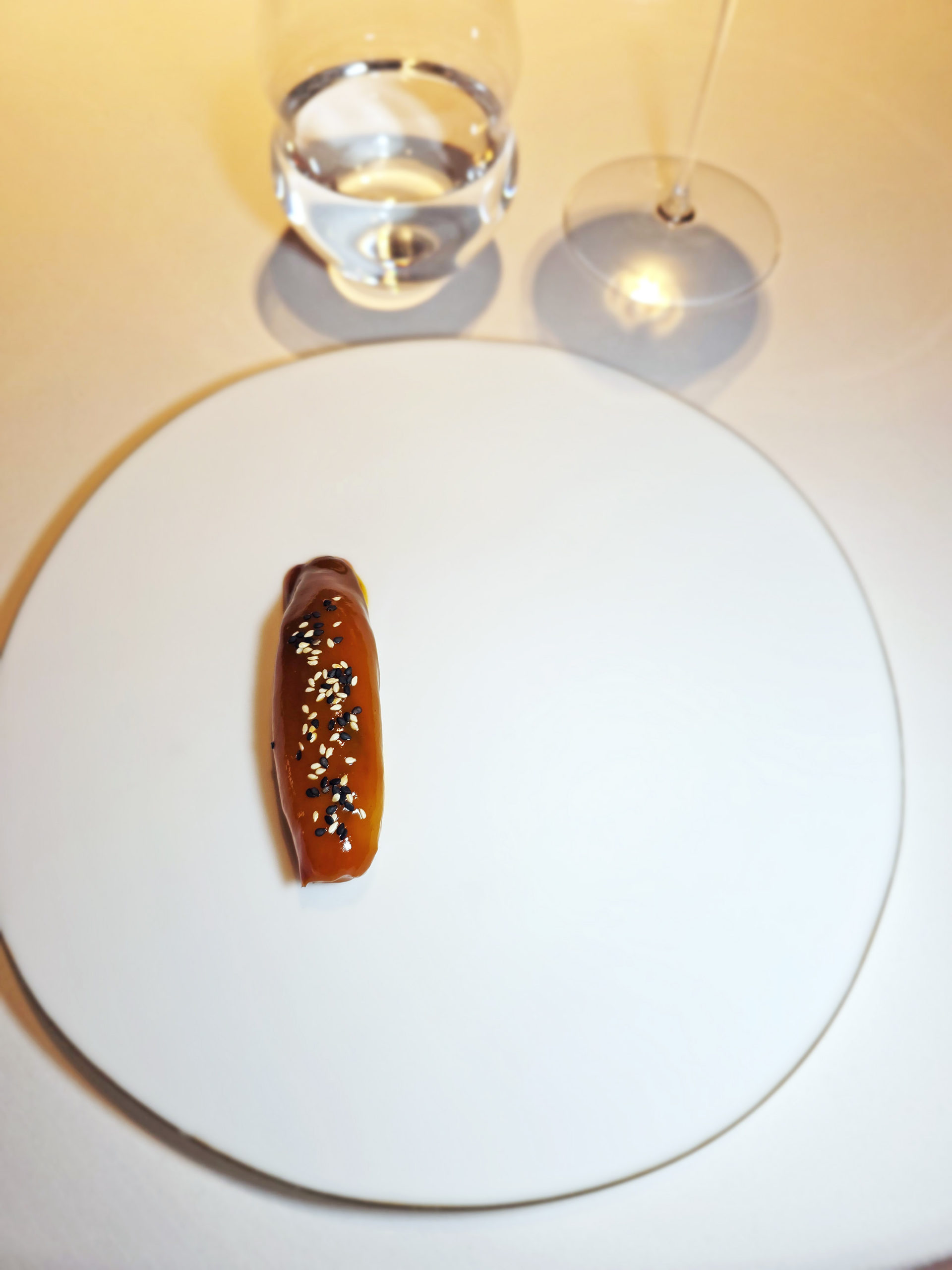
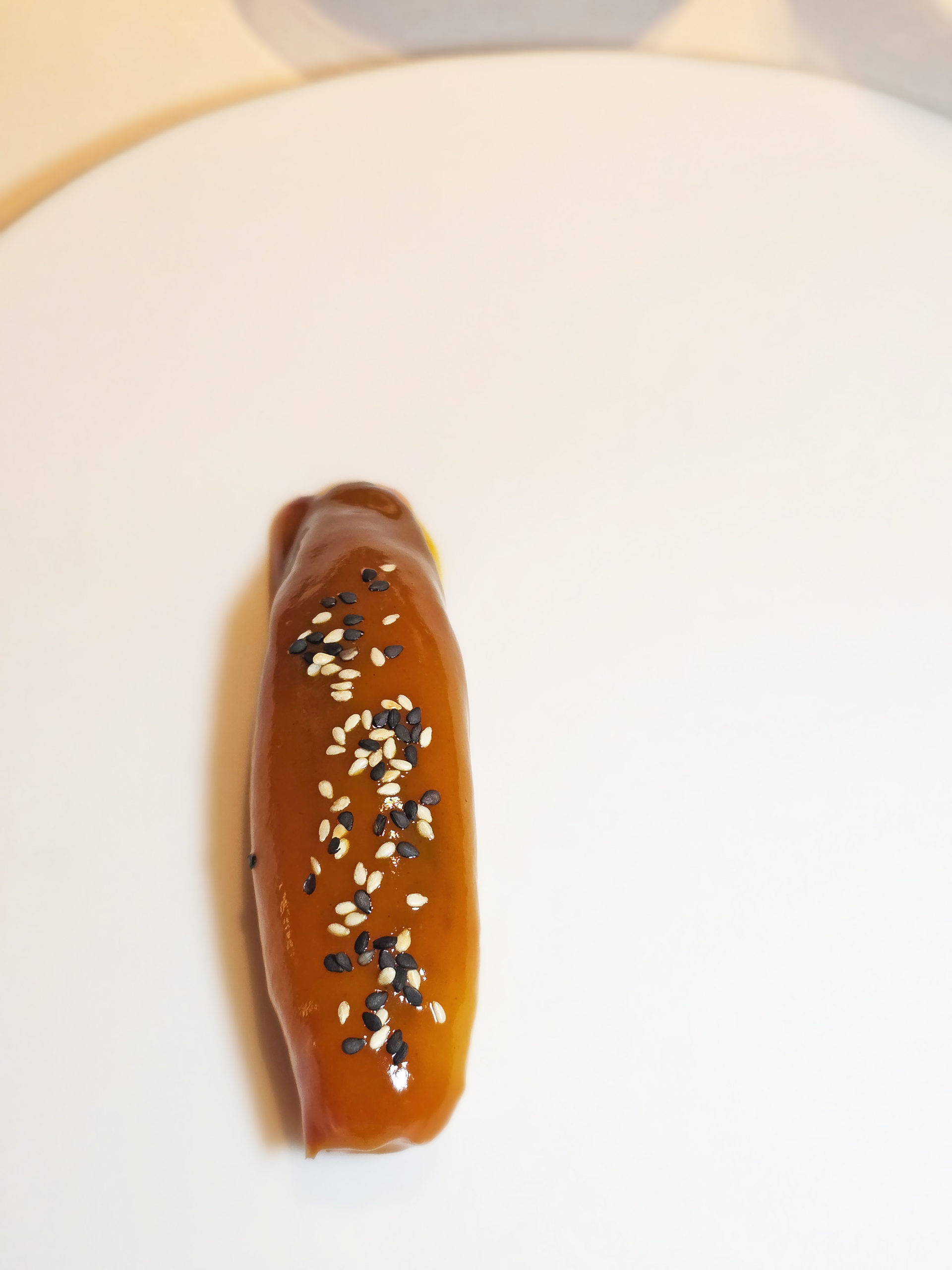
Next came red chicory prepared sous-vide and then grilled, accompanied by a sea buckthorn ponzu in place of classic citrus. Visually minimalist, yet highly intriguing in flavor. The chicory retained its aroma and structure, but thanks to precise cooking offered no unnecessary resistance to the knife. Instead of the expected bitterness, we found natural sweetness. A subtle Asian note was clearly perceptible — interpreted, of course, through a Northern European lens due to the addition of sea buckthorn.
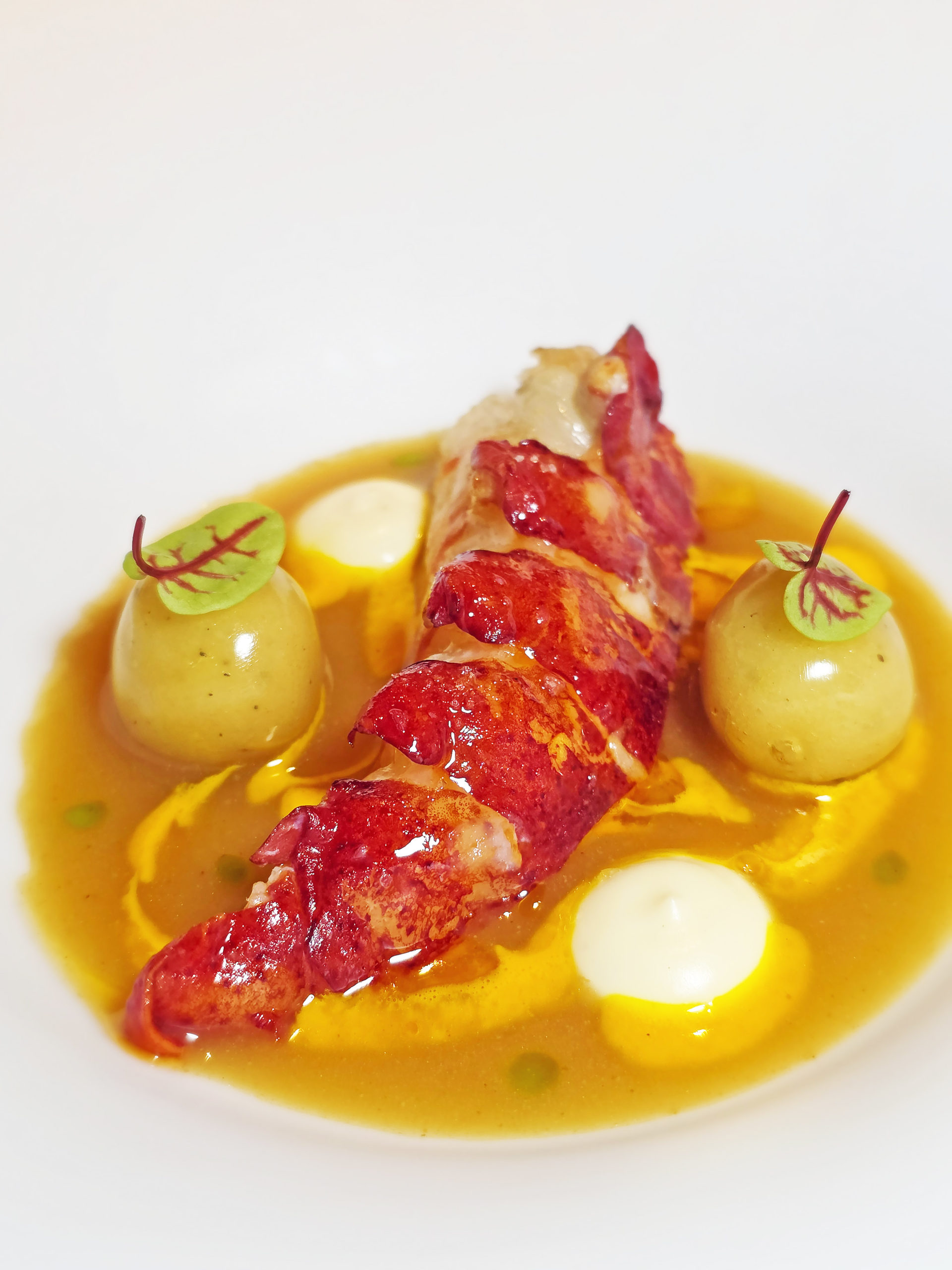
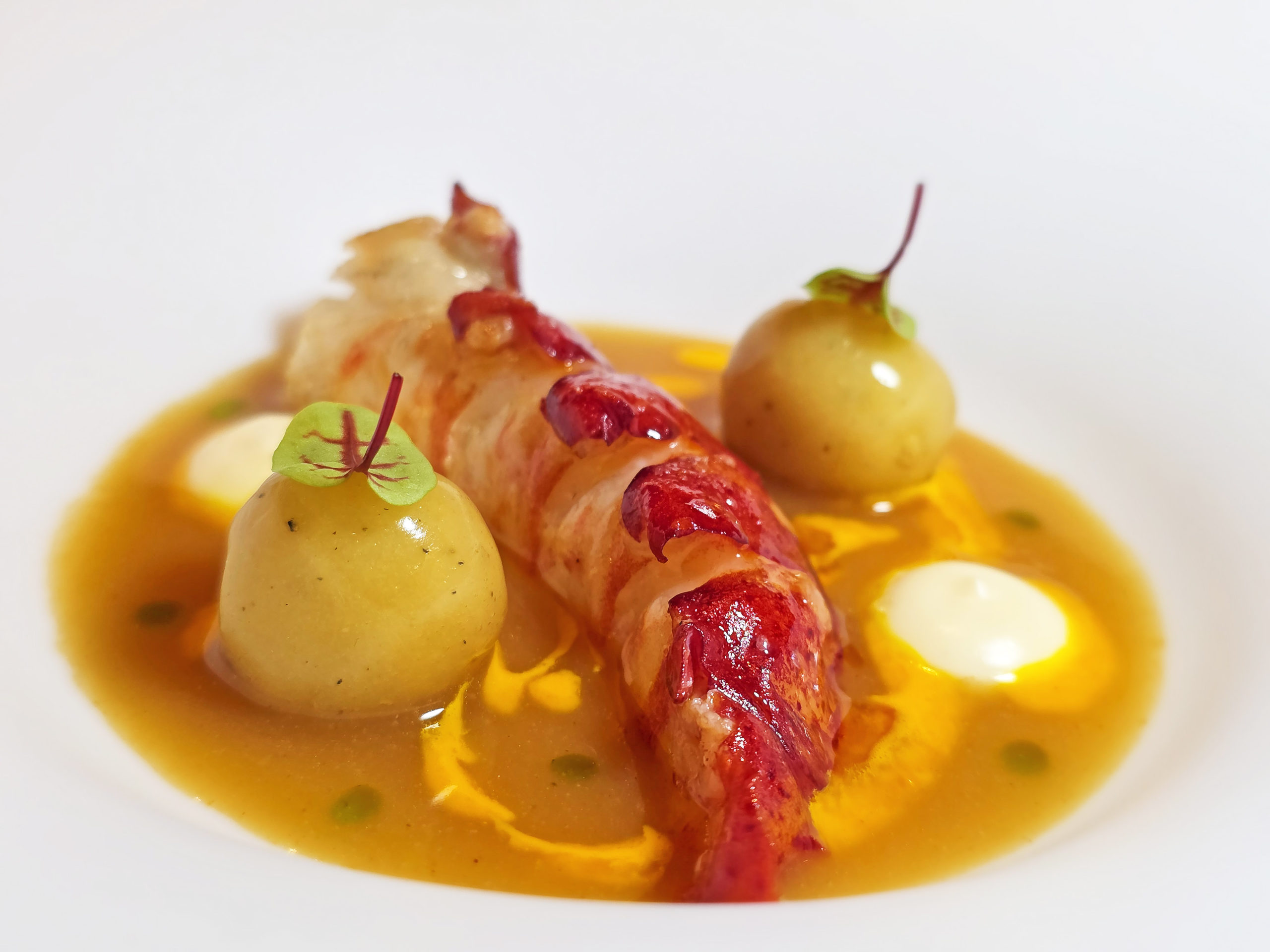
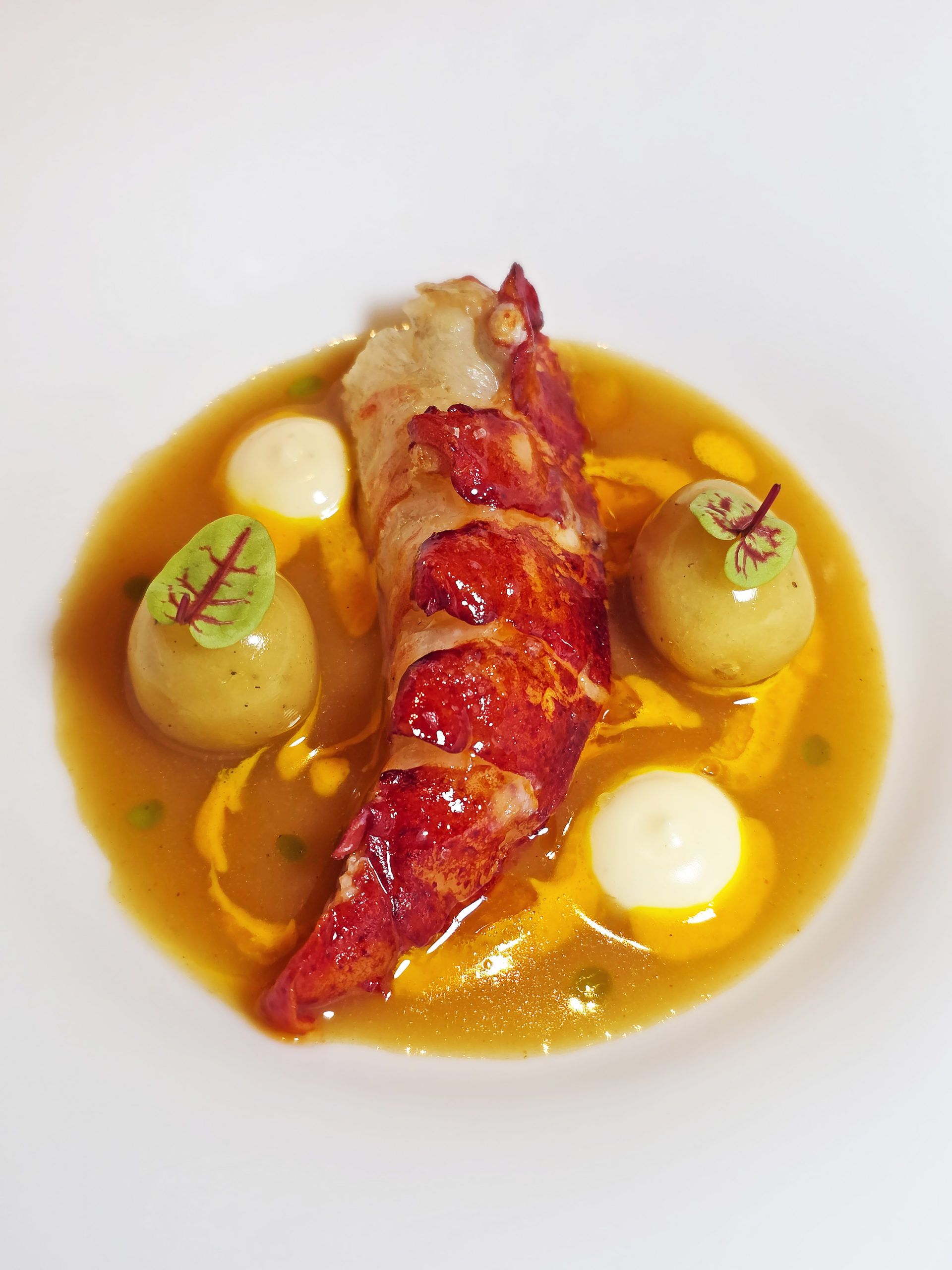
The next course featured grilled lobster with a lobster-based sauce accented by a pronounced note of saffron. It was accompanied by young potatoes — truly tiny, thimble-sized. In fact, they were not potatoes in the traditional sense, but small, intensely seasoned spheres of potato purée encased in a delicate, translucent gel. The lobster was grilled to perfection — still slightly translucent, juicy, and deeply aromatic — while the saffron, so characteristic of Iberian cuisine, provided a distinct yet harmoniously integrated element of the dish.
Before the following course, bread was served — very flavorful and pleasing in texture. This time, however, it was accompanied by neither olive oil nor butter, which we noted as a difference compared to our previous visit. We must admit that the excellent olive oil previously served would have been a valuable complement here.
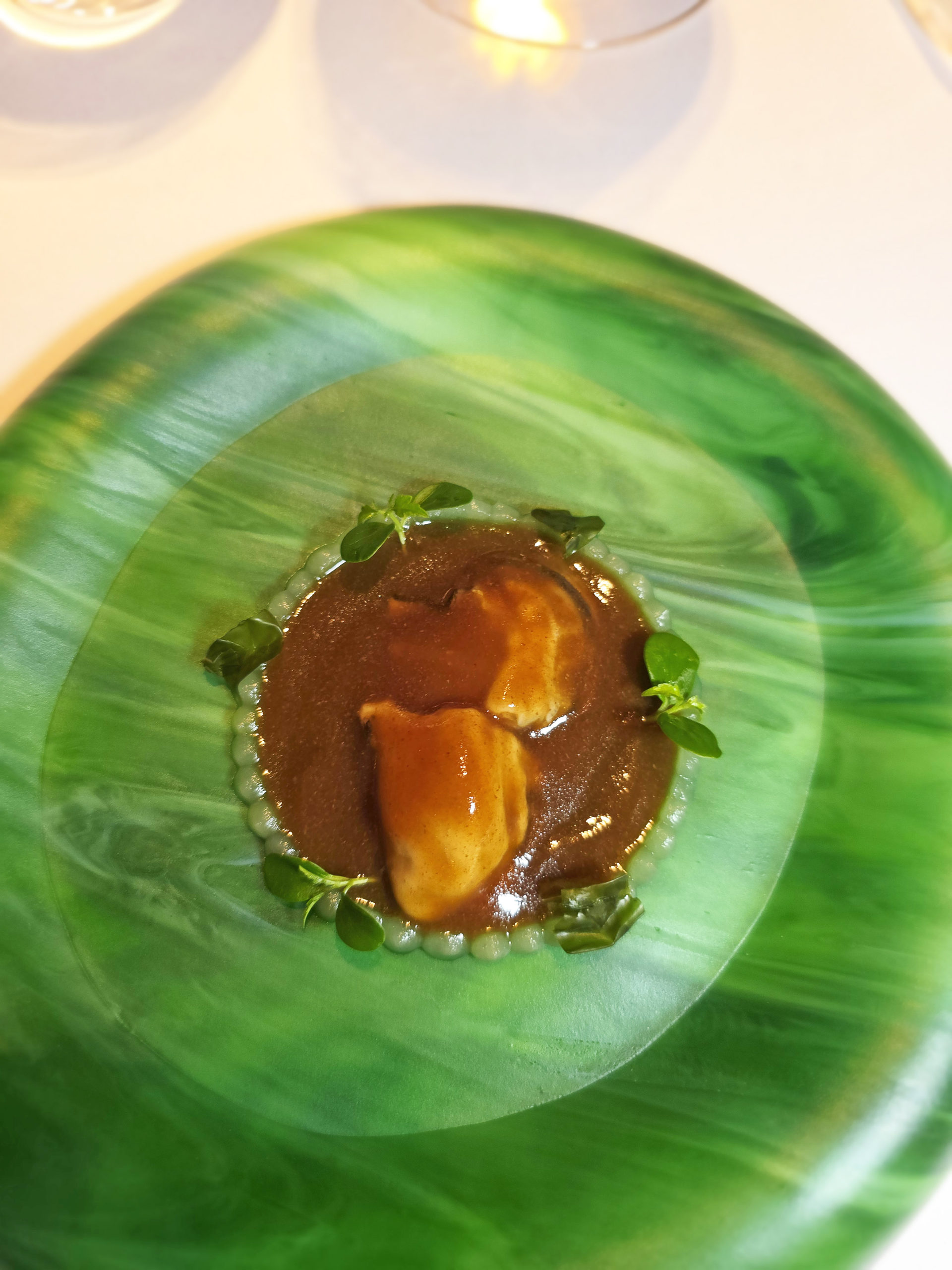
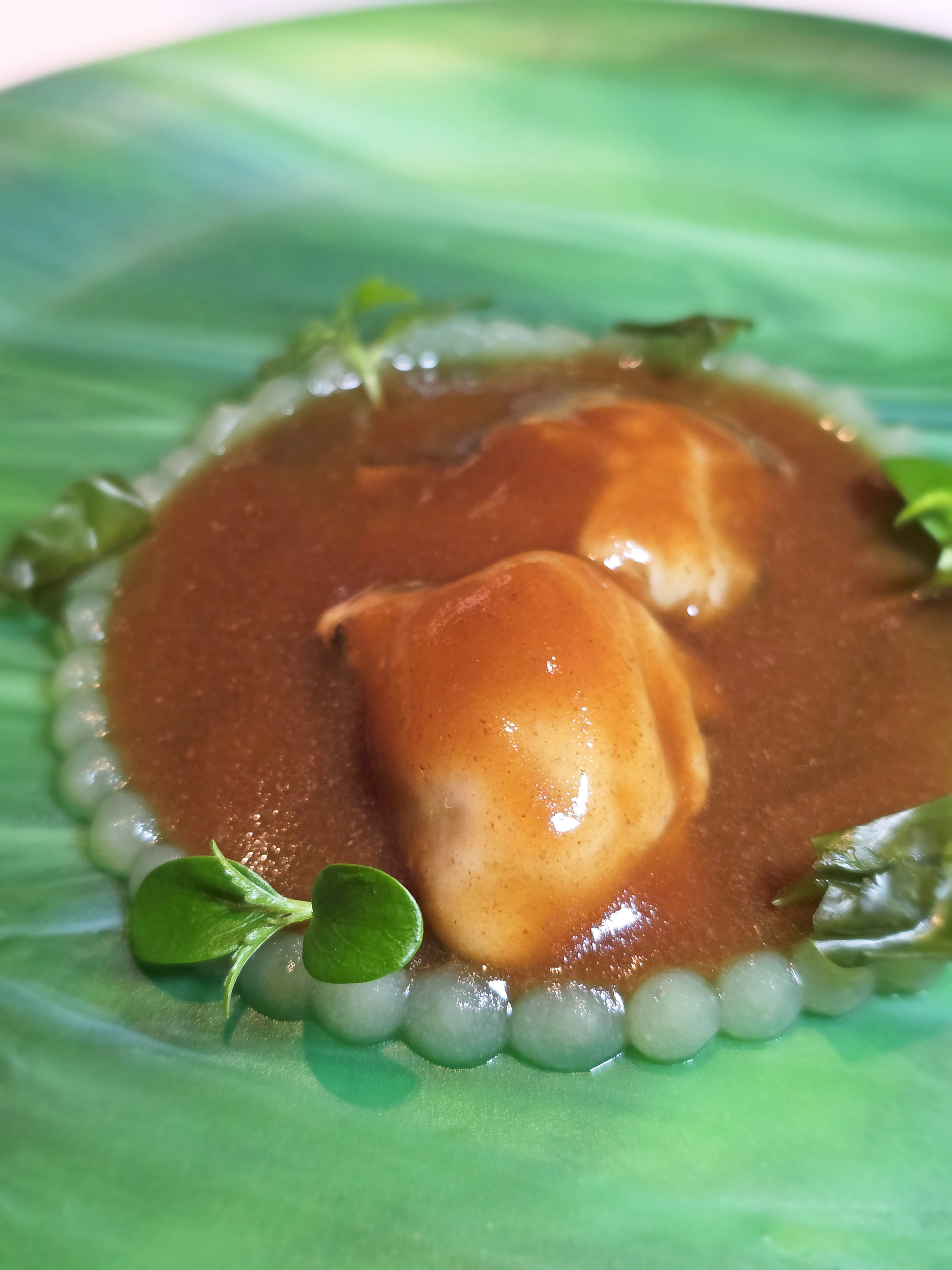
Next came an oyster paired with wild boar sauce — a surf-and-turf interpreted in a distinctly Polish-maritime style. What a dish this was. The oyster itself was large, fleshy, and gently warmed, which deepened its aroma. The wild boar sauce, prepared in the style of a goulash reduction, was intensely meaty, slightly earthy, at moments subtly metallic, yet it did not overpower the oyster. The oyster, in turn, contributed mineral clarity, iodine freshness, and a pronounced marine character. Fresh herbs and a surrounding celery gel provided the final touch. Without those two elements, the dish would not have been the same.
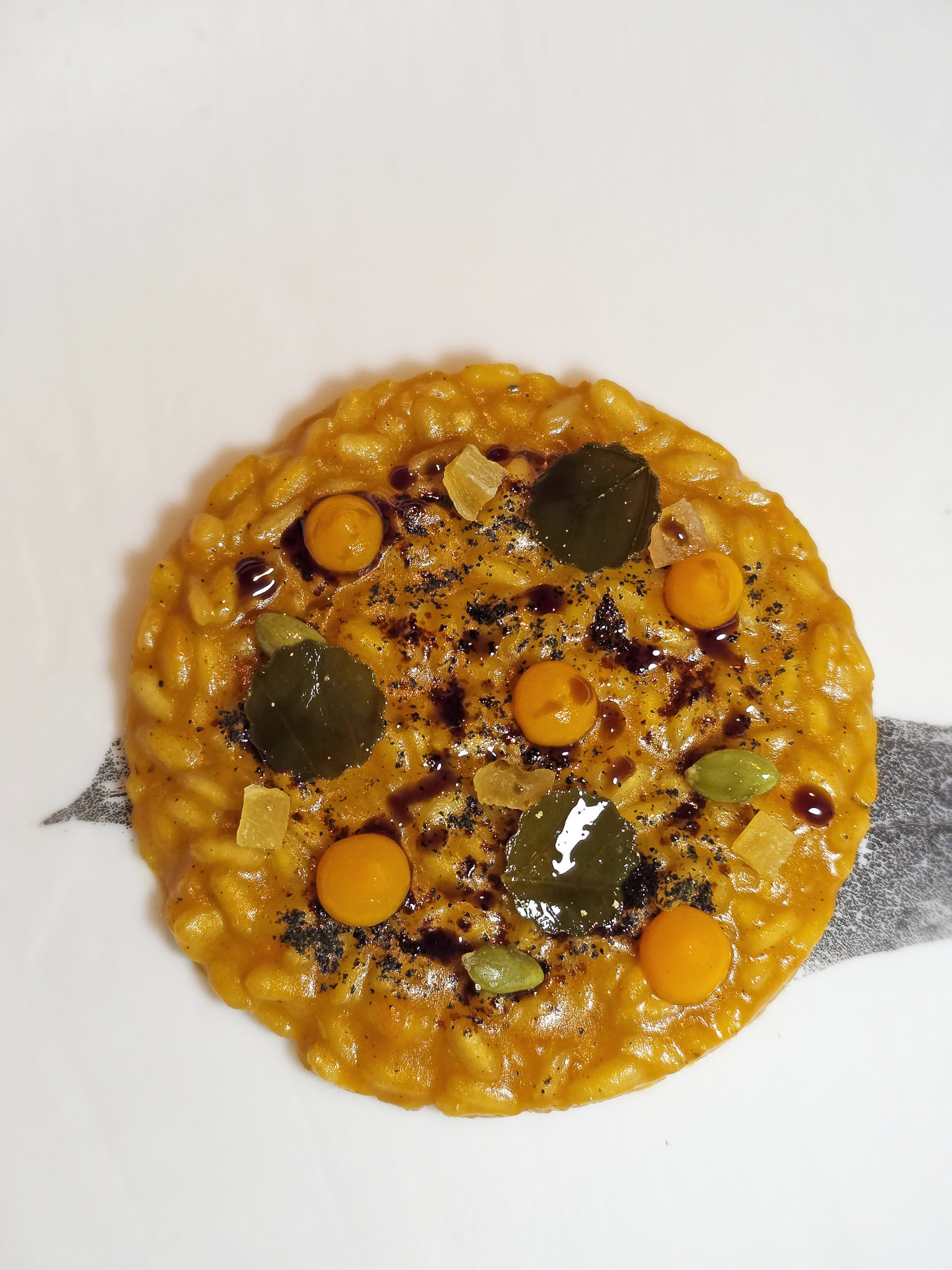
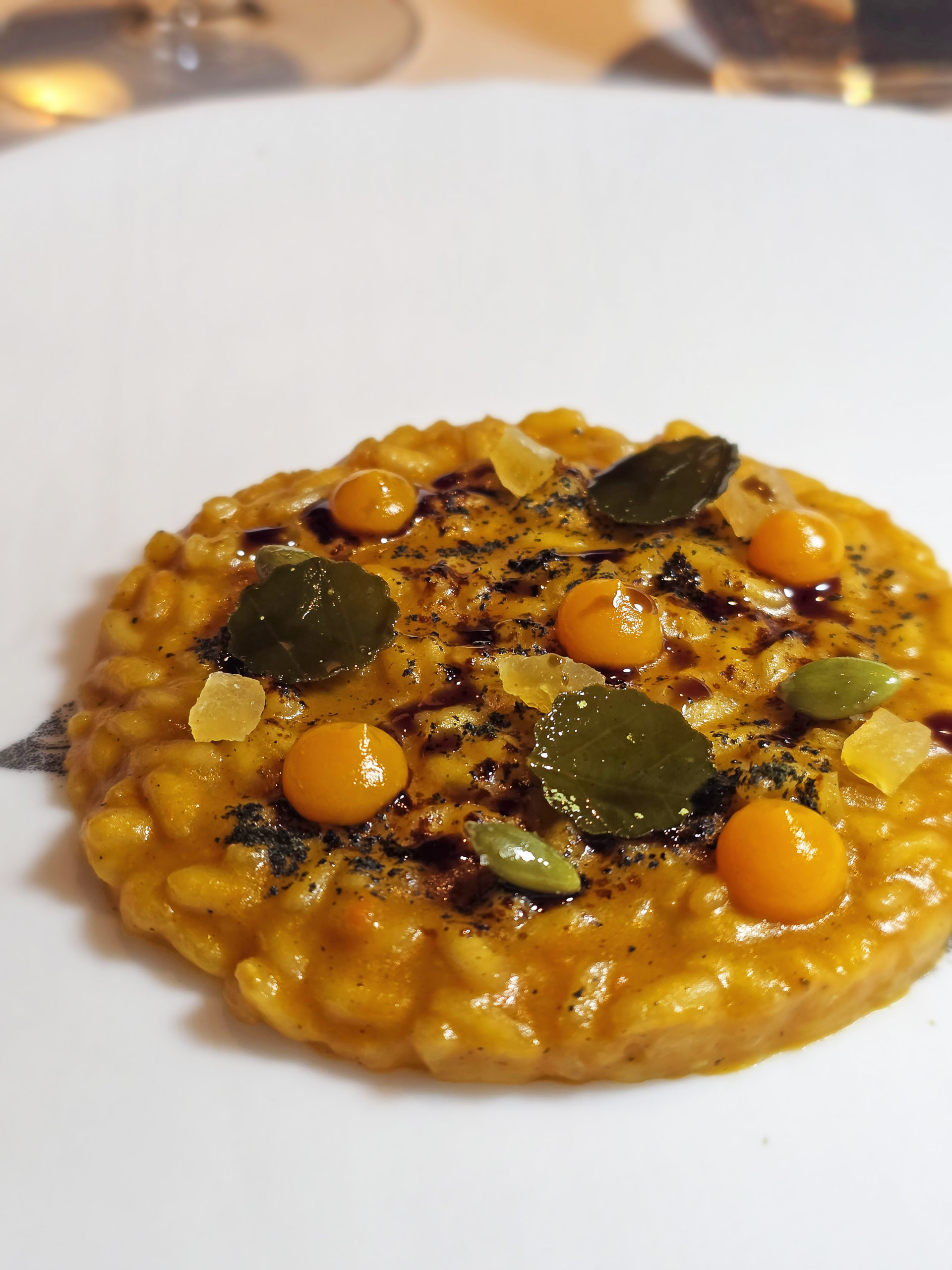
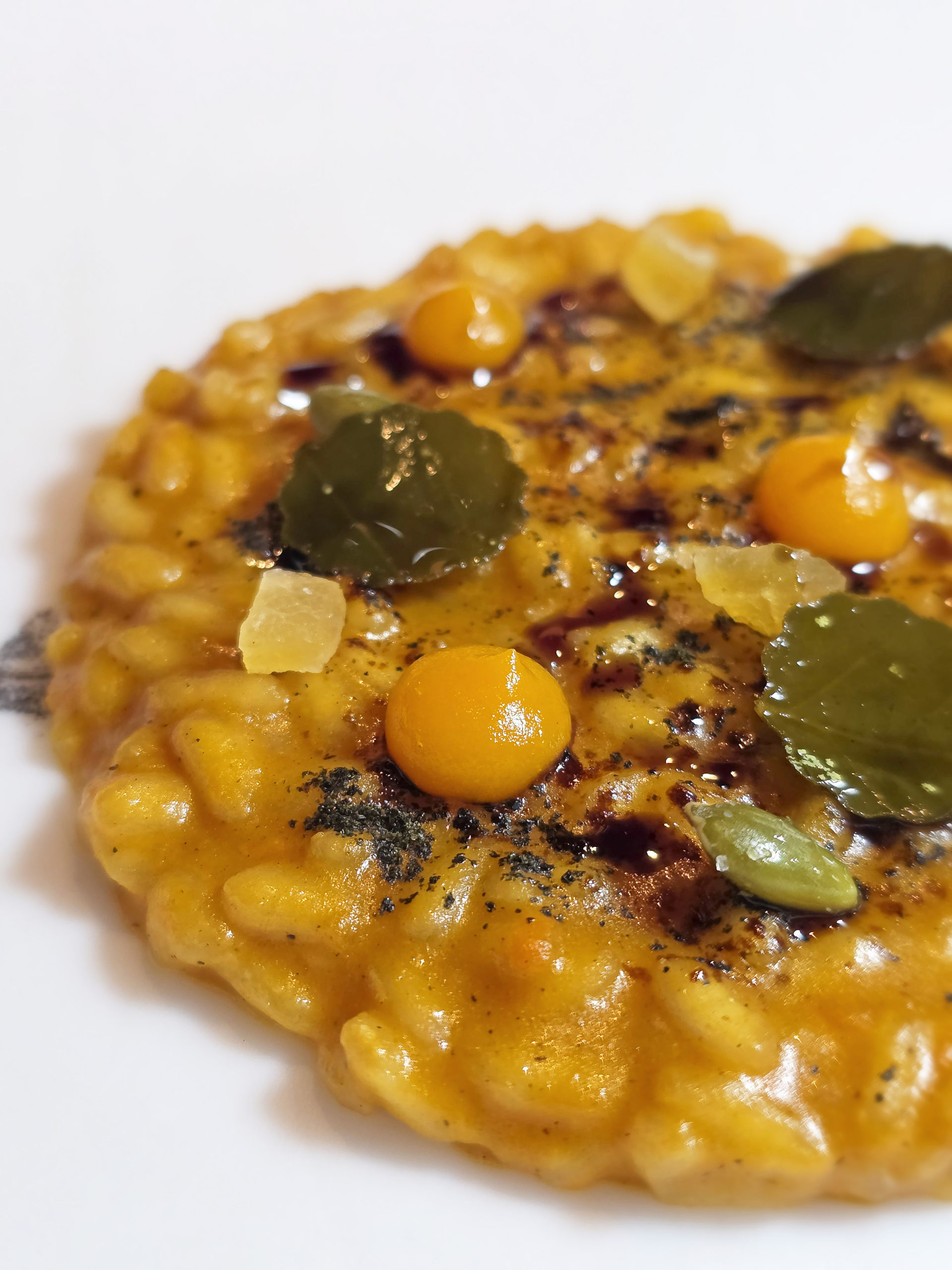
Next came the pumpkin risotto — one of the best dishes of the evening. The intense flavor of pumpkin was paired with a delicate hint of licorice and nori, caper leaves, dried apricot, and pumpkin seeds that added crunch. The rice was perfectly al dente, and the overall composition was expressive yet harmoniously structured. Each element was clearly perceptible while forming a cohesive whole. It was a dish we continued to revisit in our thoughts long after the dinner ended. We must admit we are not fans of licorice, yet here it was used with such restraint that it added complexity without dominating the plate.
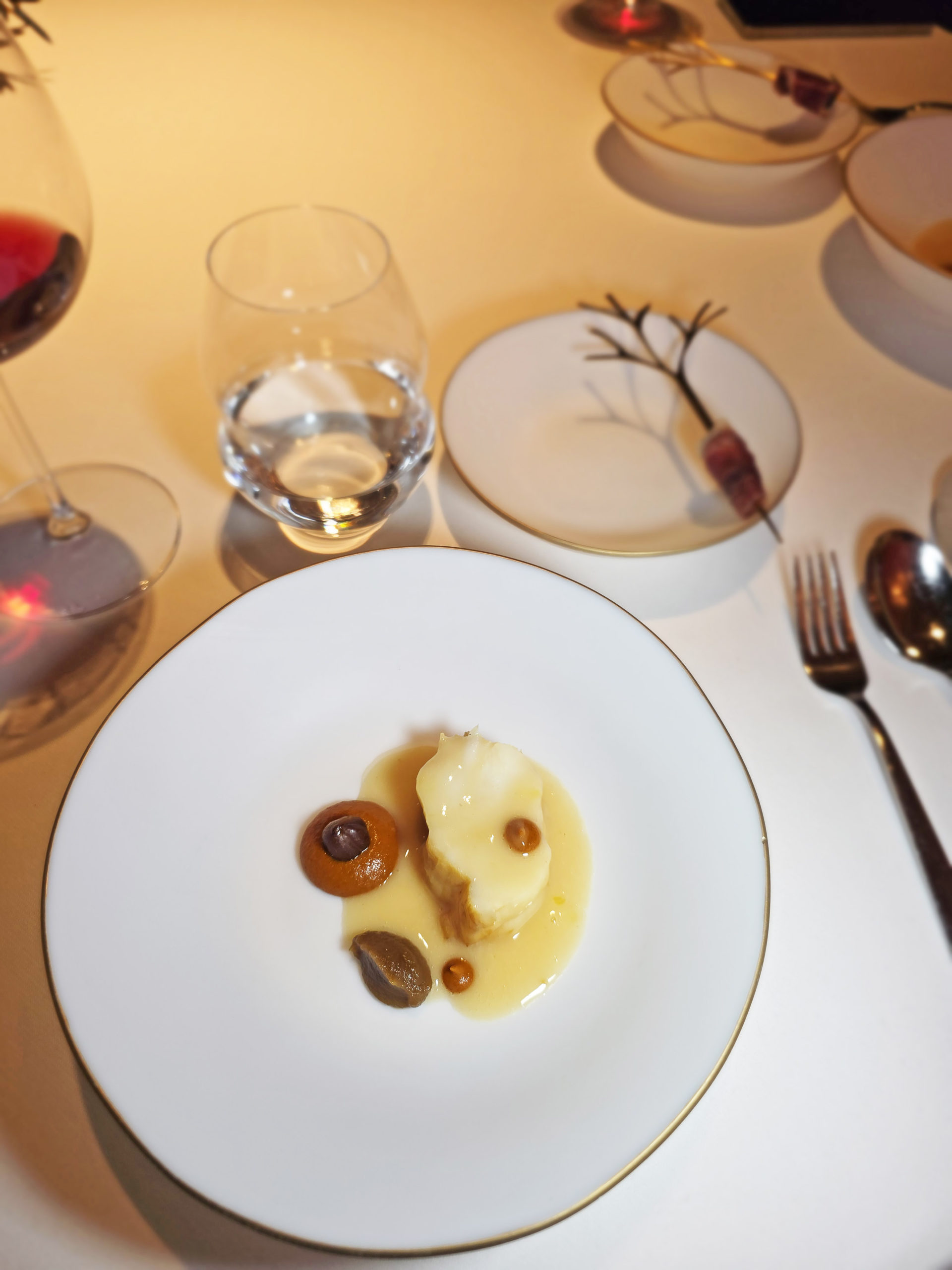
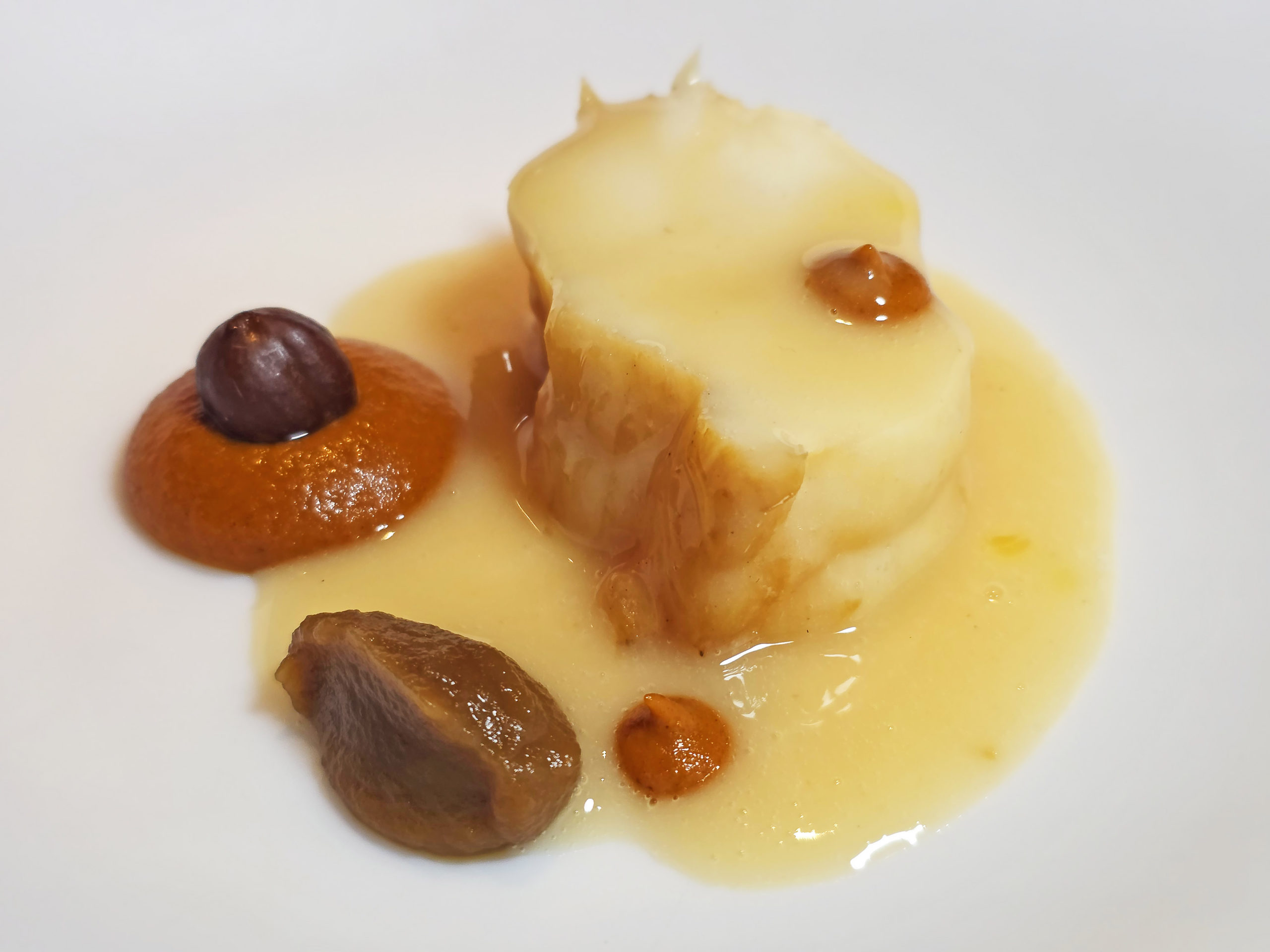
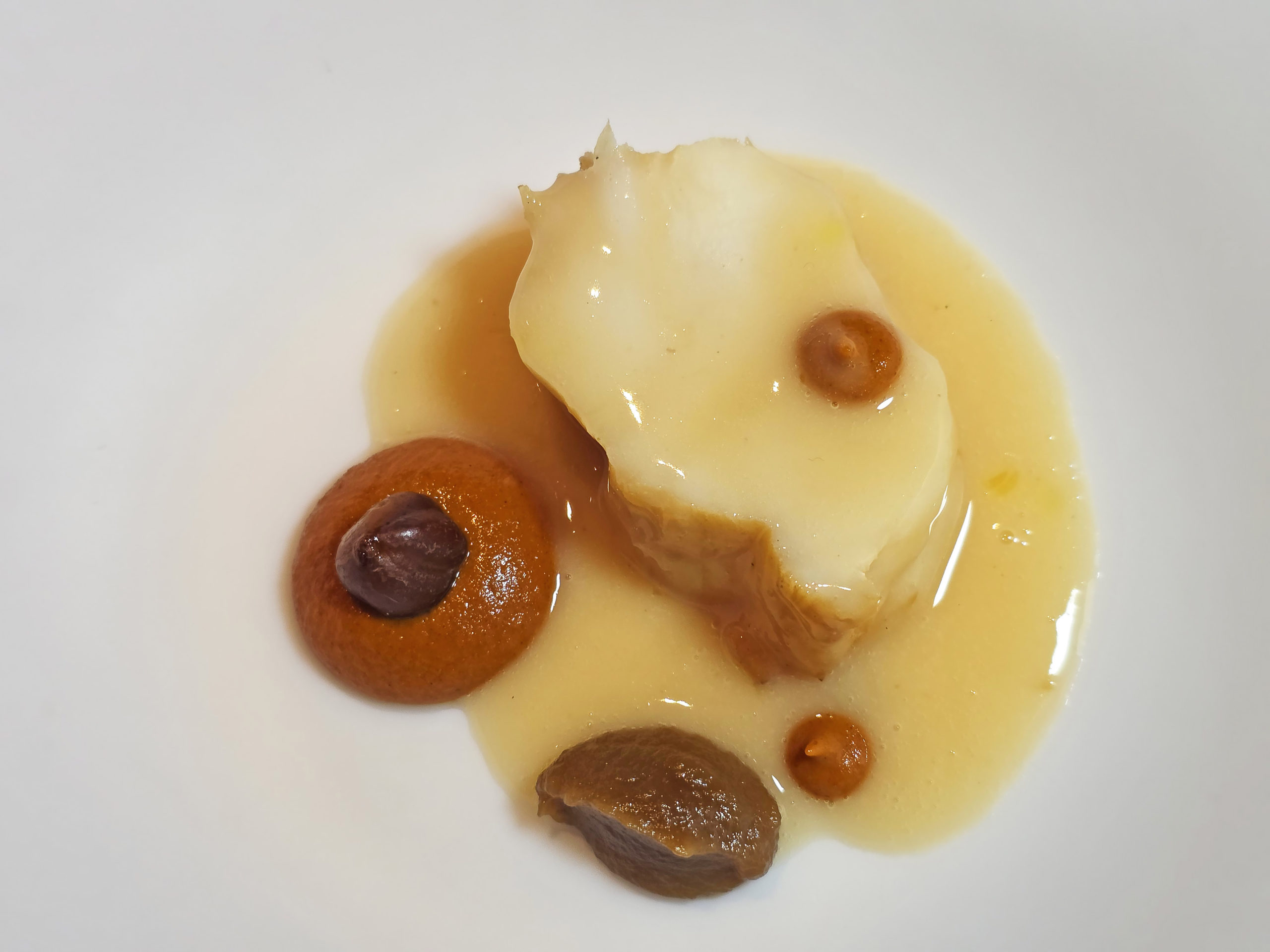
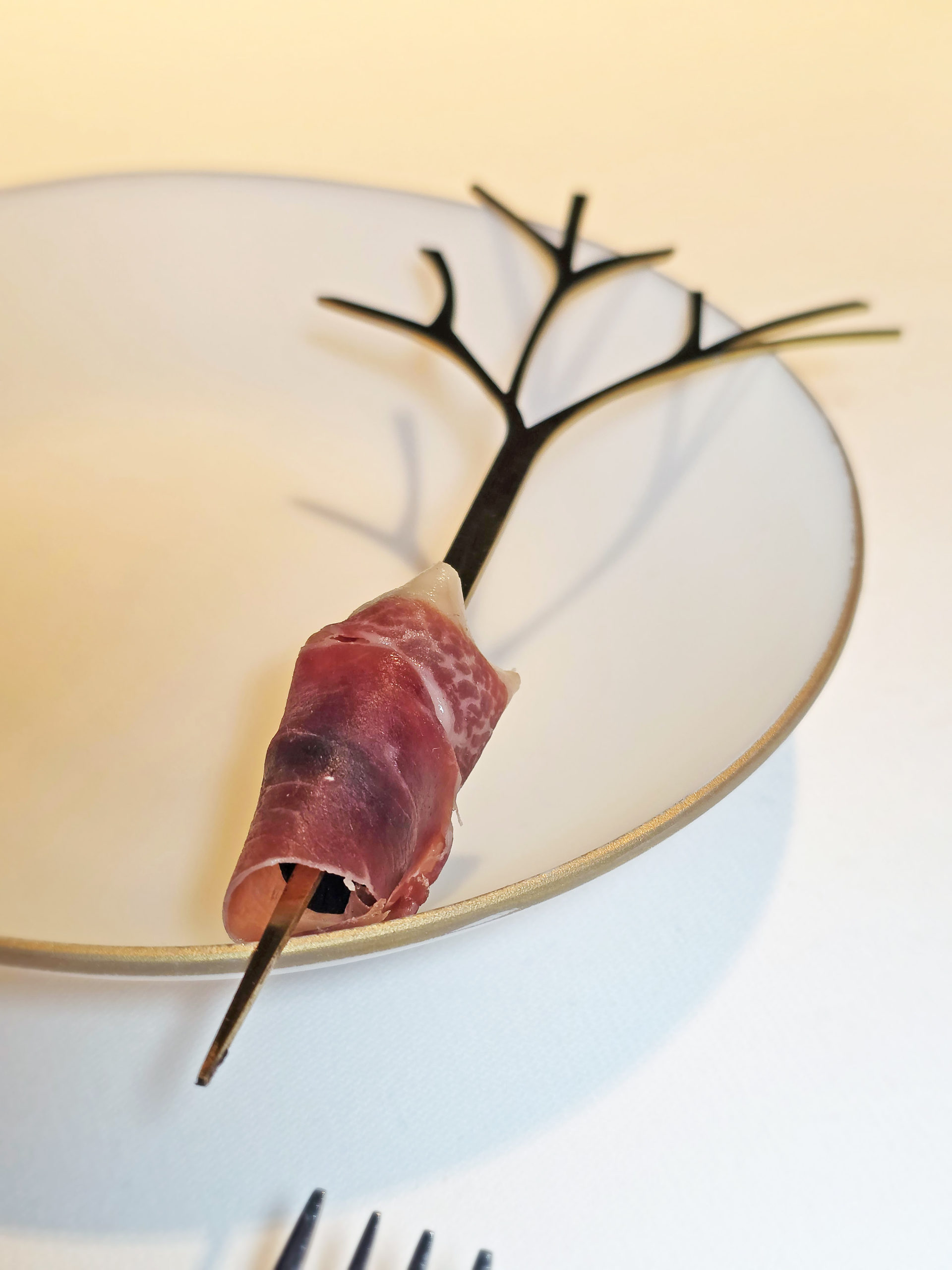
Then monkfish prepared over charcoal was served with romesco sauce made from roasted tomatoes, nuts, and dried fruit. The dish was finished tableside with a sauce based on Iberian ham. Alongside it came a skewer of semi-dried tomatoes, black fermented garlic, and jamón ibérico. Naturally, the fish was the star of the plate, but our attention was unexpectedly drawn to a hazelnut with a creamy, almost chickpea-like texture, while still preserving its delicate nut flavor. It was a highly original, multilayered dish, and once again we found ourselves declaring it the best course so far. Interestingly, we had reacted the same way to several earlier plates — which only demonstrates how consistently high the level of the entire tasting experience remained.
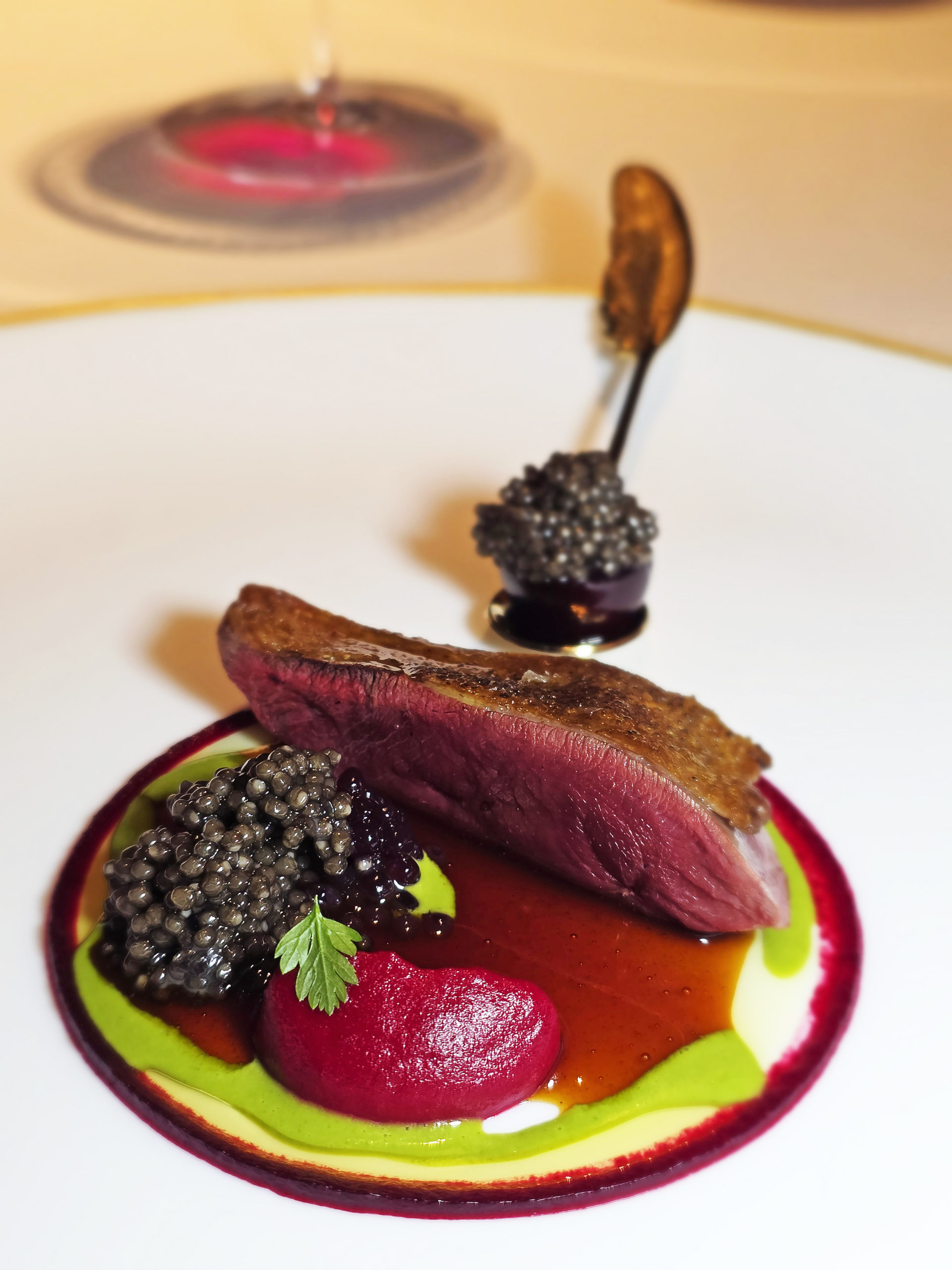
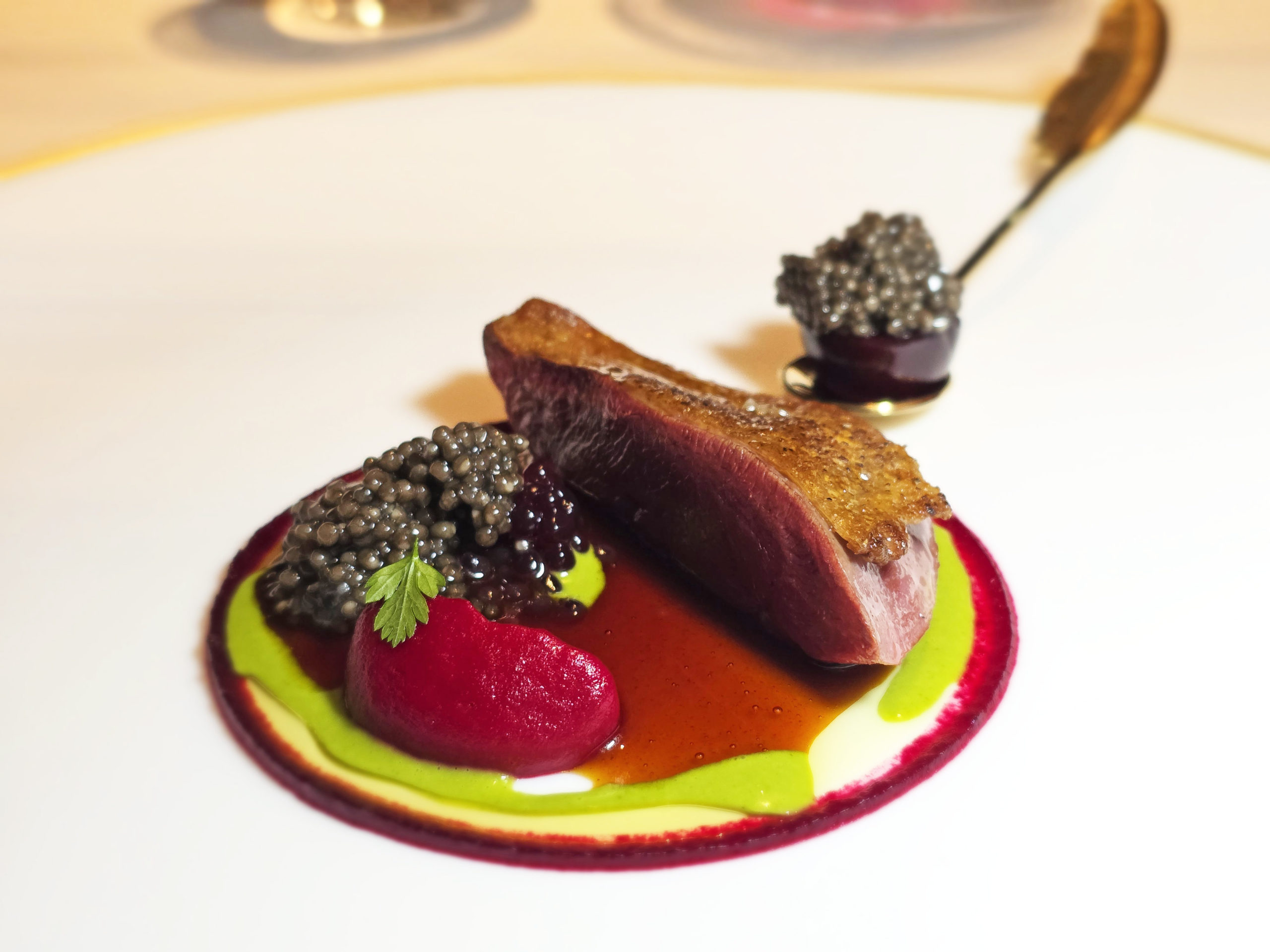
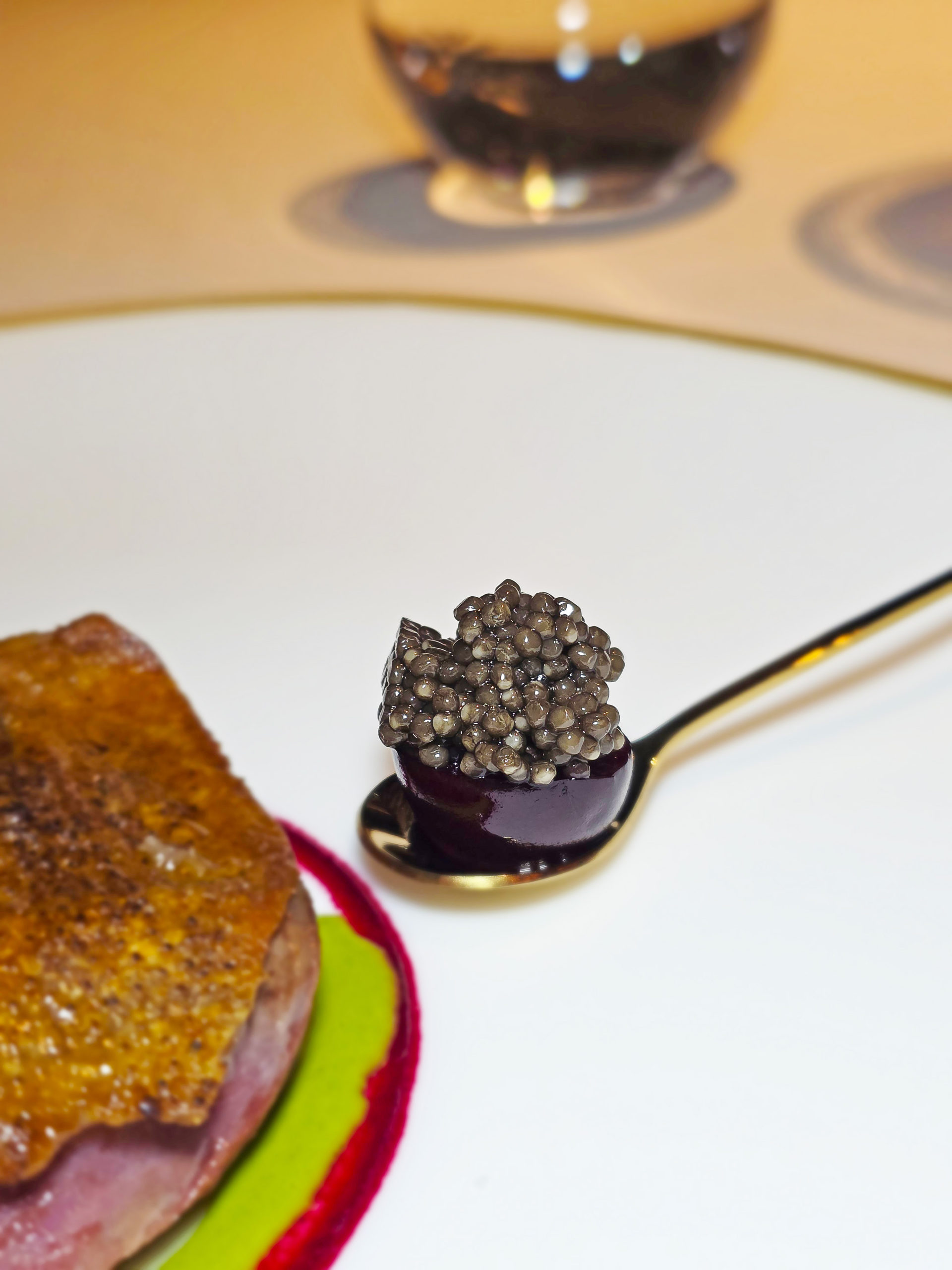
The savory part of the dinner concluded with pigeon served alongside beet purée and Antonius caviar. On a spoon, a cherry filled with pigeon liver parfait was presented as an accompanying bite. The combination of beetroot, caviar, cherry, and pigeon meat proved remarkably successful. We were particularly impressed by the perfectly cooked pigeon and the deeply flavored beet purée.
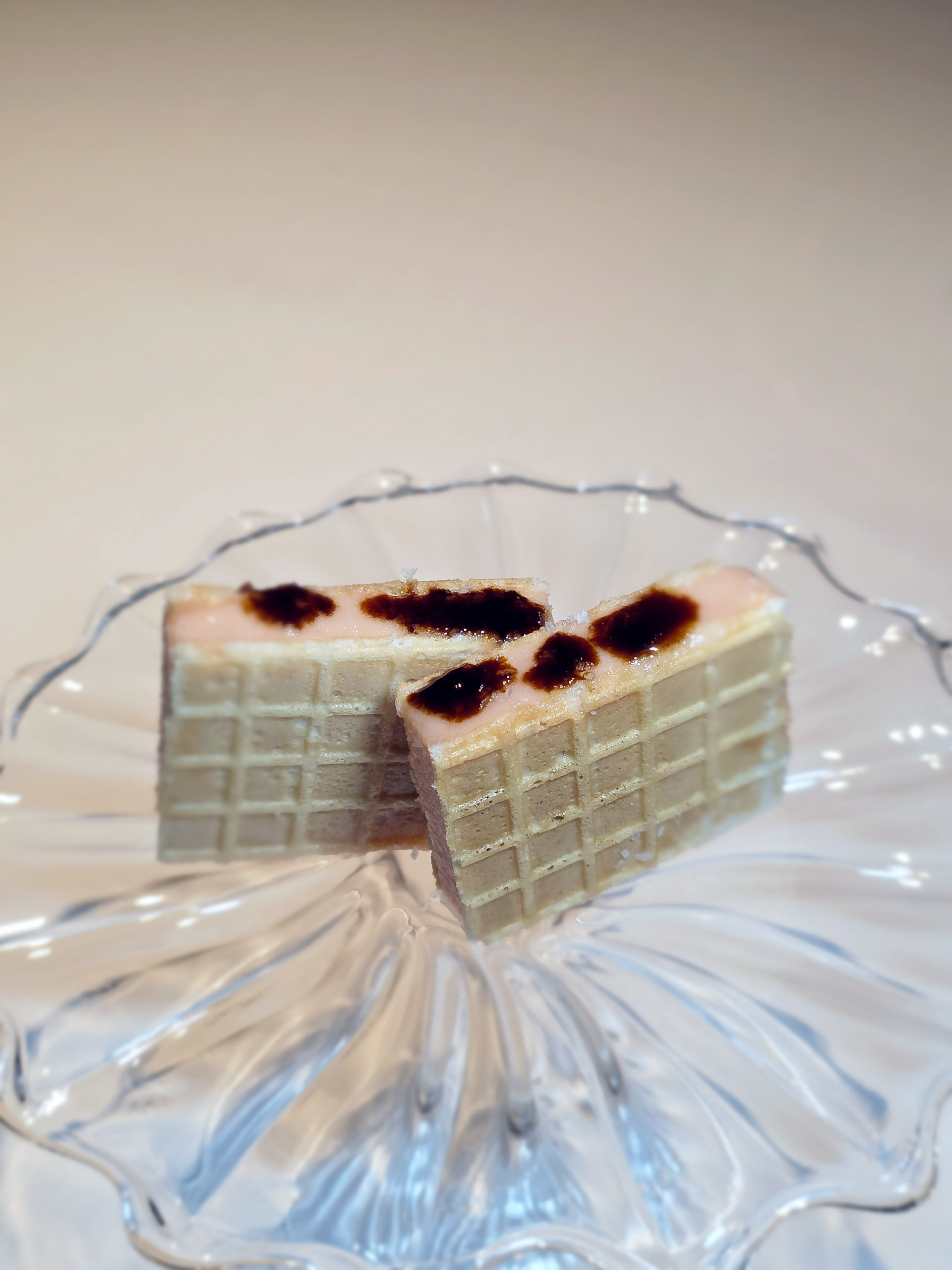
After such an elaborate savory progression, we moved on to desserts. First came “Childhood Memory,” presented as an ice-cream sandwich. Guava sorbet brought freshness to the entire dessert, while drops of balsamic vinegar added a gently salty note that balanced the sweetness. And here came the greatest surprise — and the greatest joy of that memory: the soft (not crisp at all!) wafer acted like a time machine. It transported us straight back to childhood, to the moment of peeling open a paper wrapper and feeling that familiar, delicate elasticity of the wafer between fingers and teeth. It was a deeply conscious and tender recreation of emotions stored in memory — not literal, but filtered through mature technique and refined proportion.
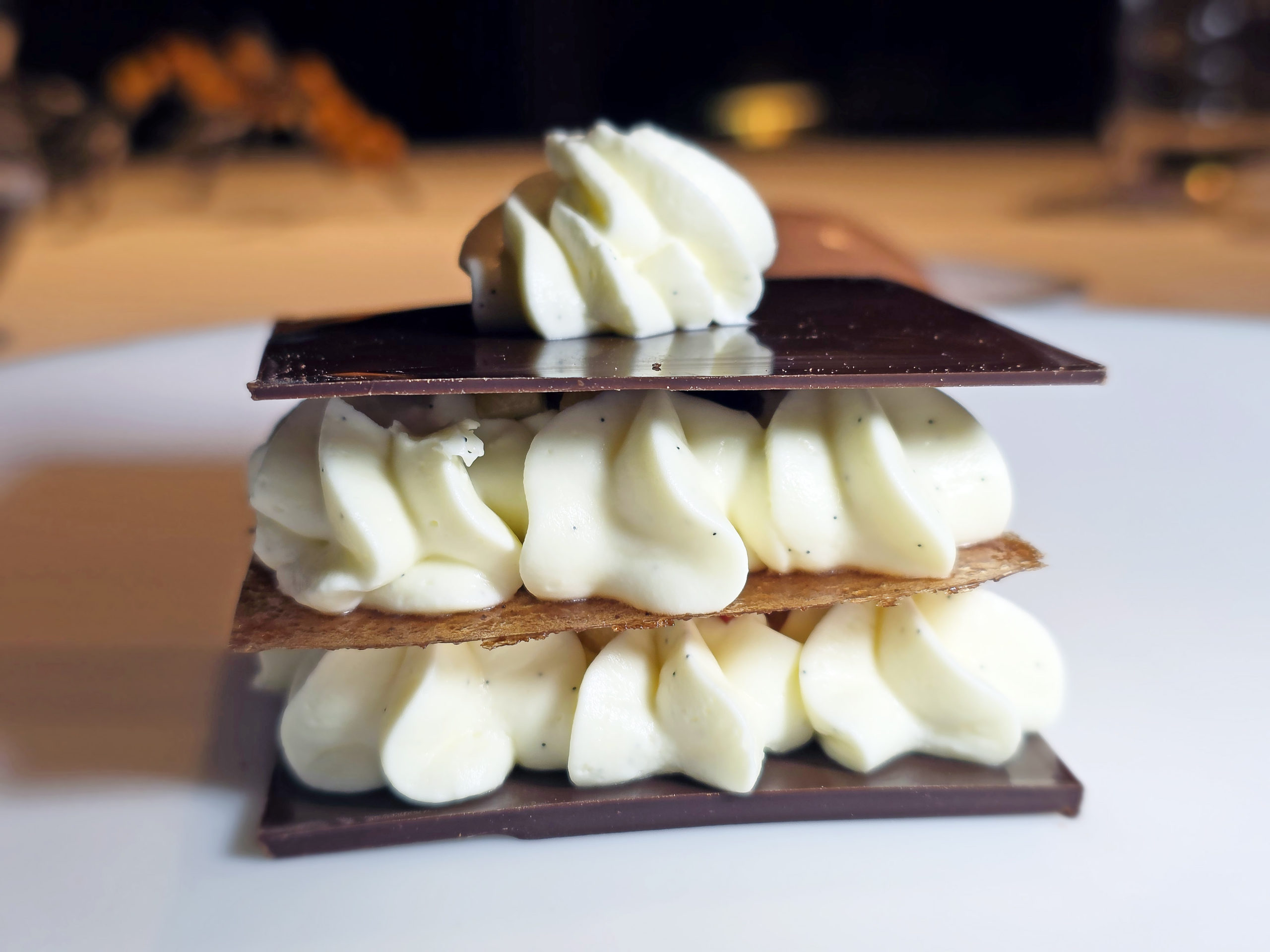
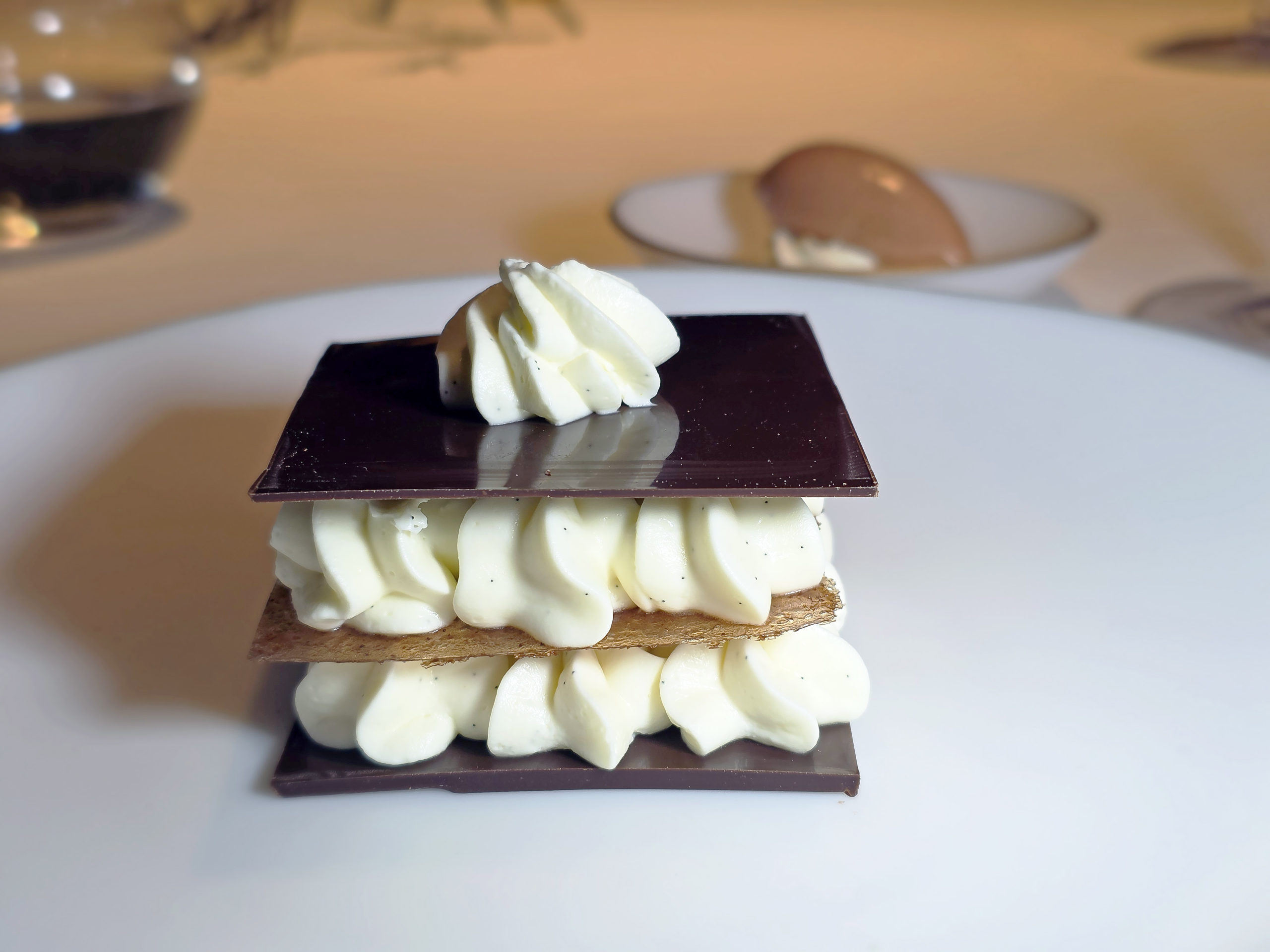
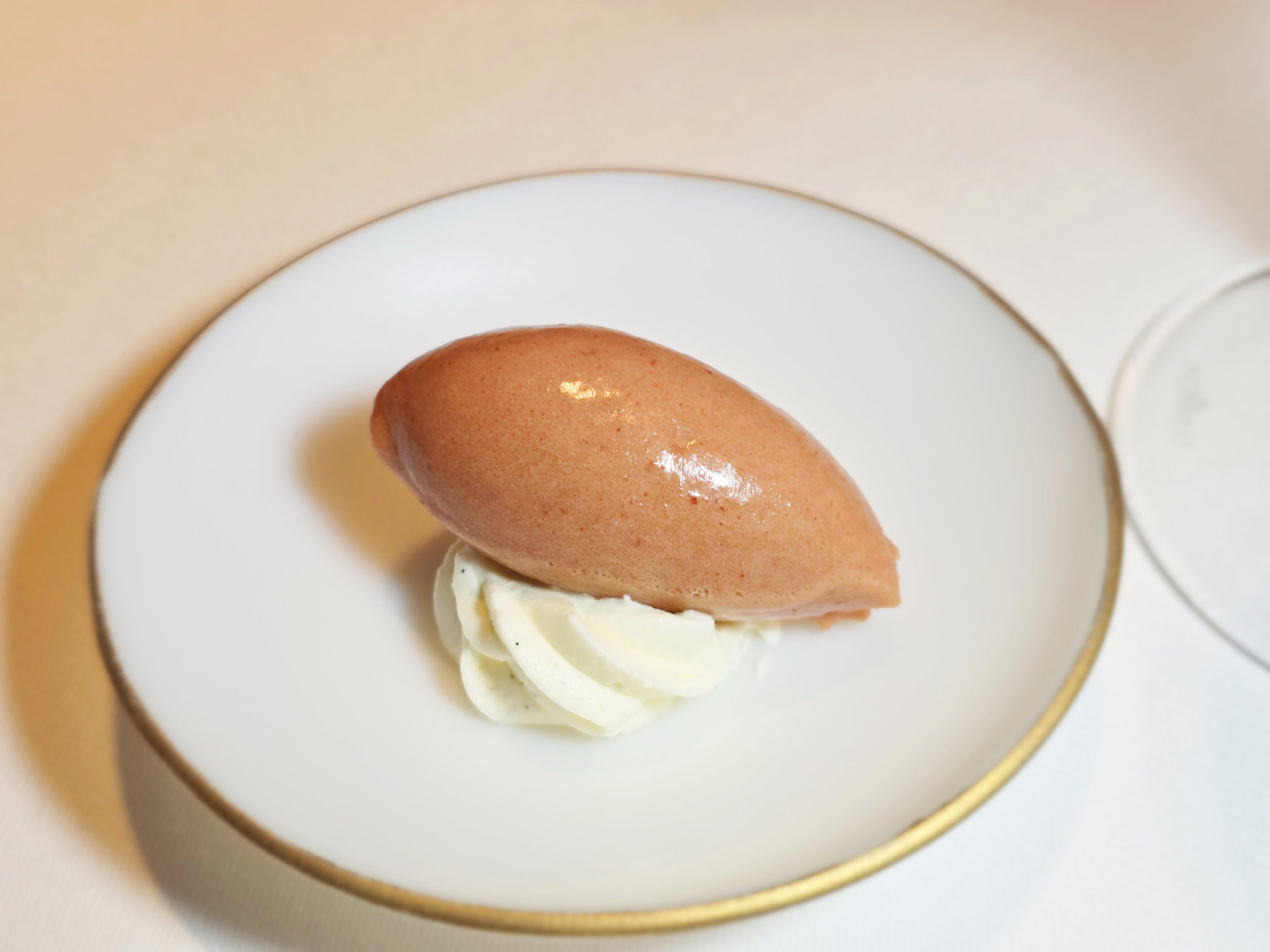
The main dessert reinterpreted the Polish classic W-Z cake — a traditional cocoa sponge layered with cream and coated in chocolate glaze. This dish carries another story connected to Chef Antonio’s fiancée (which we will not reveal, so you can discover it yourselves). Here, two layers of exceptionally crisp, glossy dark chocolate shattered like the chocolate sheets once found in a Viennetta ice-cream dessert. A crunchy element and pieces of plum were layered with an utterly sublime vanilla cream. Plum sorbet added freshness. What more can we say — this dessert stole our hearts.
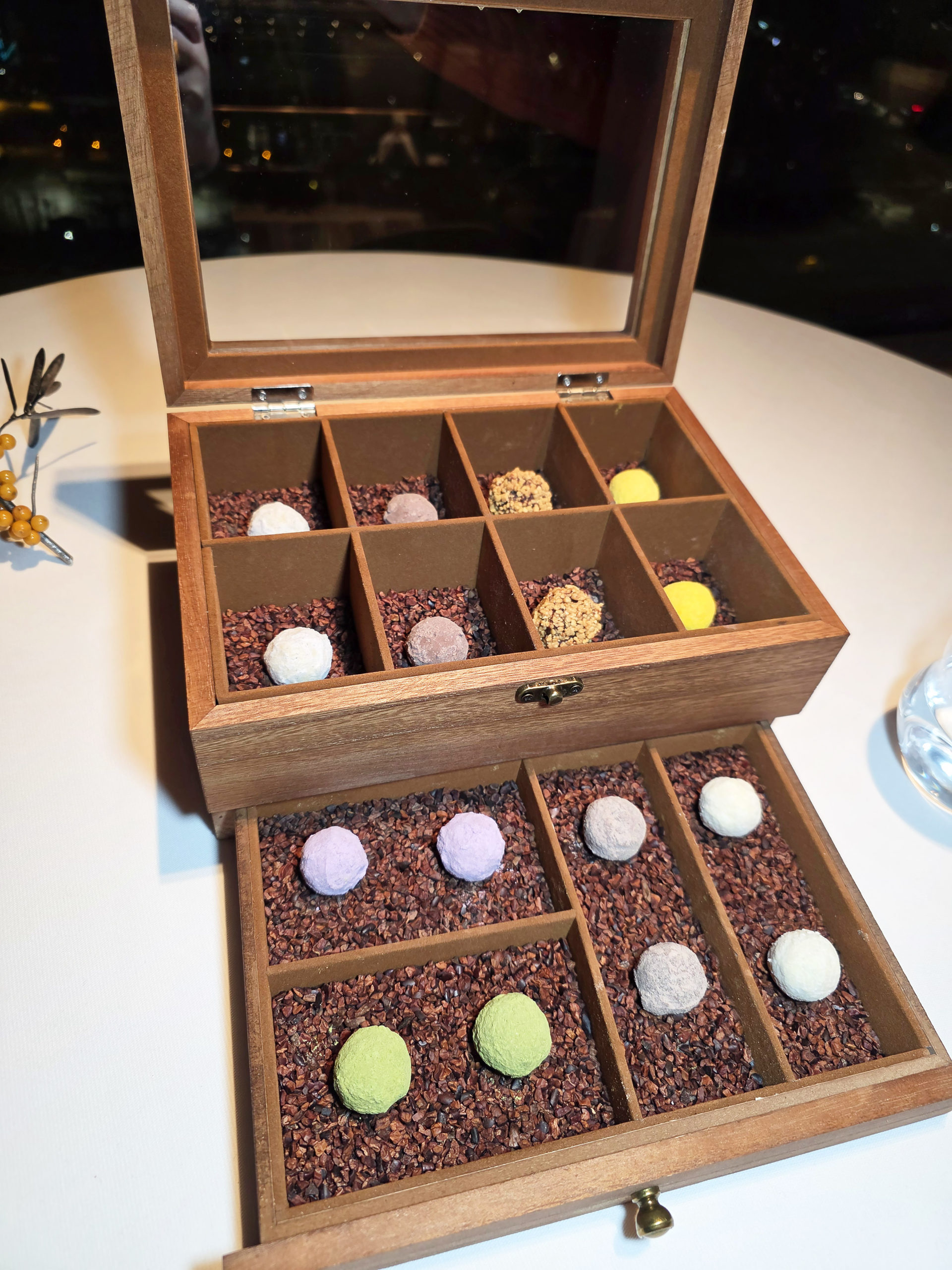
The evening concluded with an impressive casket of chocolate truffles. Among the flavors were vanilla, limoncello, lavender, banana miso, hazelnut, matcha, coffee, and coconut. By this stage, we were already fully satisfied, so we delighted in tasting two of each, leaving the rest not out of lack of desire, but out of reason. It is the clearest proof that the “Utopia” tasting menu is not only conceptually elaborate, but also delivered with such intensity that it leaves the guest in a state of complete, satisfying fullness.
“Utopia” clearly demonstrates that this is a fully authorial project by Chef Antonio. It is not a continuation of a previous narrative, but a consistently constructed new direction. What remains especially vivid in our memory is the pumpkin risotto, captivating in its intensity and depth of flavor, as well as the monkfish with jamón and romesco — one of the most original and multilayered dishes of the evening. The amuse-bouche sequence was another strong point, particularly “The Eye,” which set the tone for the entire dinner, along with the perfectly prepared abalone served with its expressive sauce.
This is an experience for those who understand that in fine dining, true power lies in detail. Everything here revolves around balance and profound respect for the ingredient — there is umami, there is complexity, there are moments of brilliance, yet the whole remains mature and harmonious, built in layers without shouting and without shortcuts. This is not a cuisine driven by heavy, dominant meat notes or a cacophony of aromas; nor does it seek effect through artificial amplification such as truffle oil. Those looking for that style of culinary expression may simply be searching for a different aesthetic. “Utopia” chooses subtlety, consistency, and flavors that unfold gradually, rewarding curiosity with every bite.
It is also worth noting that authenticity radiates from “Utopia.” One feels that this menu is personal — perhaps a declaration of love, admiration, gratitude. Or perhaps all of these at once. It is an experience that does not end with the final dish. It lingers beneath the eyelids like an image one wishes to return to.
This is one of those menus you want to taste again and again. More and more. Not out of greed, but out of curiosity. Out of the desire to look once more. Because “Utopia” does not only taste. It looks. And allows itself to be seen. We sincerely recommend “Utopia” as an experience truly worth living.