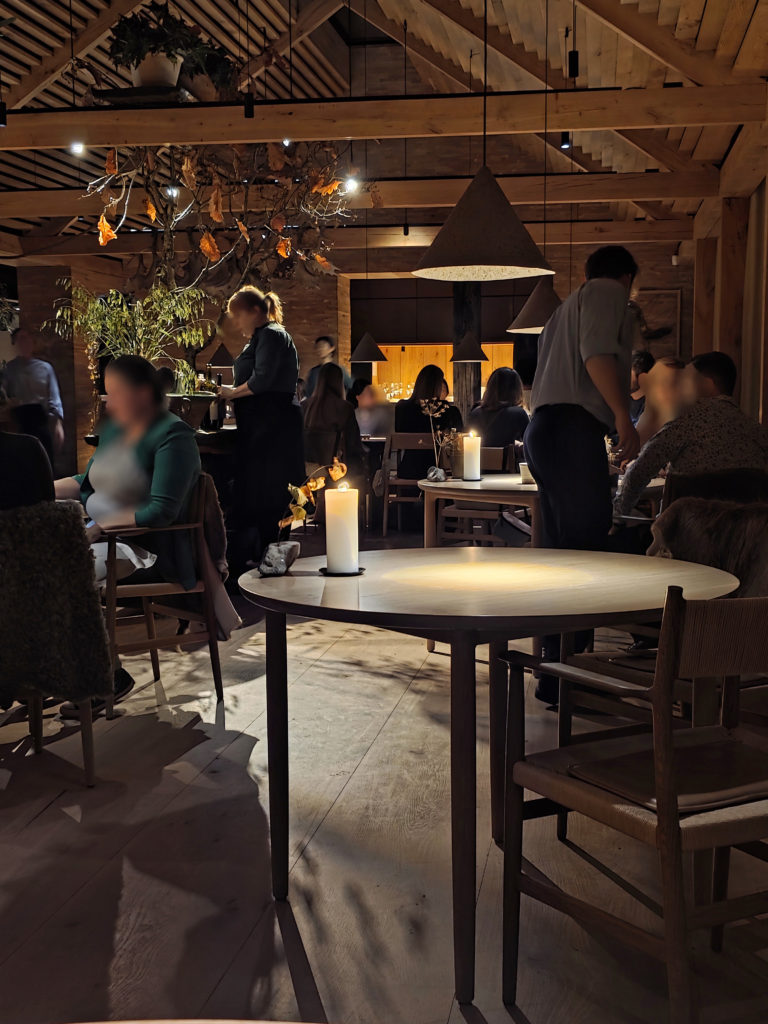
We waited a long time for a table at Noma. Firstly, because multiple attempts to secure a reservation ended in failure. Tables disappeared within seconds, even when we were sitting at the computer counting down the time until reservations opened. And so it went for almost three years… All the greater was our joy when, finally, in November 2025, we managed to cross the threshold of the Copenhagen restaurant that for years has defined the direction of contemporary Nordic cuisine.
Noma is located in the Copenhagen district of Christianshavn, situated along canals and the waterfront, with a characteristic mixture of former port buildings and modern architecture. It is a quieter part of the city, away from the strict city centre, but still easily accessible and full of industrial spaces transformed into creative venues. The restaurant is located on Refshalevej, in an area that today is known for culinary concepts, art and spaces connected with modern craftsmanship.
Noma has three Michelin stars and is run by René Redzepi, who since its opening in 2003 has been setting the direction of contemporary Nordic cuisine. Its name was created from the combination of the Danish words “nordisk” (Nordic) and “mad” (food), which perfectly reflects its philosophy based on local products, fermentation and seasonality. The restaurant has won numerous awards, including the title of the world’s best restaurant three times in the Restaurant Magazine ranking, becoming a global symbol of culinary innovation. It was here that the idea of New Nordic Cuisine was born, inspiring restaurateurs all over the world and permanently changing the perception of Scandinavian gastronomy. Its influence, however, goes far beyond awards. Noma has become a cult place that defined a new way of thinking about food and the restaurant experience.
Currently the restaurant operates as Noma 2.0. The new iteration opened in 2018 after the closure of the original location, and the name “2.0” emphasises the complete transformation of the concept, including not only a change of location but also of working methods, the menu and the approach to seasonality. The new complex was designed as a group of several connected buildings resembling a small “culinary village”, with a central kitchen, a greenhouse, a fermentation laboratory and separate spaces dedicated to different stages of creating dishes. Thanks to this, Noma 2.0 functions not only as a restaurant but as an integrated creative ecosystem, allowing the team to work with nature in an even more direct and flexible way.
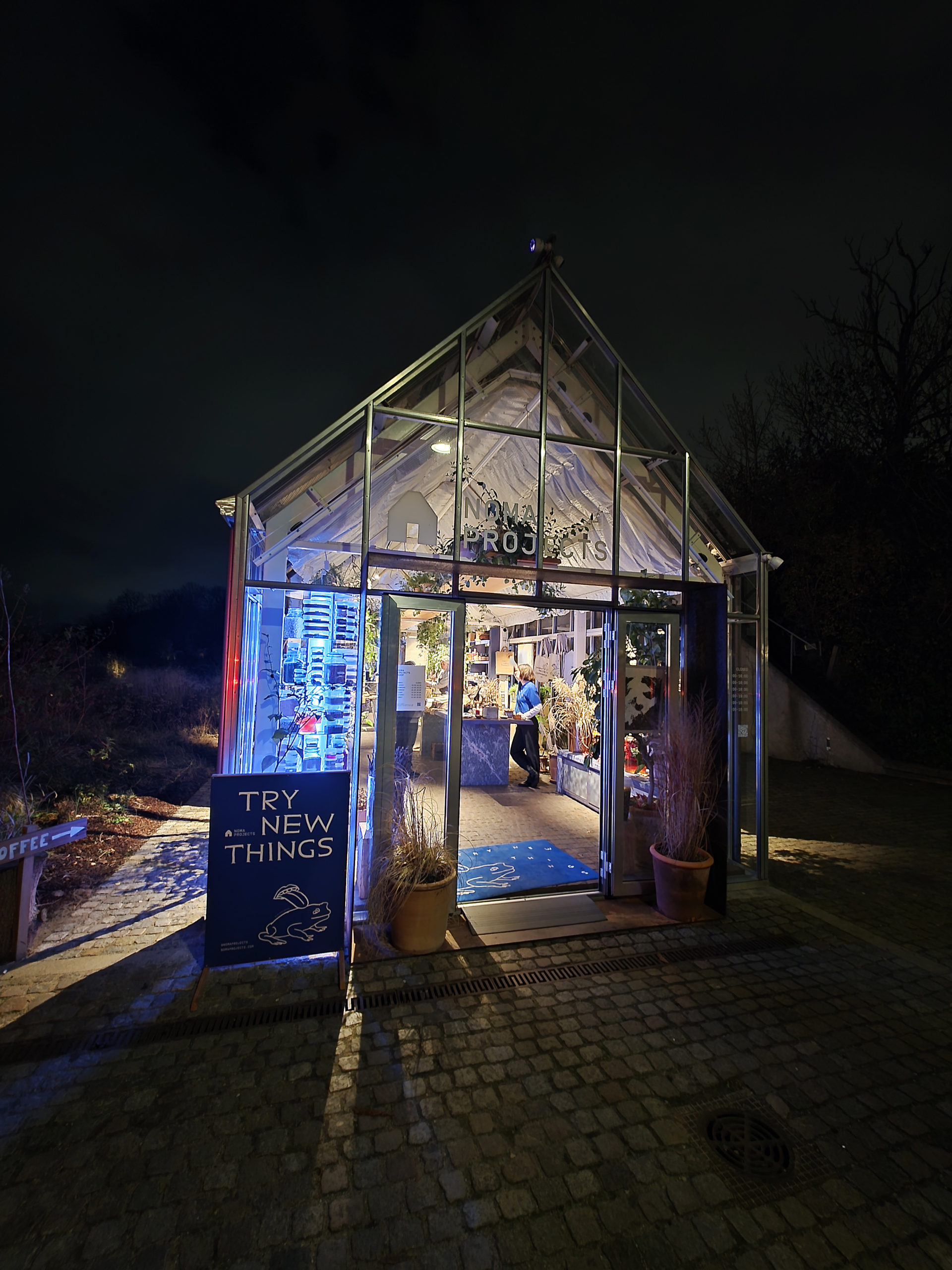
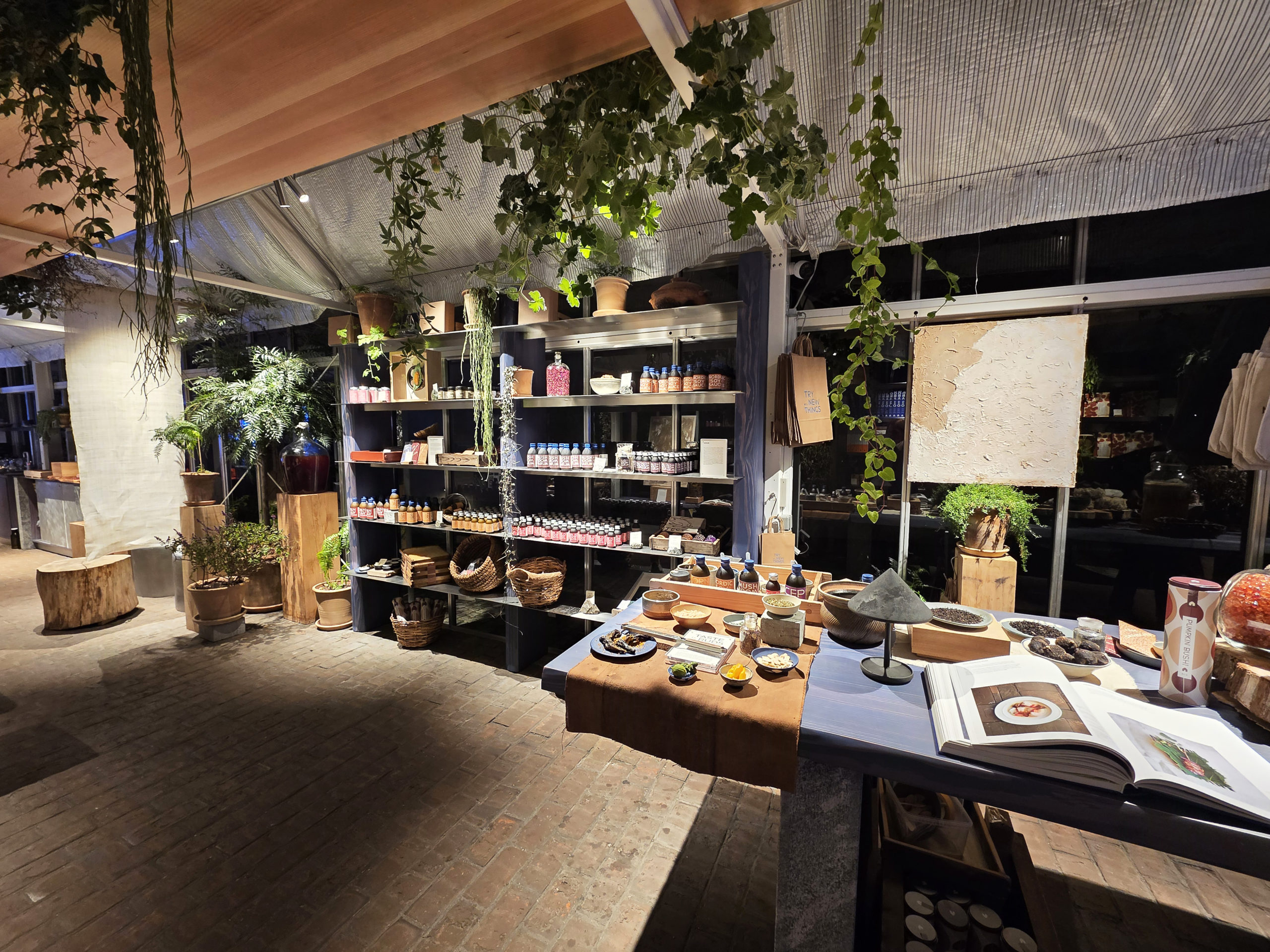
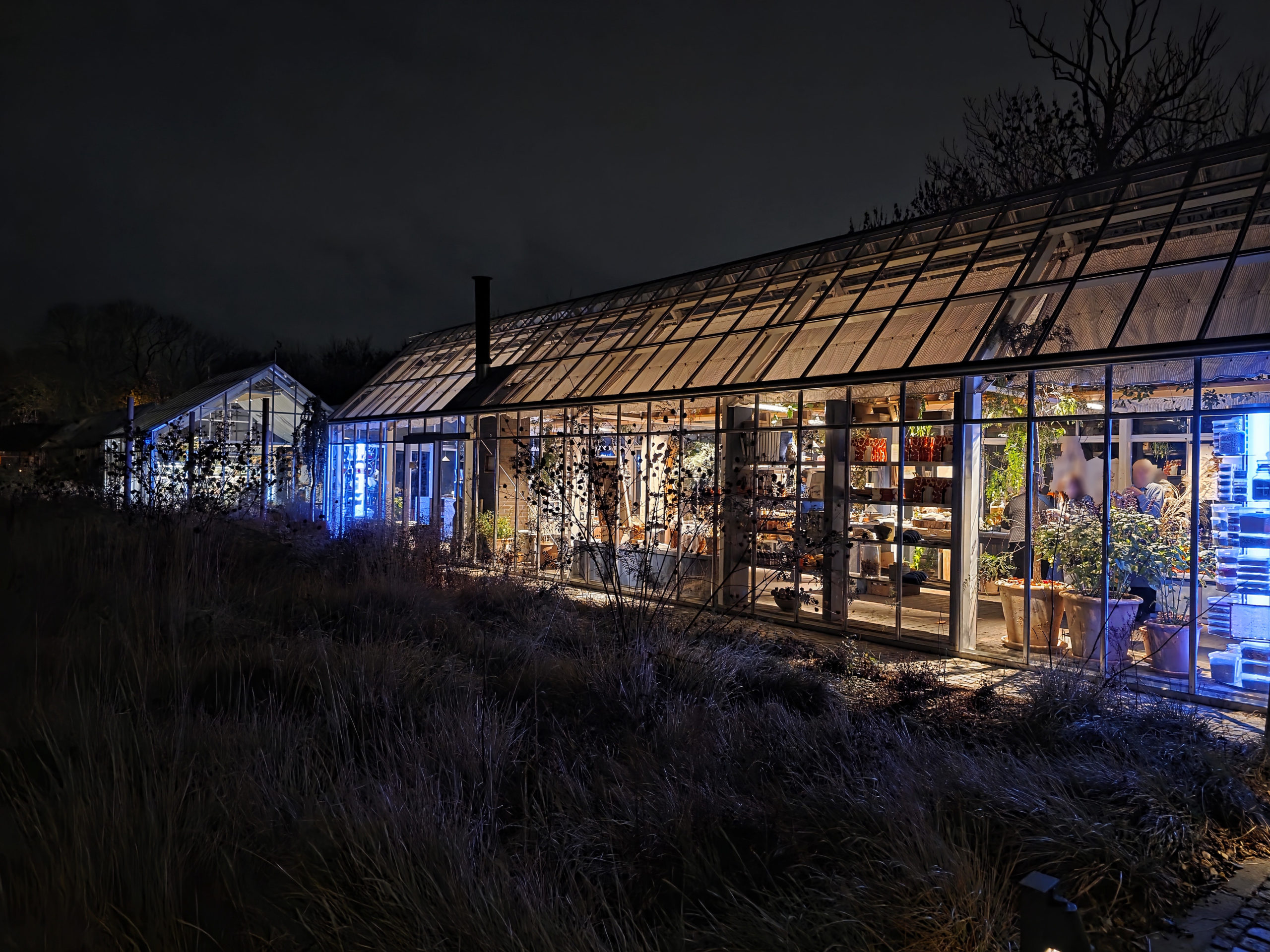
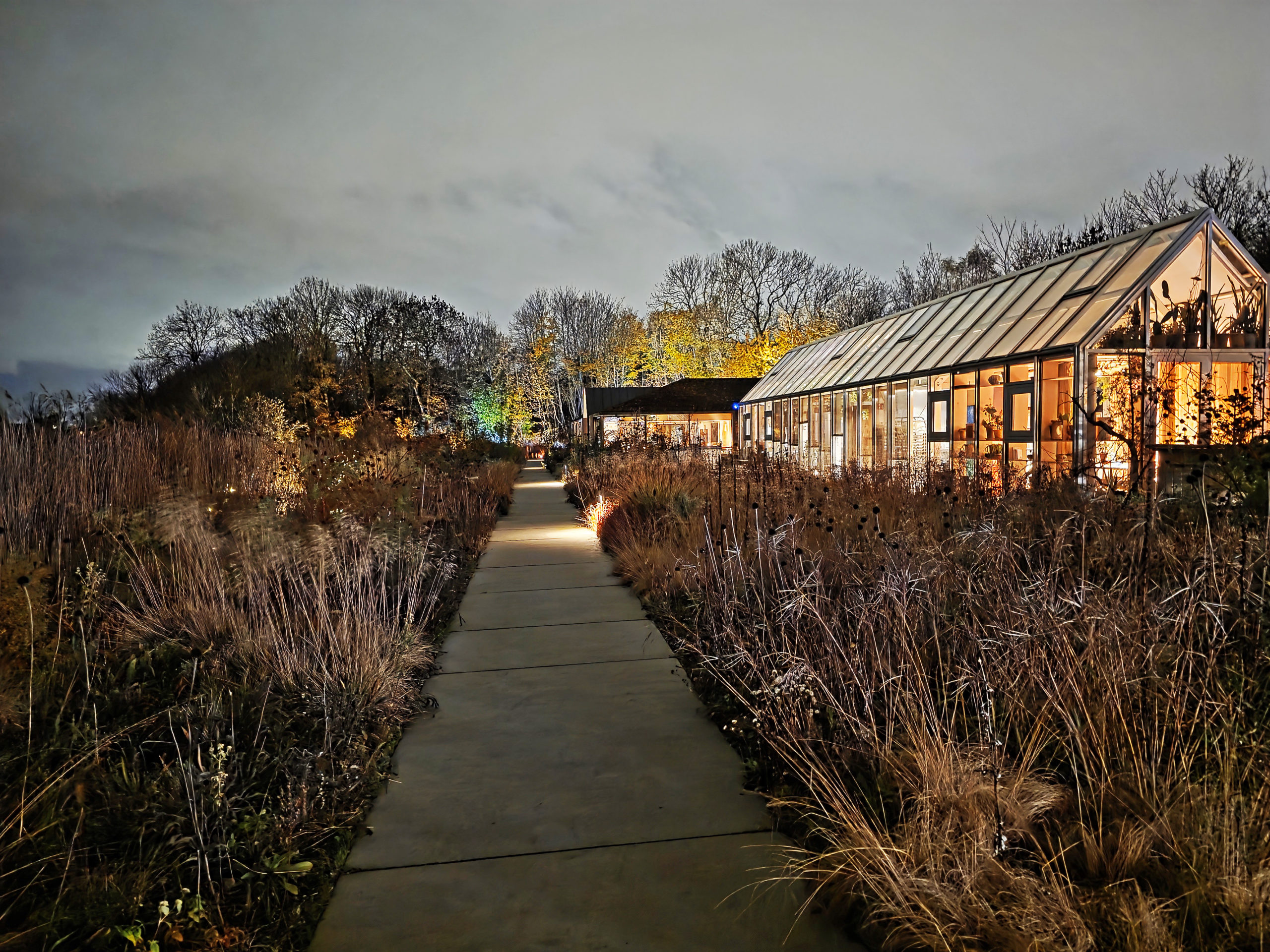
It is worth noting that before entering the area where the restaurant is located, you pass the Noma Projects shop, which is situated in a greenhouse right next to the restaurant and allows visitors to take a part of the Noma experience with them without the need to have a reservation. You can buy products created by the restaurant’s team there, such as fermented sauces and oils, garums, vinegars made from wild plants, seasonal pastes, as well as coffee from the Noma Kaffe project and various publications and accessories related to the philosophy of the place. The shop space is kept in a raw Nordic aesthetic, and visitors are often offered tastings of selected products, allowing them to immediately experience the character of Noma’s cuisine.
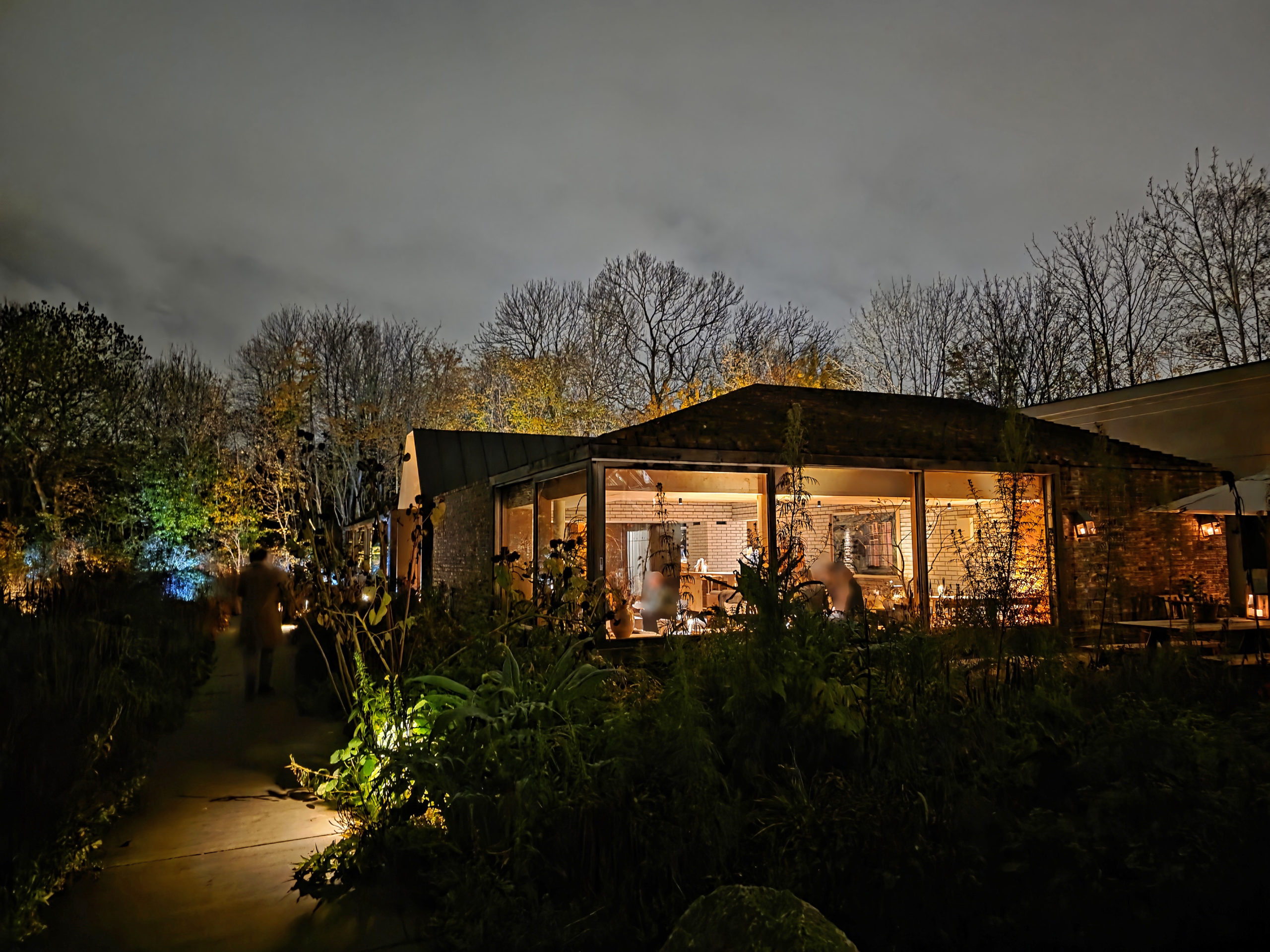
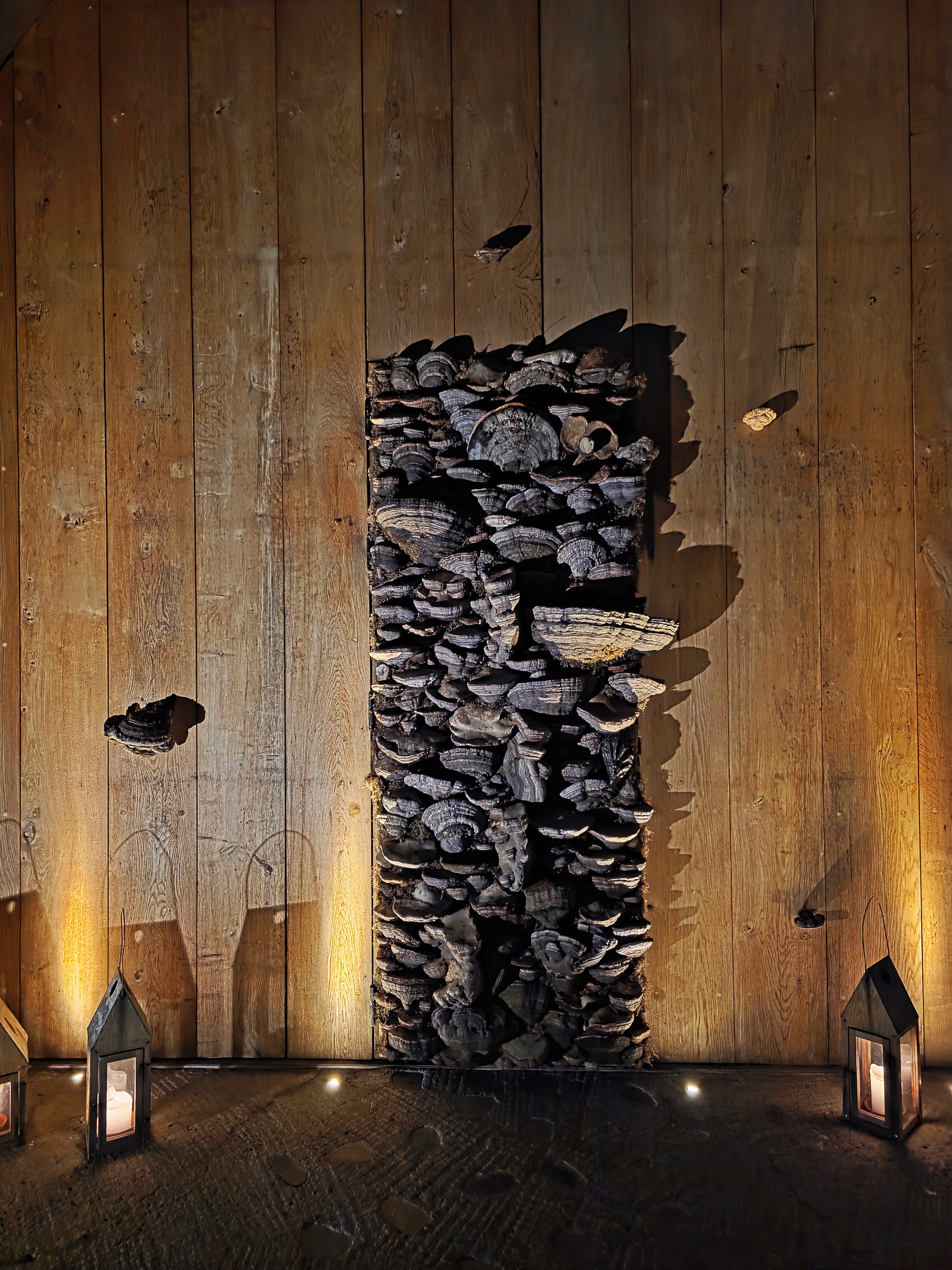
Only later do you walk through the garden (rather poorly lit) and reach unusual doors, which themselves are a surprise. Depending on the season, the doors are decorated with different elements. This time they were enormous mushrooms. These mushrooms, thanks to atmospheric lighting and the play of light and shadow, created an incredible impression, but at the same time made it quite difficult for us to find the door handle, so we stood there for a while wondering what to do next. At the threshold the staff greet you, and the path to the table leads through a corridor with an open kitchen where all the chefs greet the guests. It is the moment when it becomes clear that dinner will be something more than a standard visit to a restaurant.
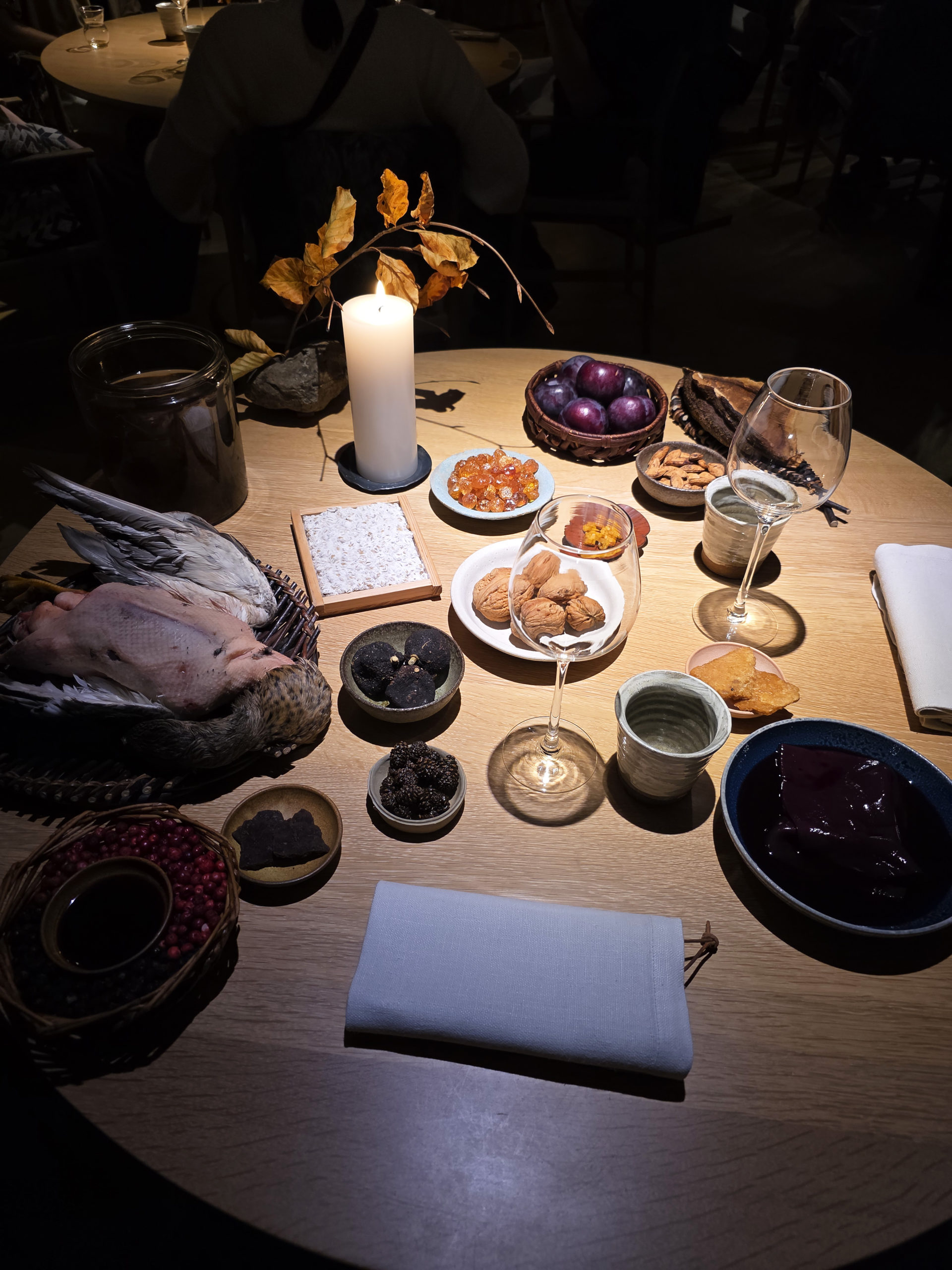
On the table an impressive display of products that would later appear in the menu was waiting for us. It looked like a preview of an extraordinary evening. With the meal it was possible to order a wine pairing or a non-alcoholic one, including juices, kombuchas and teas prepared on site. Wanting to try everything, we decided on one wine pairing and one non-alcoholic pairing. While the wine pairing seemed rather average to us, somewhat poorly matched and a little niche for the sake of being niche, the non-alcoholic pairing delighted us.
The dining room at Noma resembles a modern Nordic hut. The space is bright, raw and created from natural materials, above all wood. There are no white tablecloths or decorations that could distract from the food. The tables are massive, wooden, with smooth natural surfaces, and the chairs and benches are made in a Scandinavian craft style, with characteristic joinery without visible metal elements. The whole creates an impression of simplicity, but the kind that is precisely designed and refined in every detail. The interior has a muted colour palette, mainly beiges, greys, wood and soft light, which makes the room both elegant and very calm. Despite the minimalist décor the space is not cold. On the contrary, there is a pleasant, organic warmth resulting from the use of natural materials. You will not find elegant cups or glasses from Riedel or Zalto here. Here nature clearly rules in a rustic form.
The architecture of the restaurant resembles a small village. The individual buildings are connected with each other, and the central kitchen is located in the heart of the entire complex. Thanks to this, even while sitting at the table you can feel the closeness of the work of the kitchen, which is part of the experience. The view from the windows often opens onto vegetation or elements of the garden, which further strengthens the contact with nature, so important for the philosophy of this place. However, we did not have the opportunity to admire the view outside the window, because in November in Copenhagen darkness falls exceptionally quickly. Everything here is designed so that the food remains the centre of attention, and the dining room is only its background – calm, minimalist and at the same time cosy.
It is worth adding a few words about the atmosphere in the restaurant. There are relatively few tables for two, many of them are larger tables for several people, which means that the restaurant is exceptionally lively and at times very loud. An additional accent was the frequent shouts of the entire team saying “yes, Chef”, which added a special flavour to this unique evening.
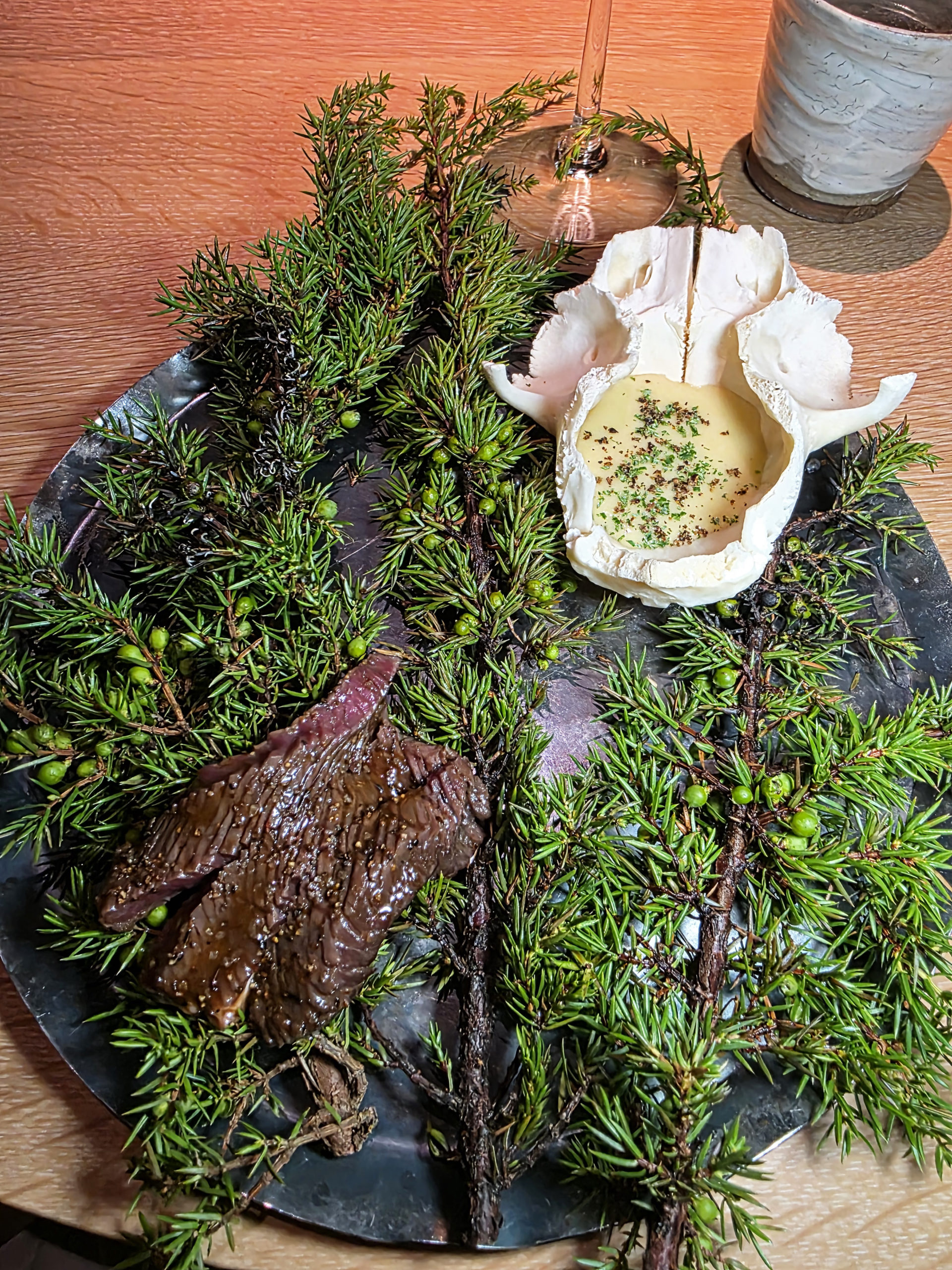
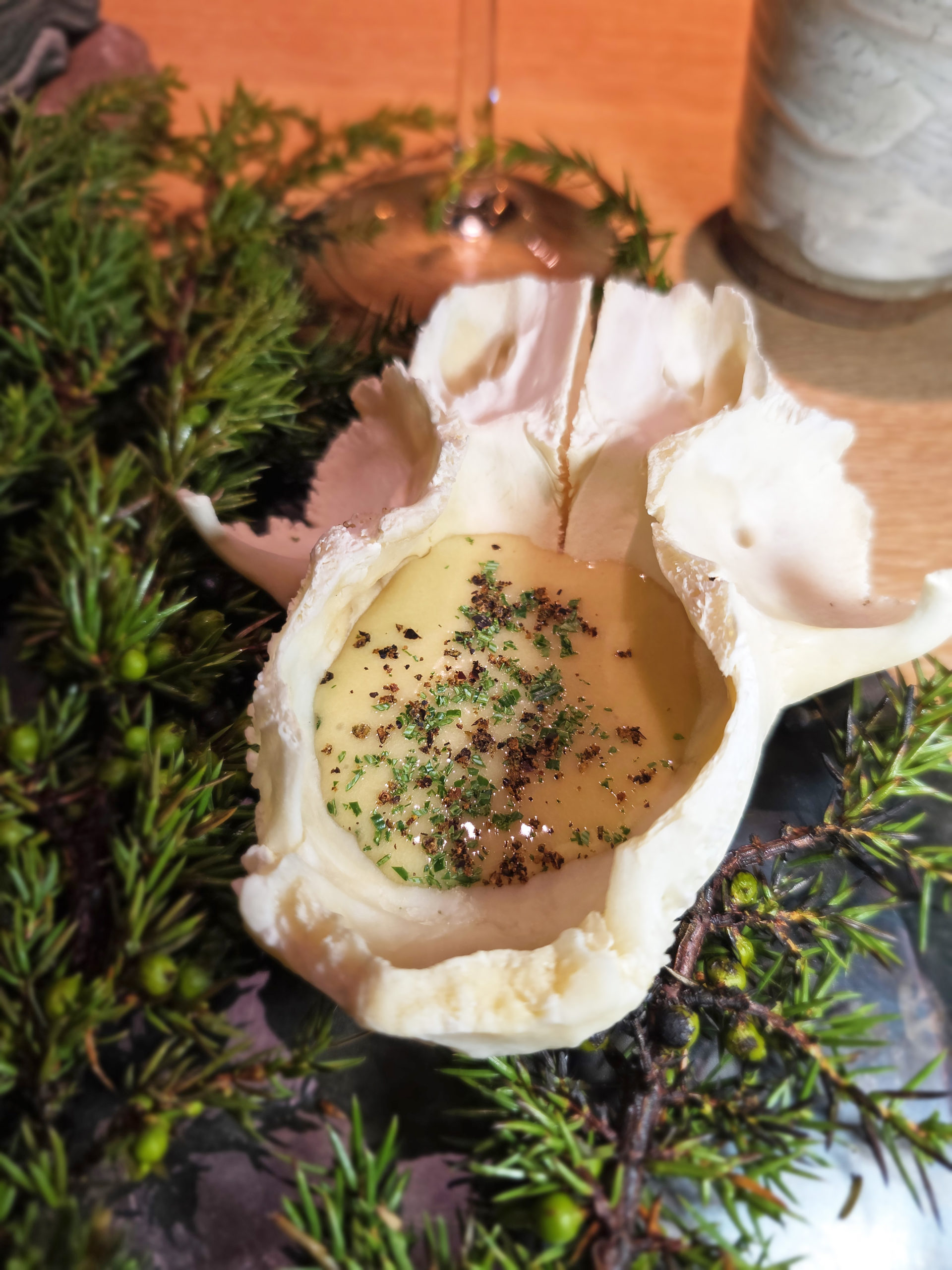
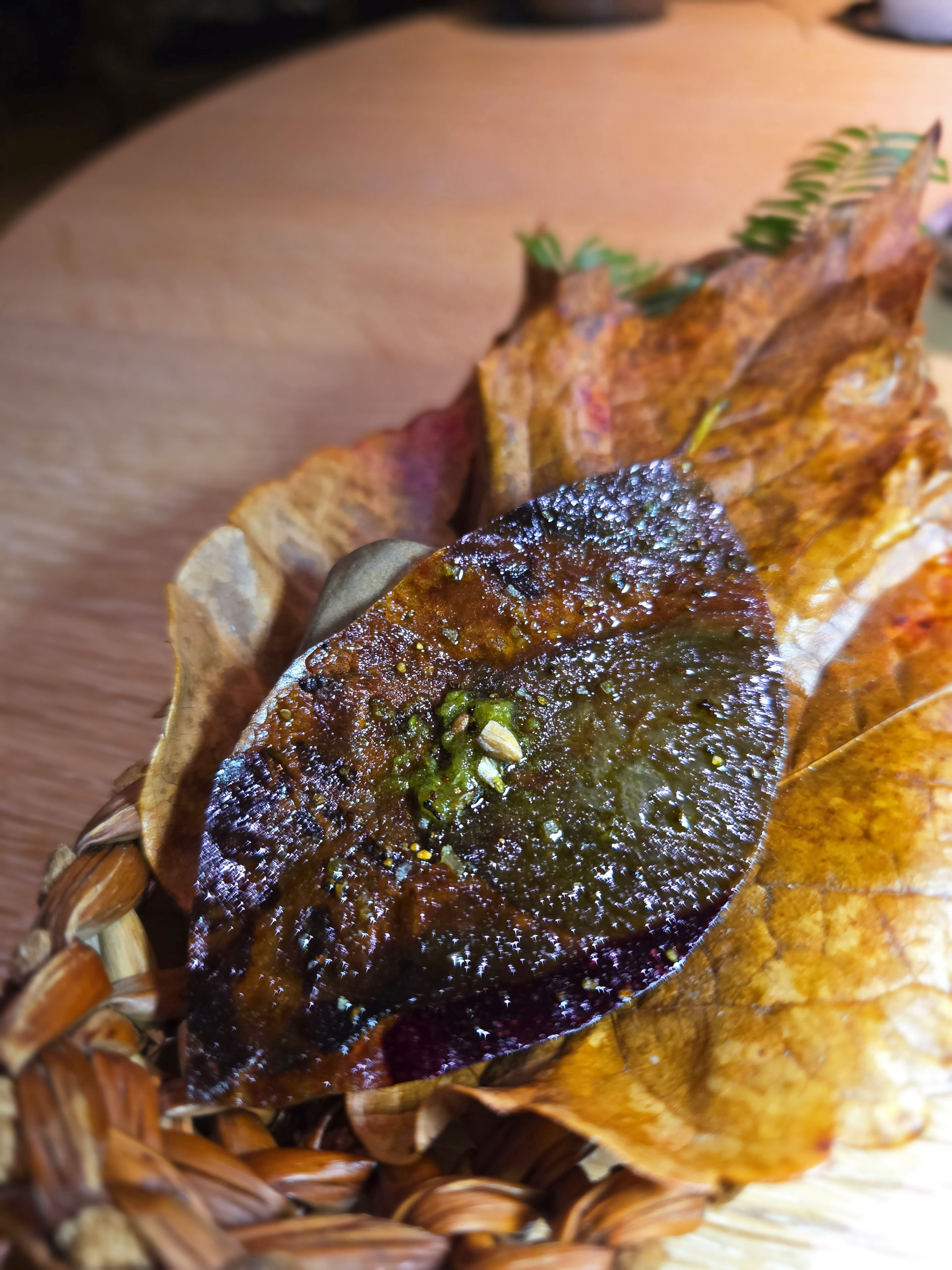
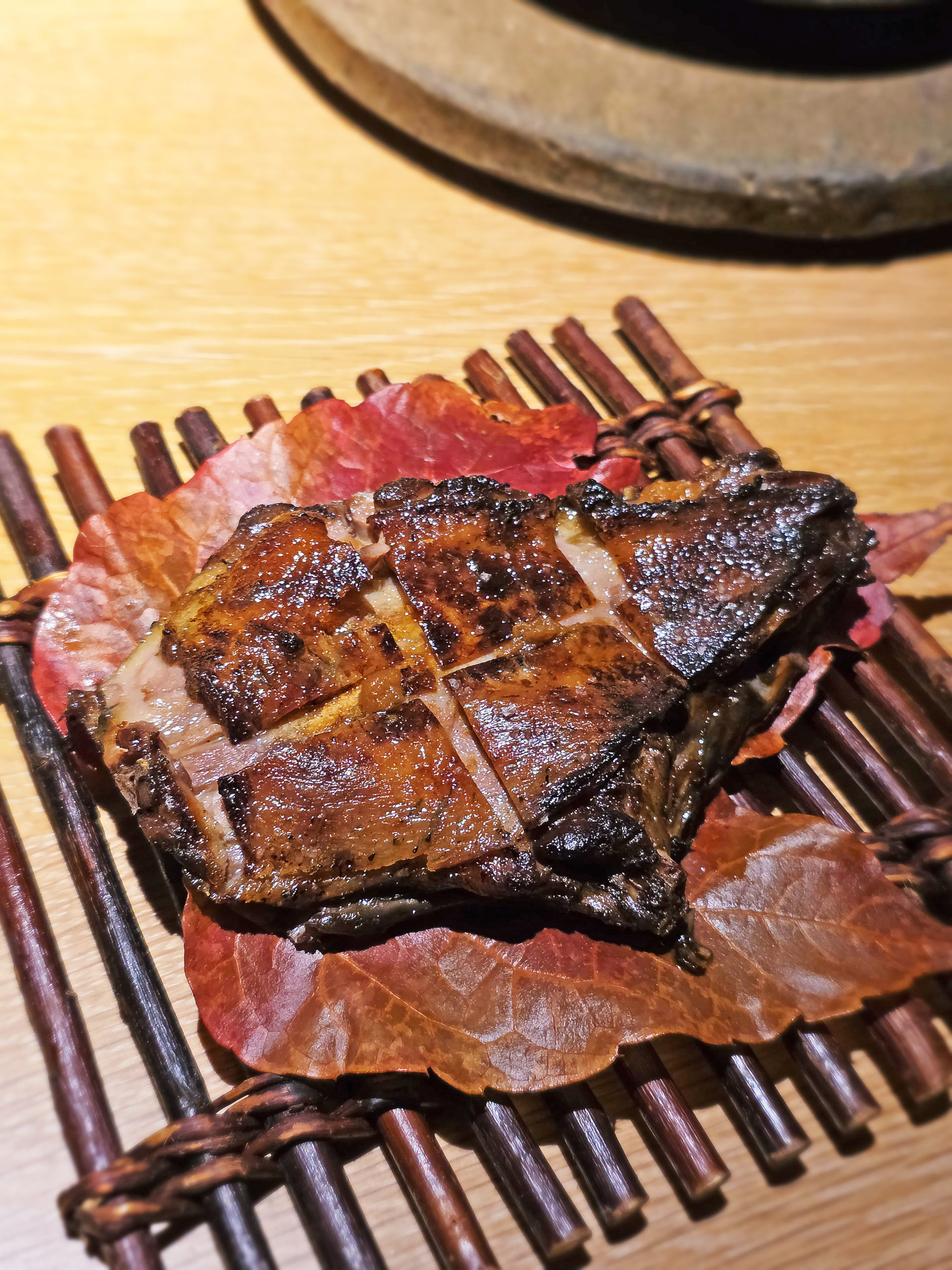
We begin the tasting. On the table appears grilled reindeer heart. A light smoky aroma, the touch of live fire with a bit of juniper berries. Alongside it a rose béarnaise, made with butter and egg yolks, with rose oil and house-made rose vinegar. The heart was sliced and intended for dipping in the sauce and eating with the hands. The pieces were very juicy, lightly touched by fire, with a noticeable smoky aroma. The sauce, in turn, was creamy, buttery, with a perceptible aroma of rose, softening the strong meaty, bloody flavour of the reindeer heart. After a moment we were brought an addition in the form of a fruit leather made from plums and white and red currants, which had to be peeled off a leaf before consumption. The flavour of this leather could be compared to healthy fruit gummies for children. If that leaf had not been there, the whole dish would not have lost much. Worth noting was an interesting pairing in the form of lightly sparkling jasmine tea, which nicely cut through the richness of the dish.
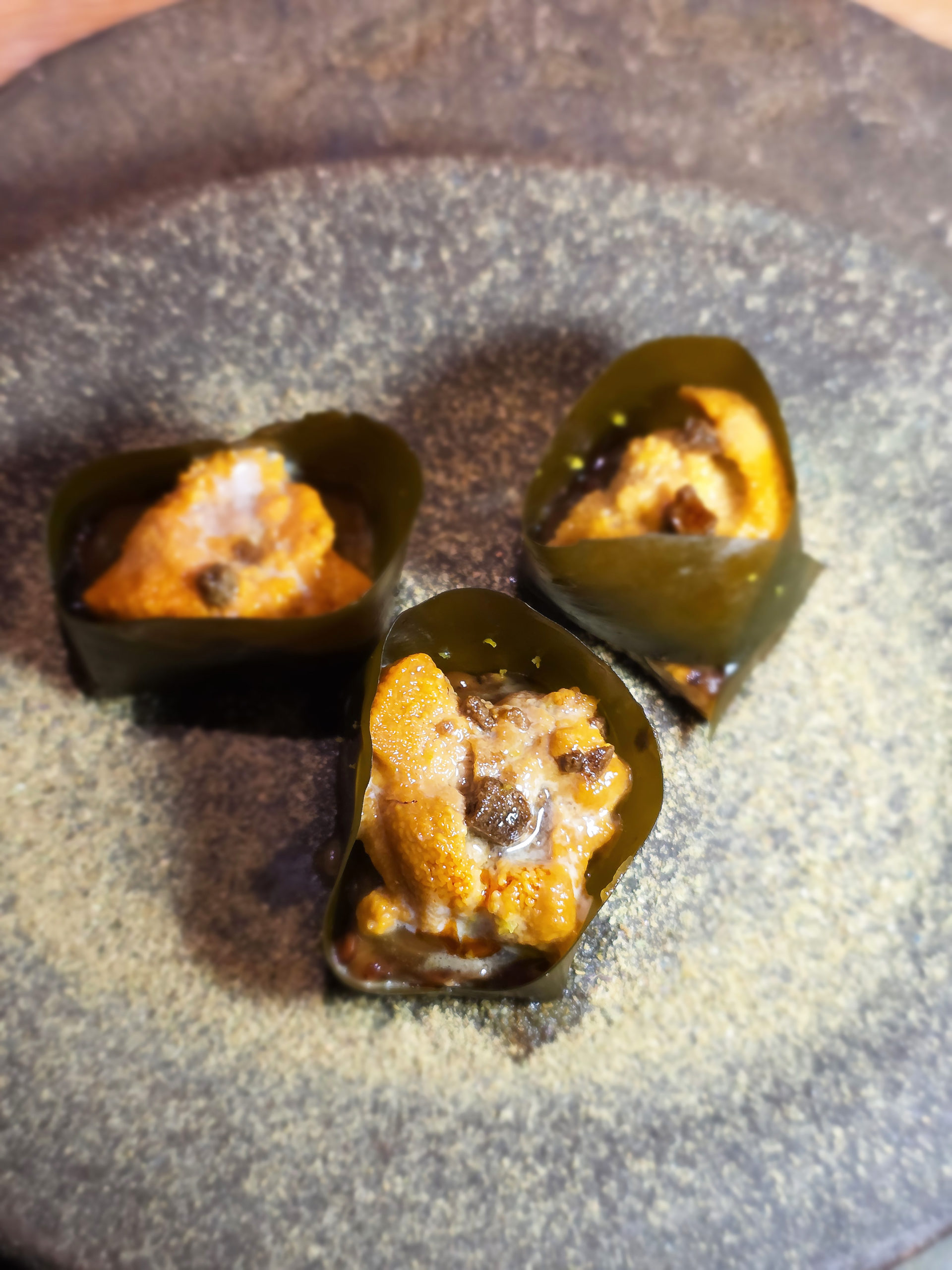
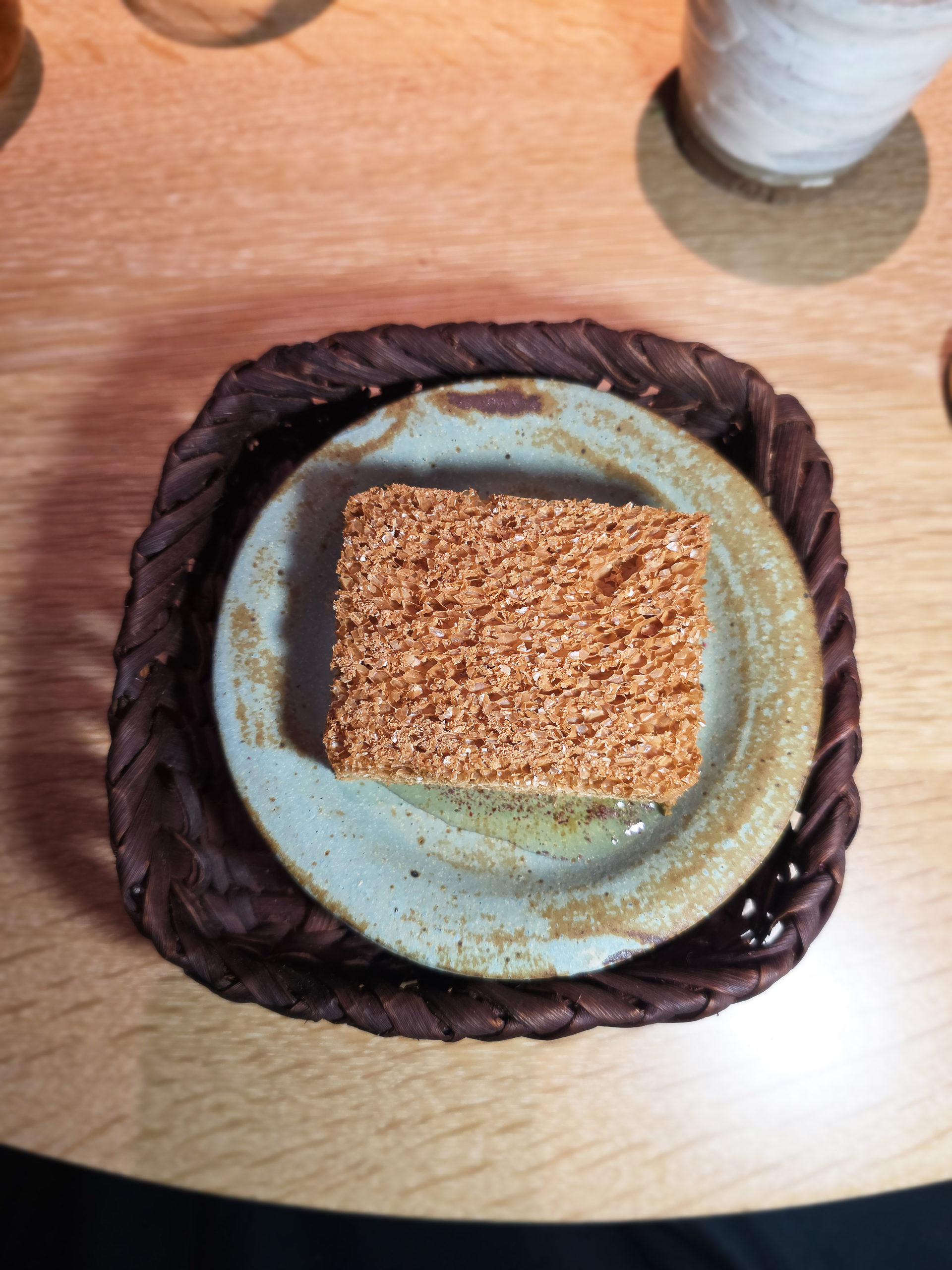
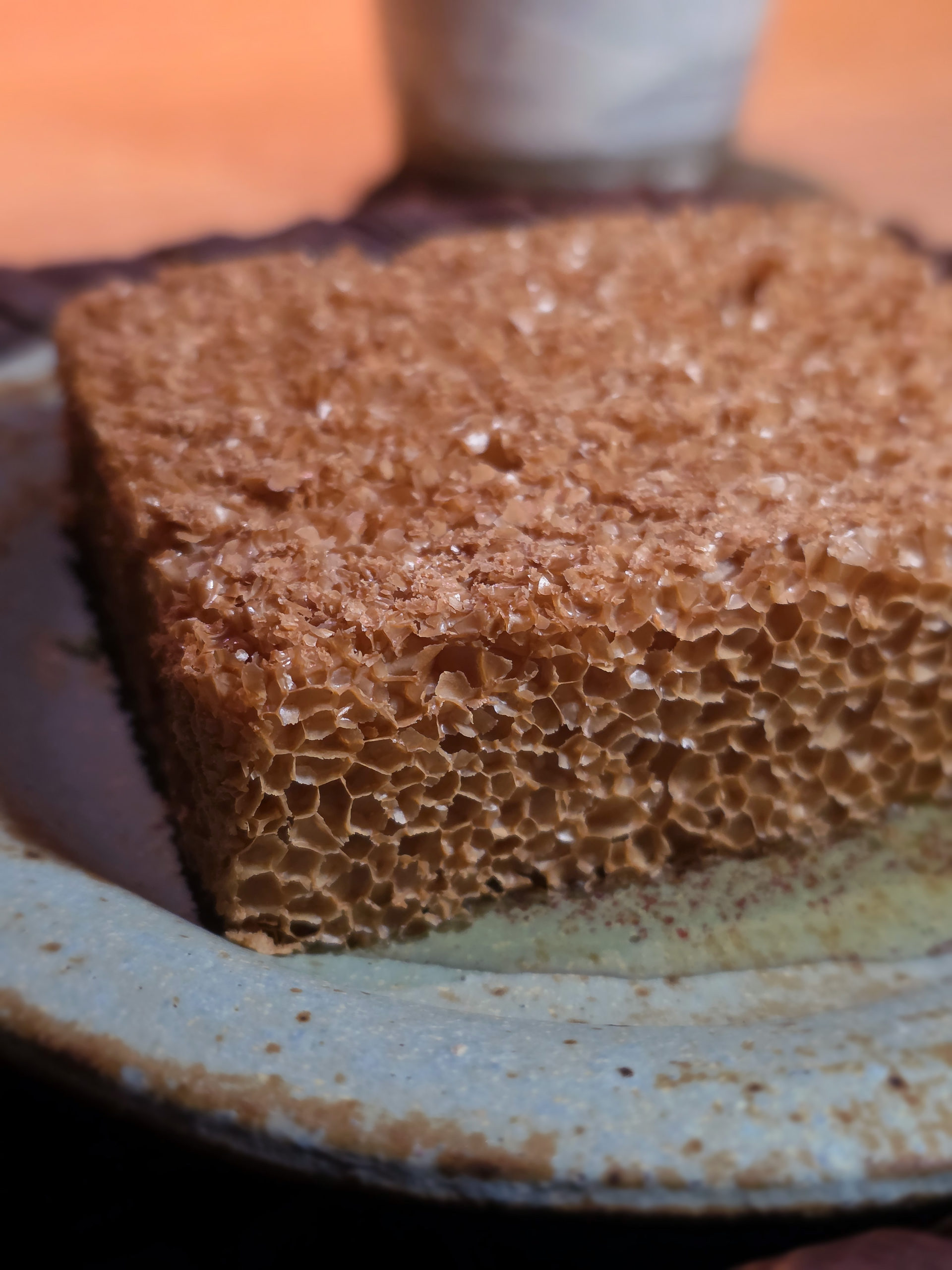
Before the next plate, a glass appeared with pumpkin juice with seaweed and sea buckthorn as a pairing for the next dish, which was sea urchins from Iceland. The sea urchins were placed on a cake made from barley fermented with koji, surrounded by kelp seaweed with seaweed salt and a spice blend based on mushrooms. At first the most noticeable were the creamy, strongly marine, umami sea urchins; the second flavour note was strongly perceptible fermentation, even more intense seaweed and saltiness. The whole tasted so intense that we began to wonder whether we liked it or not… whether we would eat more of it or rather stop at one piece. Such impressions accompanied us throughout the entire dinner. The dishes at Noma are exceptionally interesting; throughout the tasting one discovers completely new flavours, created and built from scratch by the Noma team. But these are also not flavours that will appeal to everyone. For us curiosity definitely won!
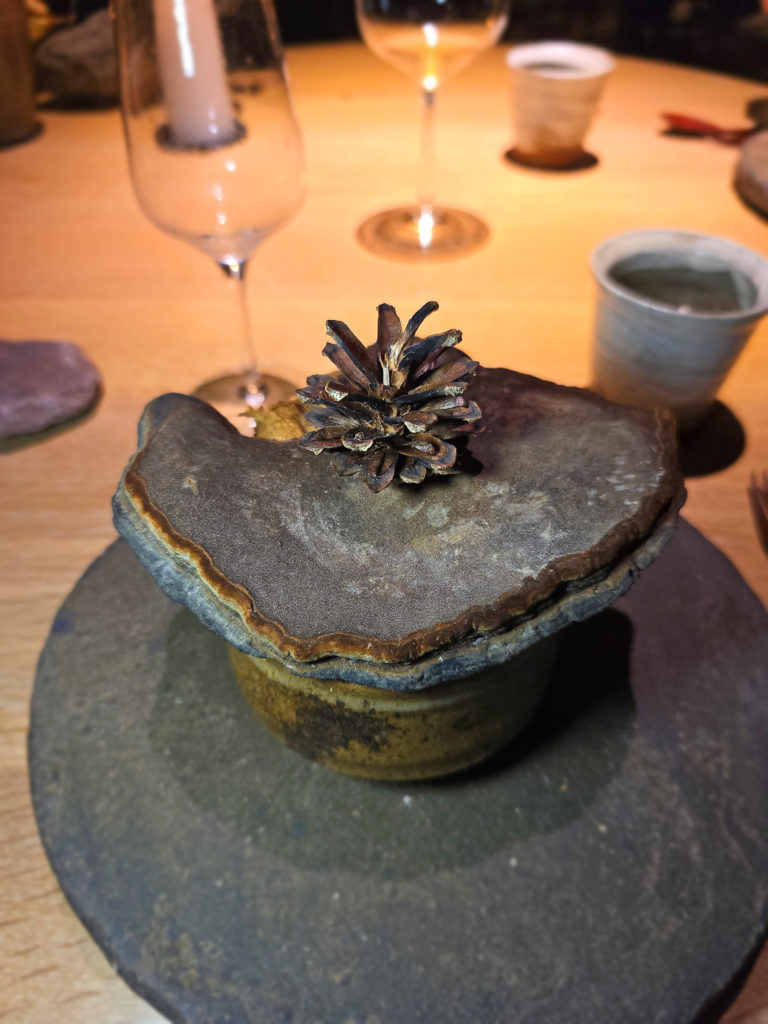
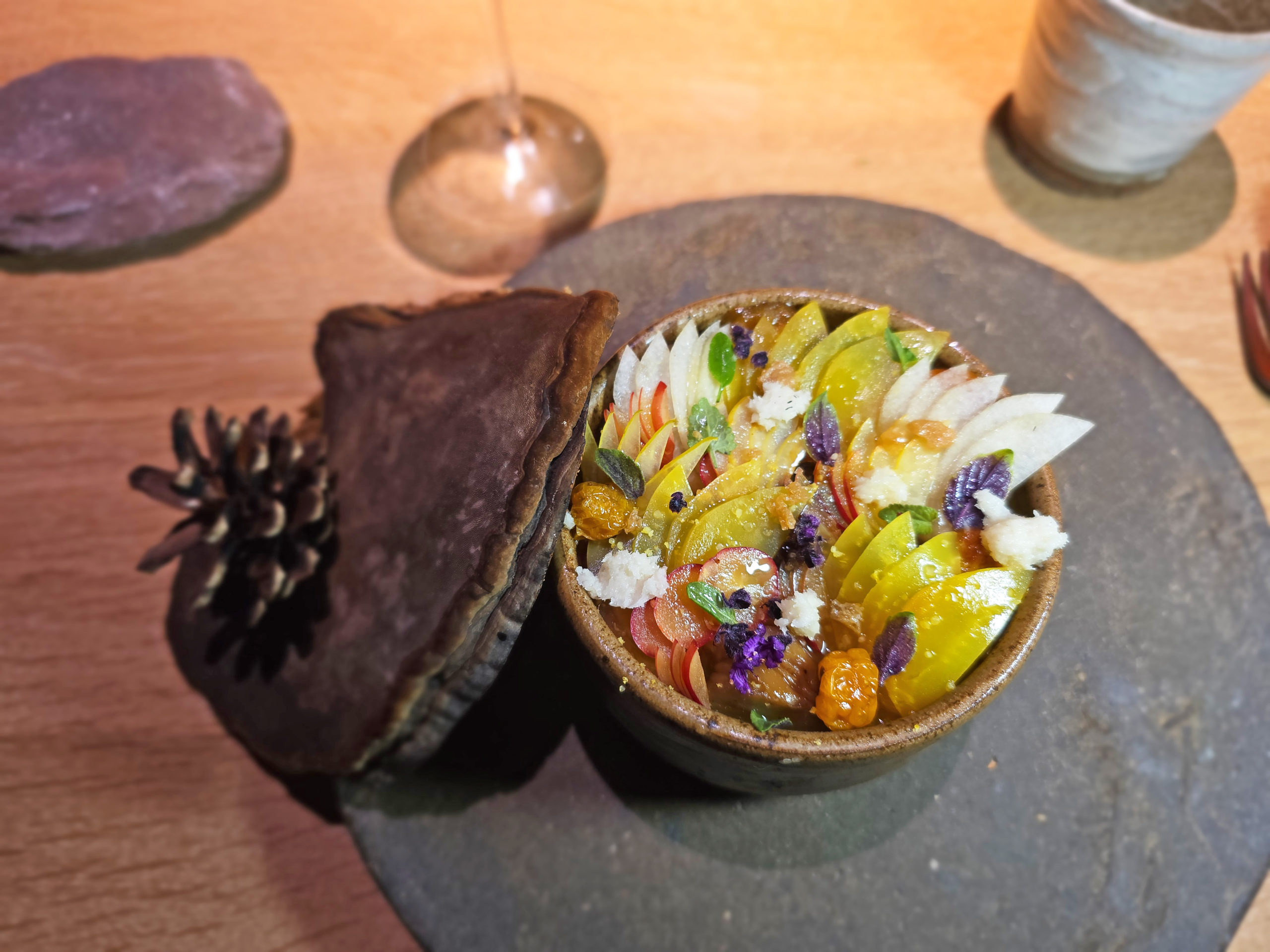
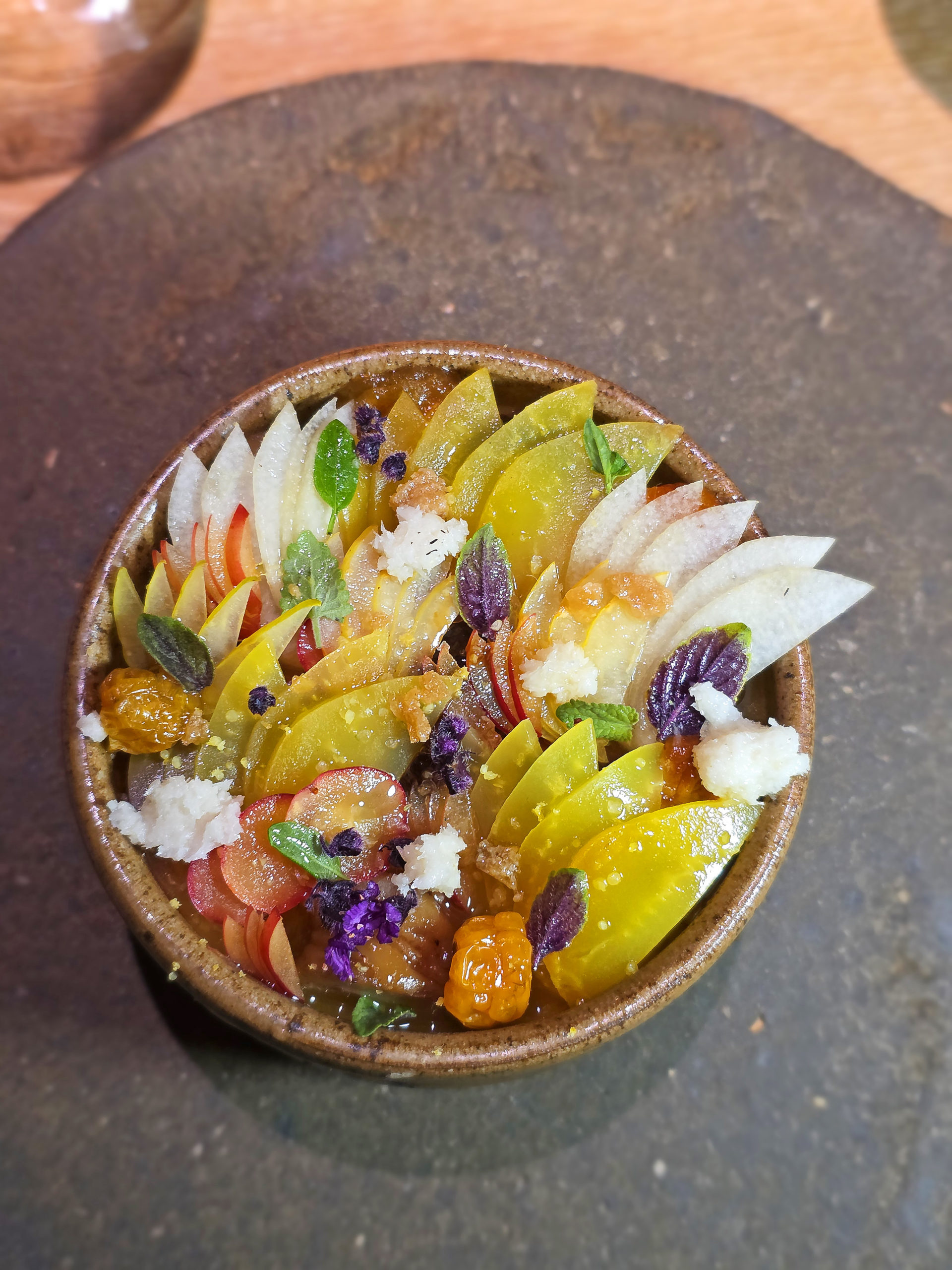
So we move on. A salad called forest ceviche appeared on the table. Such a salad is a permanent element of the programme and a very characteristic plate for Noma, which in every season receives a new interpretation. The forest ceviche was presented in one of the most impressive vessels of the evening. To see the dish, one had to remove the lid made from a mushroom, decorated with a pine cone. Inside there was a salad of fruits and vegetables with a mirabelle sauce and a bit of horseradish, with an intricate mosaic of precisely cut slices of apples, pears, crab apples and the addition of chestnuts. Visually spectacular and in flavour fresh, sour, crunchy, very autumnal, with a noticeable note of horseradish for additional freshness and sharpness, surprising, one of the biggest “wow” moments of the evening.
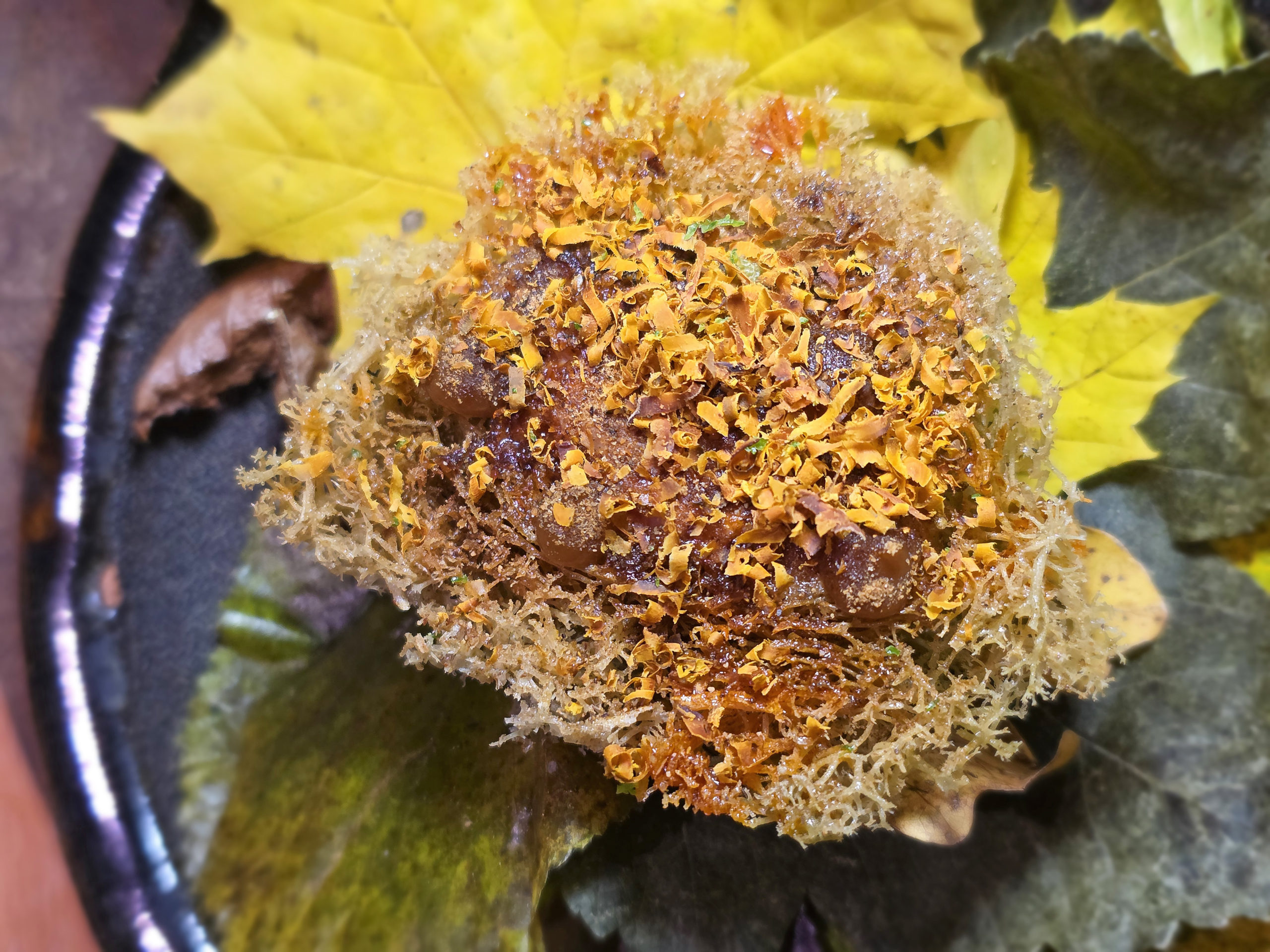
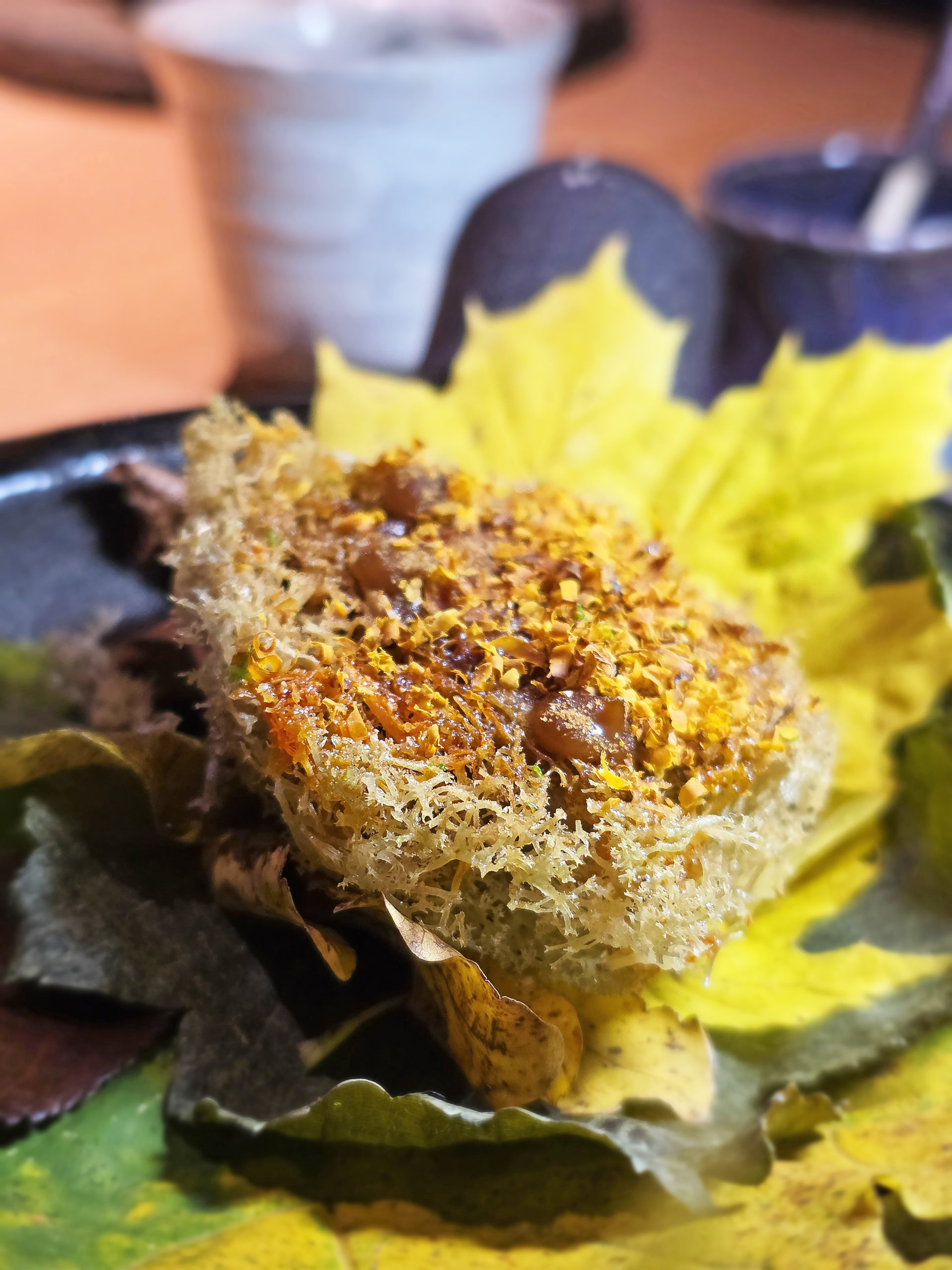
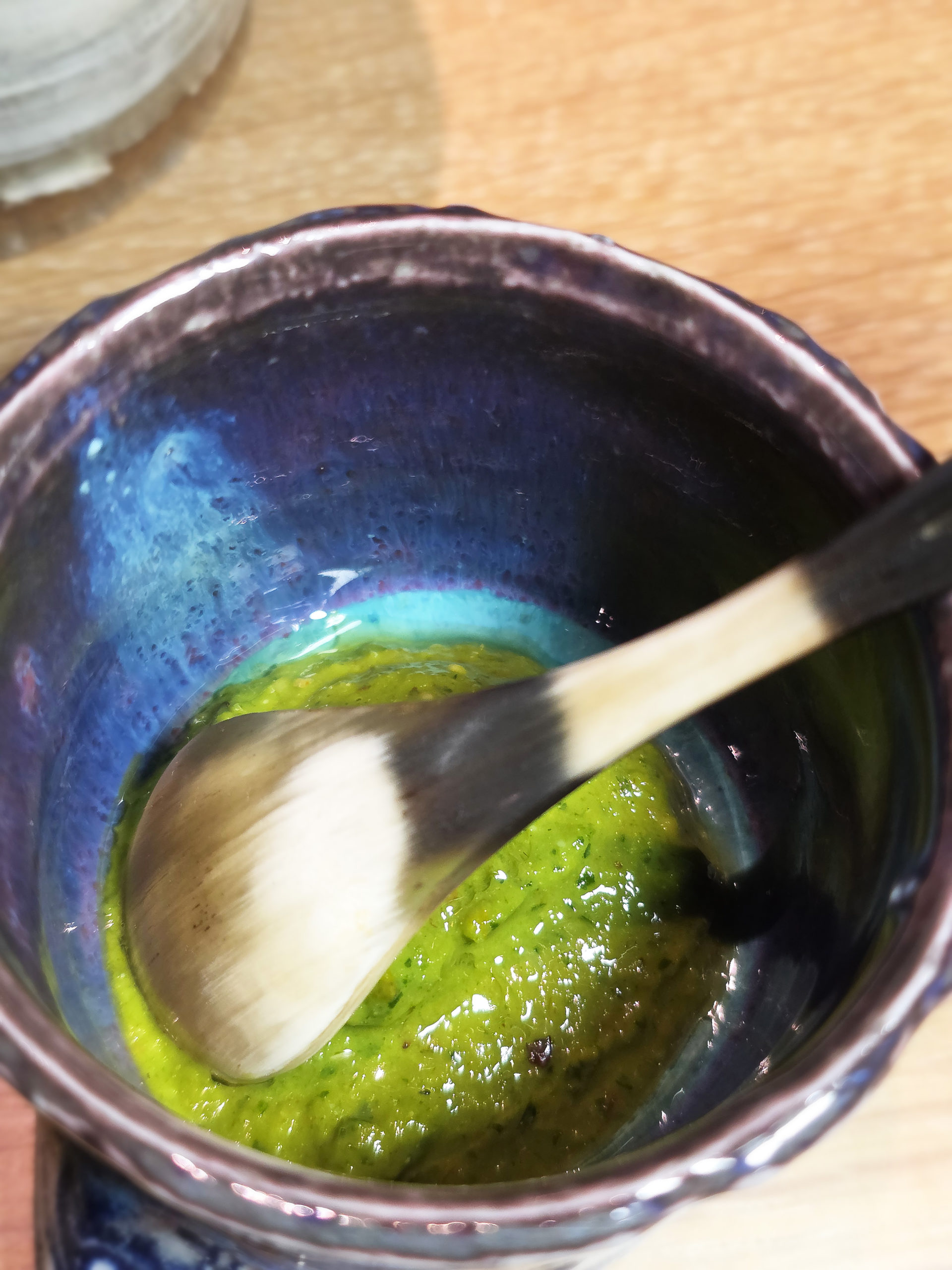
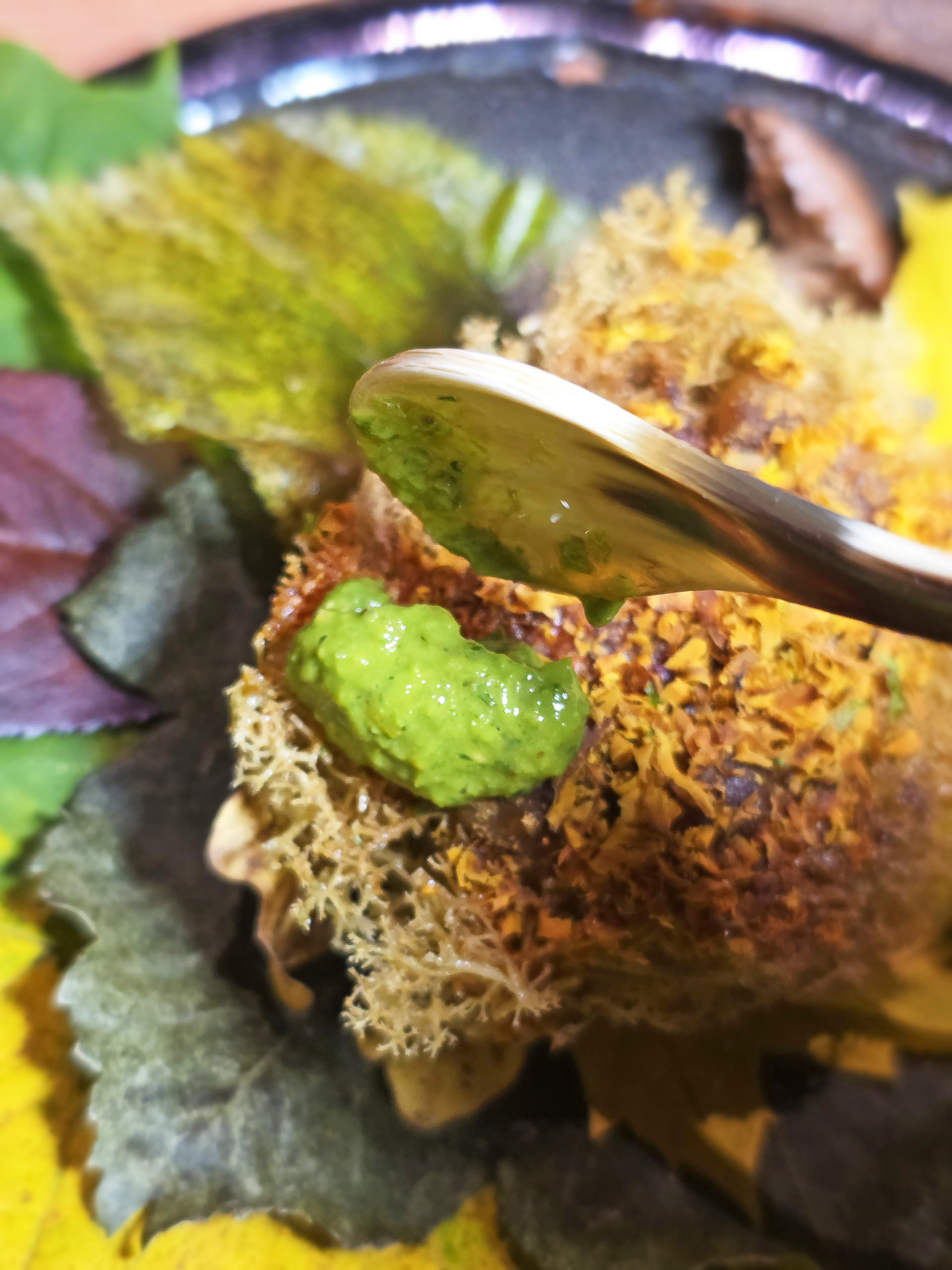
Next came fried reindeer sweetbread in tempura made from a variety of wild moss. The flavour addition was chilli oil and smoked pumpkin. In a separate vessel there was Nordic pesto made from various herbs, among them thyme and coriander. Another dish to eat with the hands. This dish is difficult to describe. The sweetbread inside was soft and delicate, but the piece itself was rather small, covered with a large amount of crispy moss and additions that quite strongly masked its flavour. The eating experience itself, however, was incredible, crunchy. While eating it felt as if we were stepping on dry forest litter. Mainly because of this impression the dish was surprising, intriguing and evoking admiration. The pesto that accompanied it was tasty, interesting, sour, strongly herbal, but completely unlike in flavour the most famous, also green, pesto genovese. An interesting pairing of green tea from Kyoto with a fig leaf.
We remain in autumnal moods. The pairing the same, but on the plate this time appear peeled walnuts, fresh cheese curd with a very velvety consistency reminiscent of panna cotta and a butter sauce. The fresh walnuts come to the forefront, but in a very delicate and soft form, as they had been peeled. In fact, this is everything we can say about the flavour of this dish, because the remaining flavours of butter or curd were so delicate that they were almost imperceptible. These other ingredients rather wrapped around the walnuts, but it was not a dish that would particularly remain in our memory. Despite the fact that we appreciate delicate flavours and respect for the ingredient, here we definitely did not feel complete satisfaction.
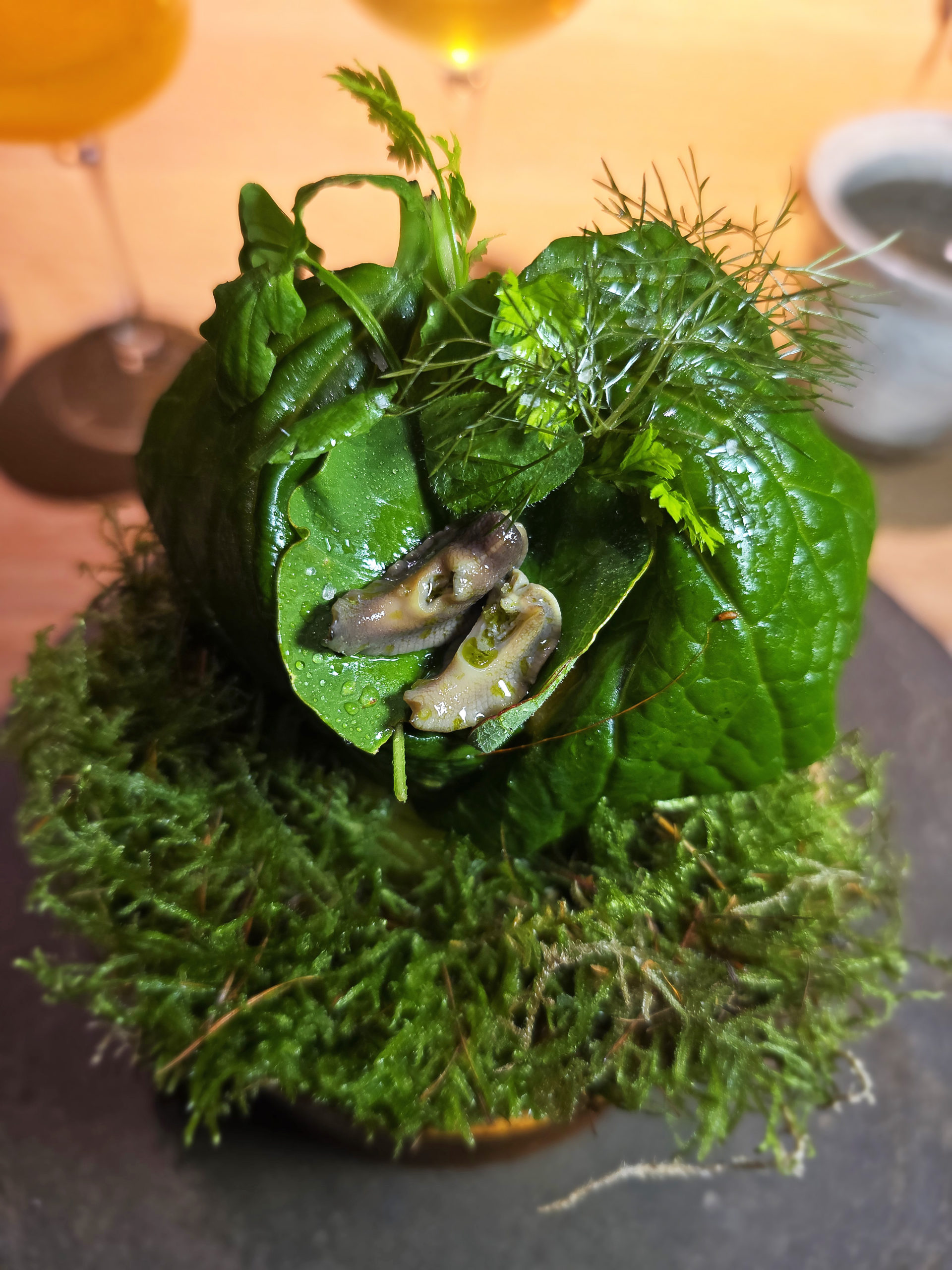
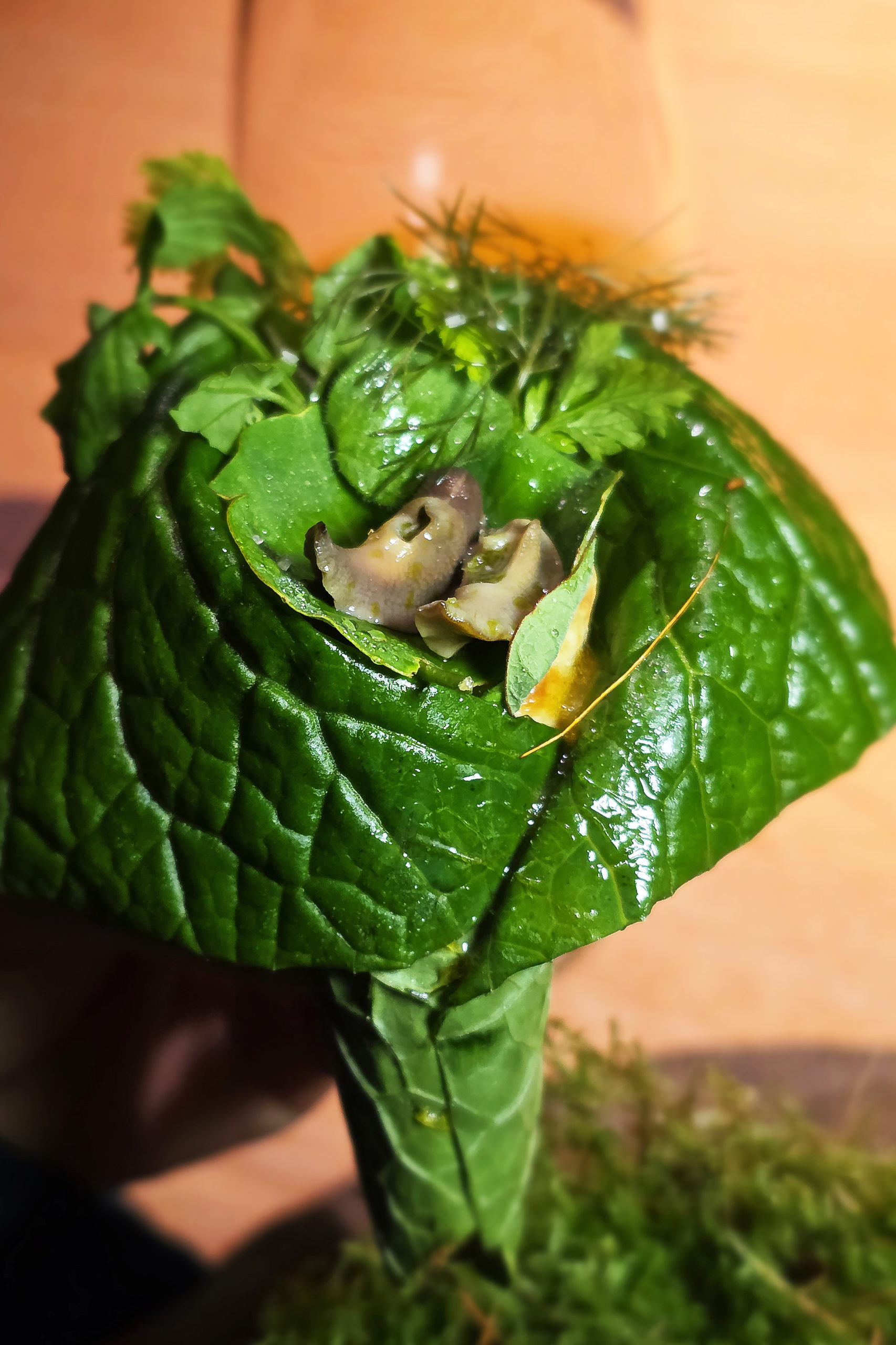
In the glass appears juice of pear and cloudberry with the addition of black pepper. And on the plate? A wasabi leaf, not as spicy as the root but with a recognisable similar aroma. This leaf wrapped a crispy wafer cone filled with a paste with horseradish, with a paste of green parsley with a yeast reduction giving an umami flavour. On top watercress from the greenhouse, fennel, oregano and snails cooked in barley koji for three hours so that they became very soft. A small disappointment appeared on our side, because on Instagram we had seen stories where this dish was served to guests with a live snail crawling on the side of the vessel. The lack of the live (inedible) garnish indicates that it is not a permanent addition in the season. But on the other hand we thought that perhaps it is better for the well-being of that live snail. It certainly had less stress. What do we think about the dish itself? The snails were aromatic, indeed soft enough to melt in the mouth, the horseradish was noticeable, the whole was really delicious. The fairly large and fleshy wasabi leaf added a lot of greenness to the dish. The combination of these flavours produced a short, intense burst of aromas that quickly disappeared, leaving only a delicate plant-like aftertaste.
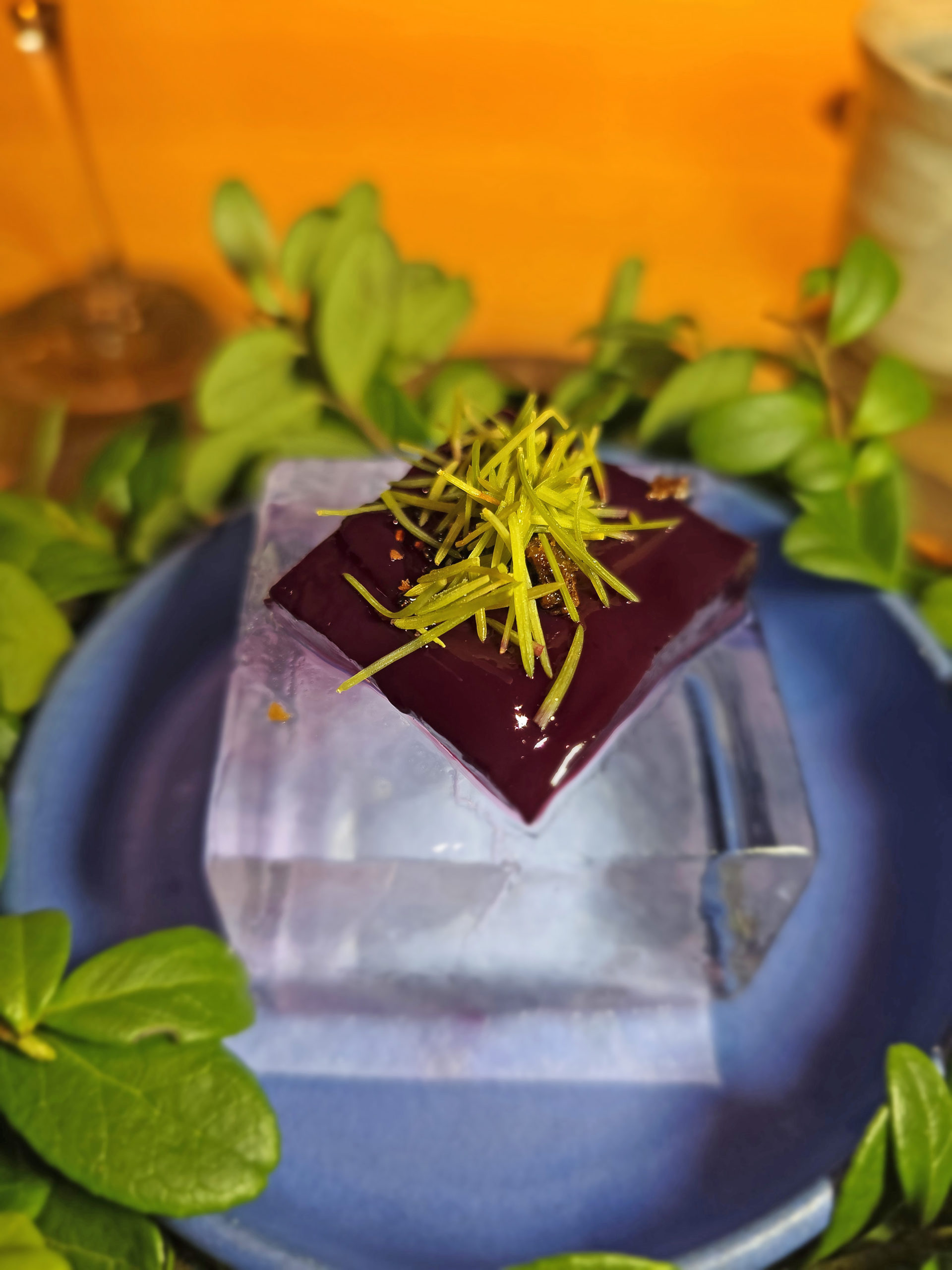
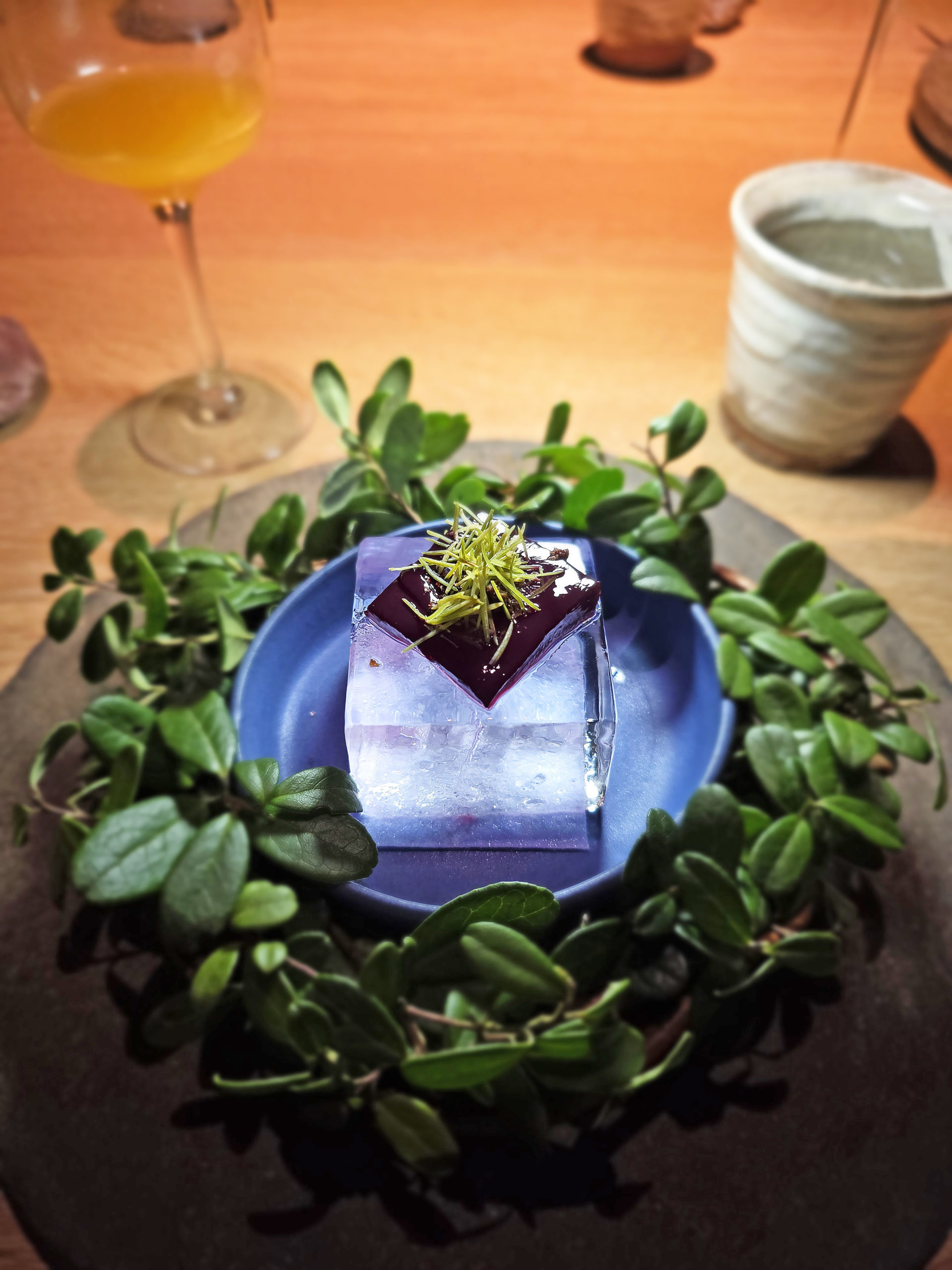
Another element of the evening drew attention through its presentation. The waiter pulled from a large jar a sheet of scoby, that gelatinous culture of bacteria and yeast that forms during the fermentation of kombucha. No, no, we did not eat it in that form. In that state it has a stretchy, rubbery consistency. To soften the scoby enzymes were used, and then it was marinated in wild berries and tomatoes, thanks to which it acquired a vivid purple colour. On top there was a pinch of pepper from Madagascar and oil from blackcurrant leaves, seaweed salt and young spruce needles. The cube was very light, sour and refreshing in flavour. The texture similar to nata de coco, lychee or jelly. New and inventive, it will certainly remain in memory.
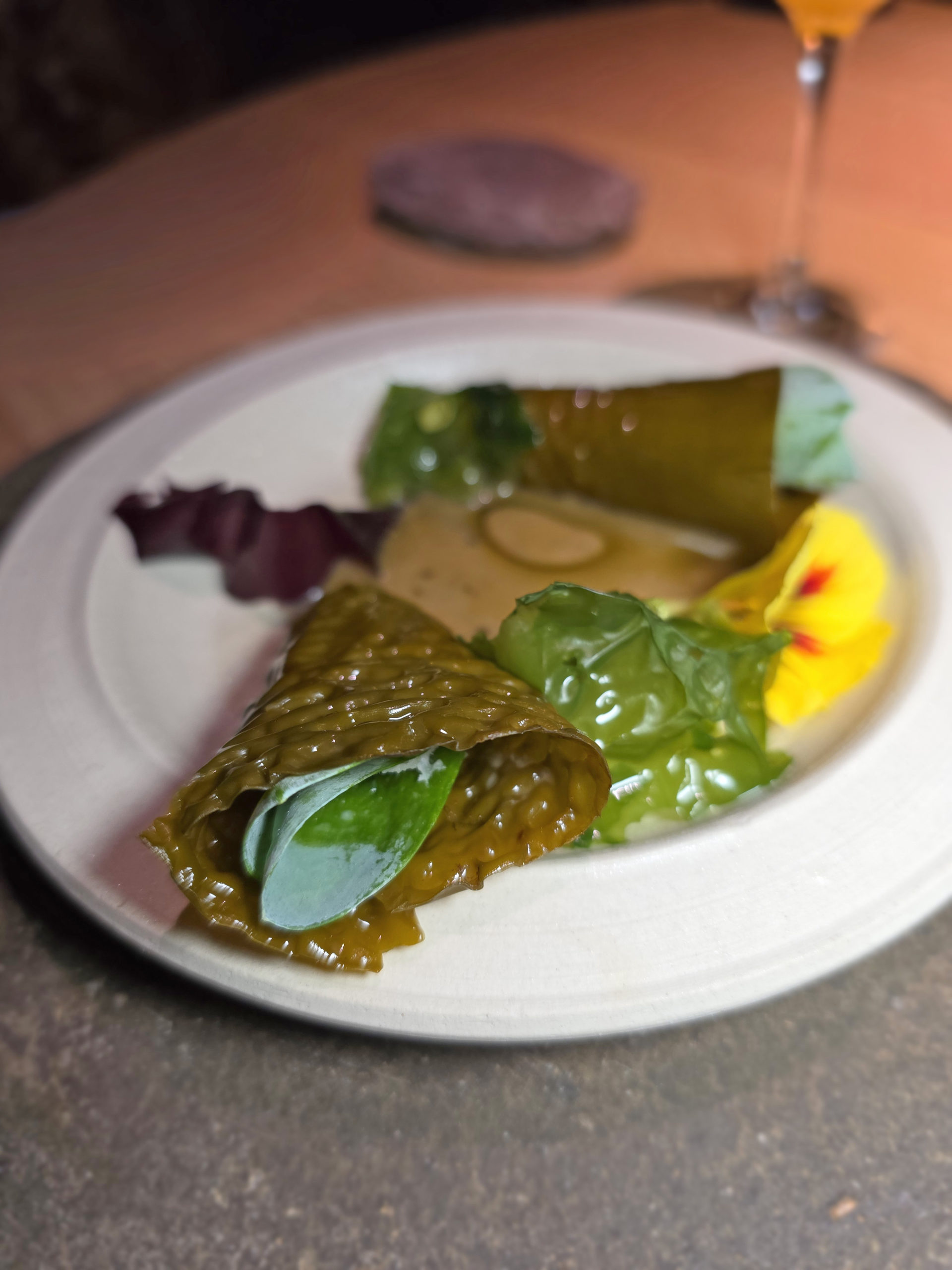
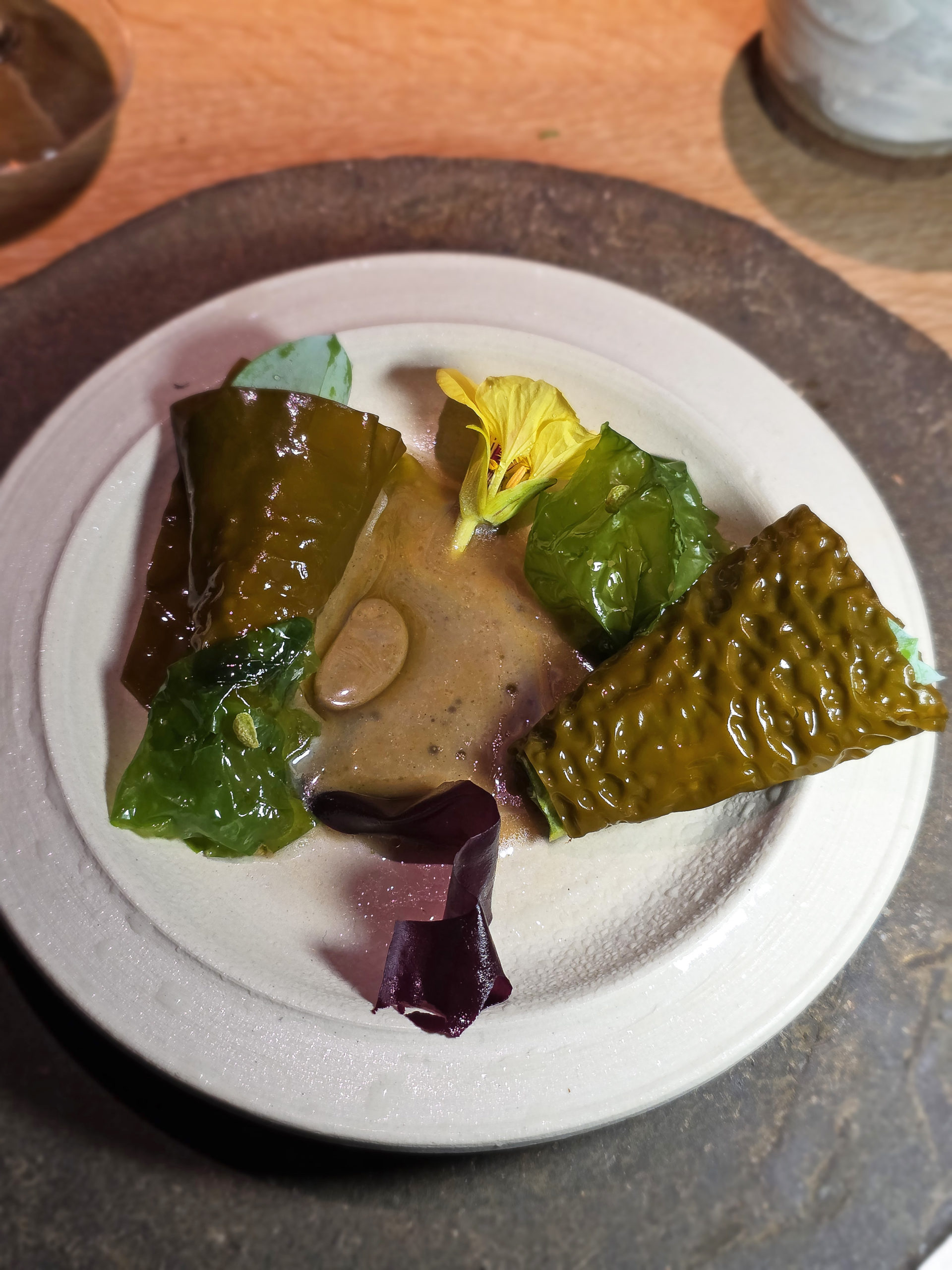
We return to more savoury flavours – this time a salad of three types of seaweed collected off the coast of Denmark appears on the plate. It consisted of a cone of sugar kelp filled with horseradish and an oyster leaf. There was also sea lettuce and søl (dulse). In the centre there was a sauce of truffles (barely noticeable) and a slightly iridescent seaweed oil (kelp oil). The sugar kelp was quite thick and had a leathery-spongy texture, definitely something to bite into. The oyster leaf added even more marine notes, this time resembling the taste of oysters, and the horseradish intensified the overall flavour. Intriguing. The combination of flavours of different seaweeds was interesting – the red søl was very strong and expressive, while the sea lettuce very light. The only thing we did not entirely like was the sauce, which had a snail-like, slimy consistency.
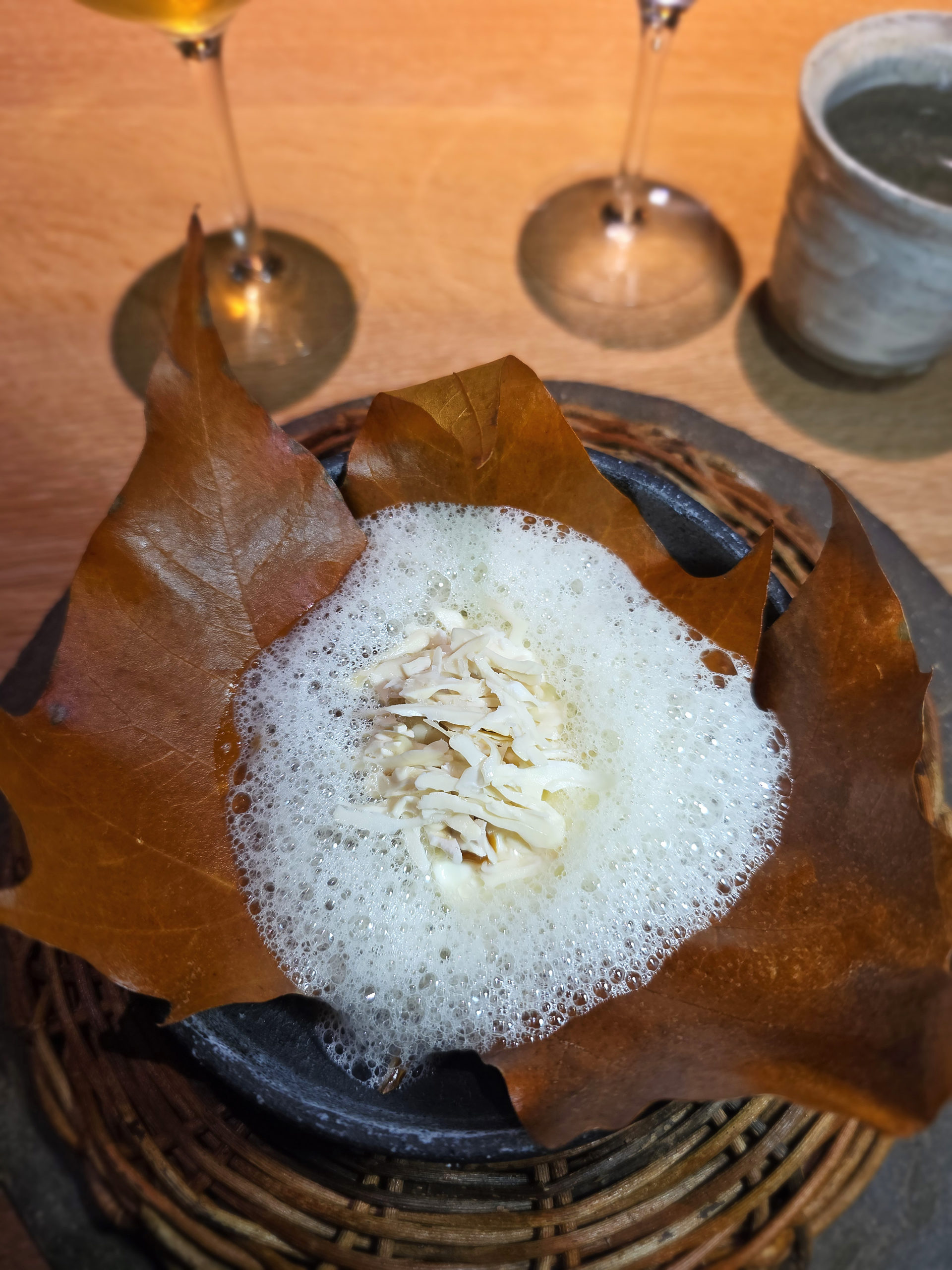
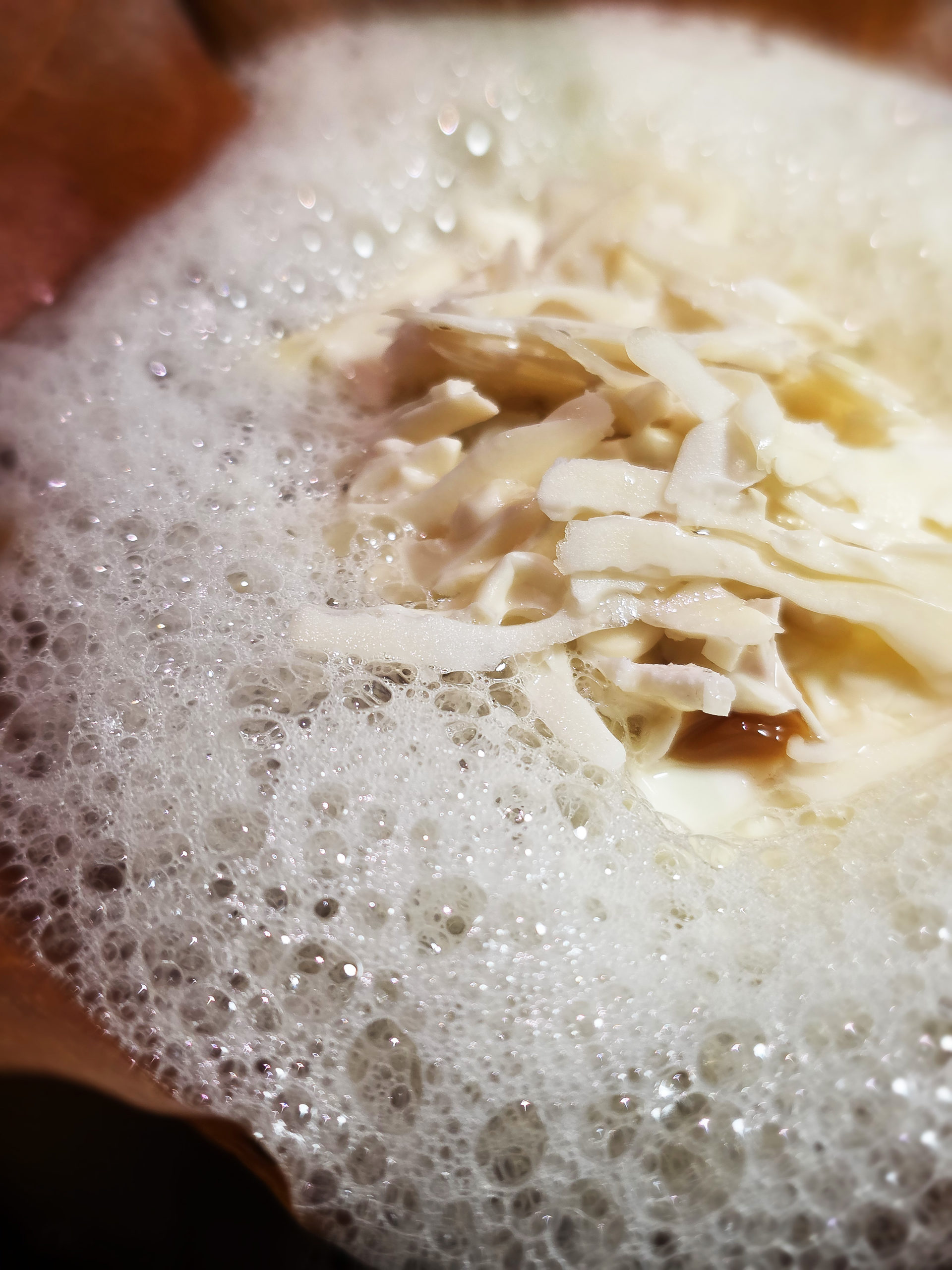
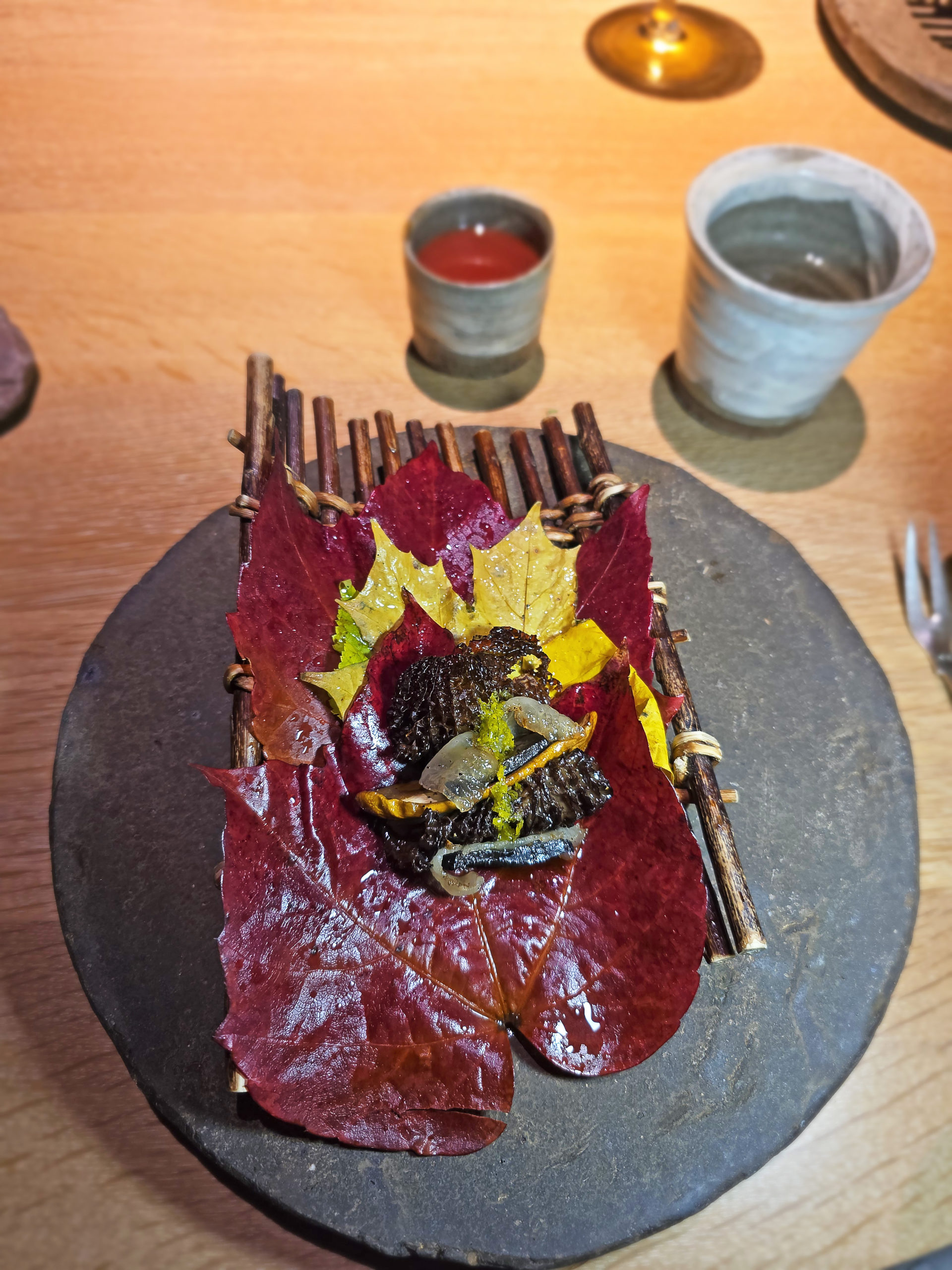
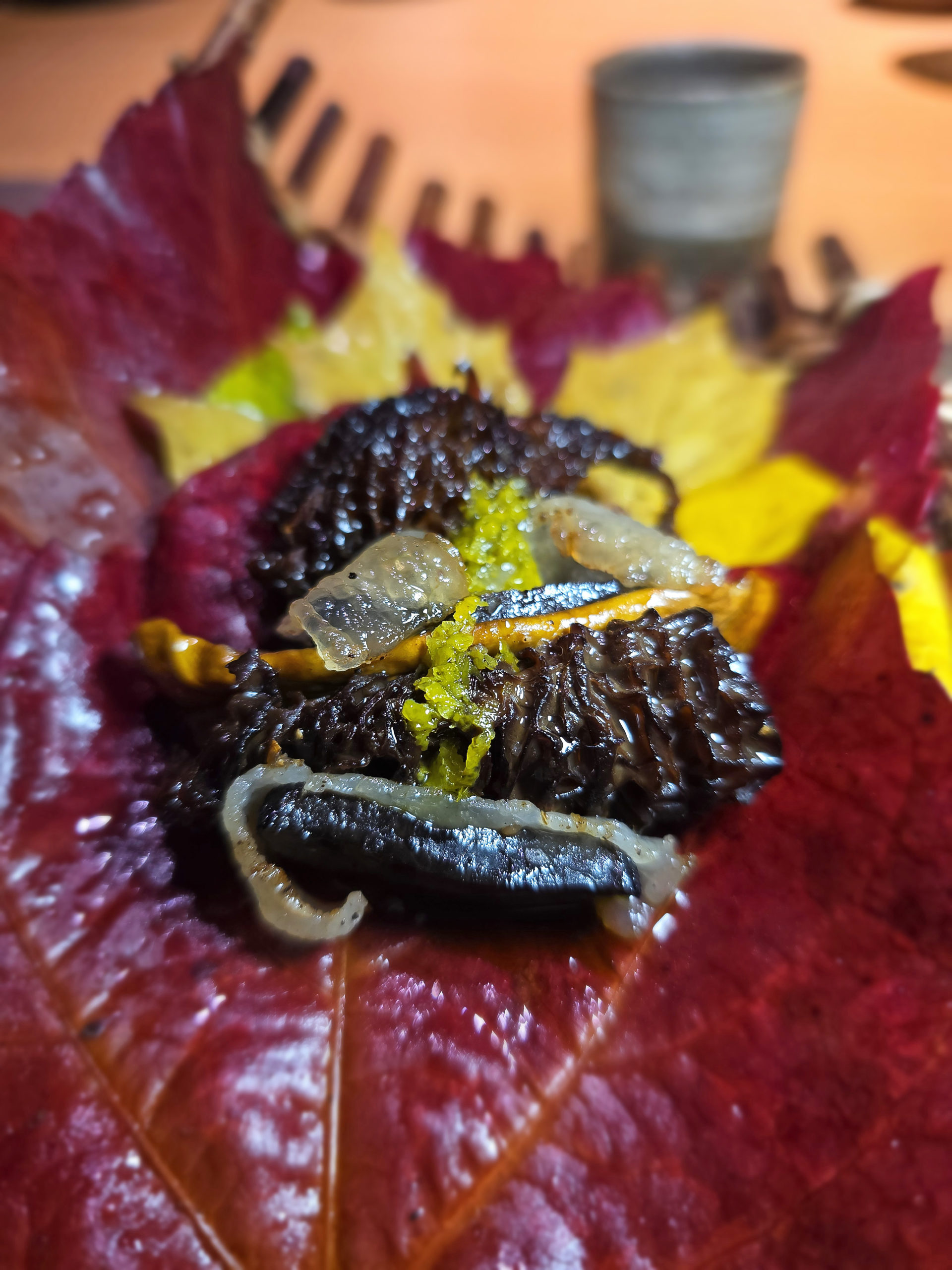
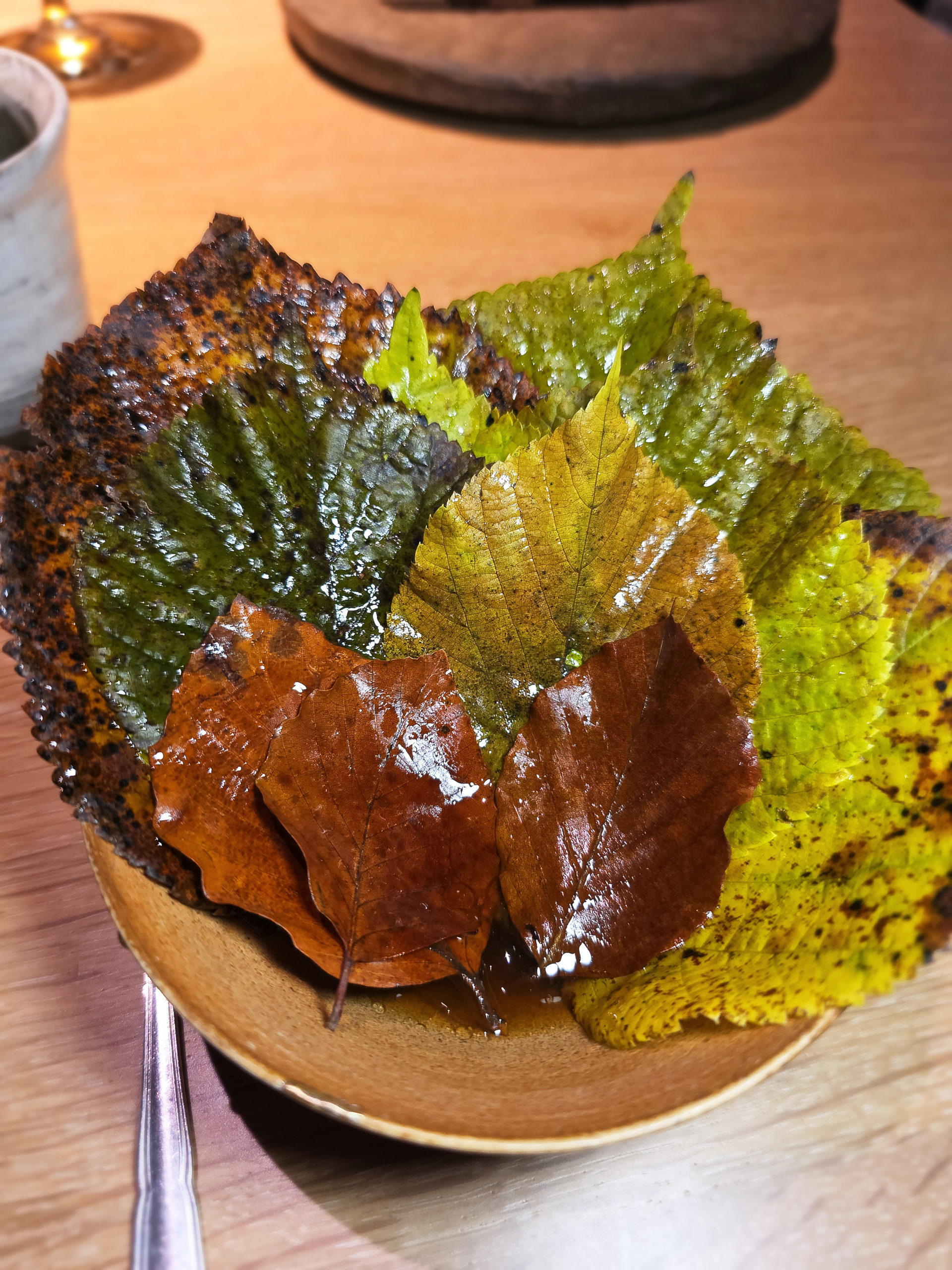
In the glass appears a drink made from plums, mirabelles, lightly smoked black tea and yuzu from Japan. And the next dish is an interpretation of cep shawarma, that is layers of various mushrooms, including morels, interspersed with slices of wild boar lardo, grilled and served with bergamot paste on top. A nice combination, because both mushrooms and wild boar come from the forest. However, there was no delight over this part of the dish. The morels were quite tough, the other mushrooms slightly rubbery. Everything tasted like late, sad autumn, the last mushrooms from the forest, because the aroma of the whole was quite far from what we imagine when thinking of a dish made from aromatic porcini. It was definitely not our favourite mushroom dish, and the presentation also did not impress. However, after tasting the mushroom broth, magic happened. The broth was served in a bowl on autumn leaves, for sipping. It was very intriguing, because it had taken on the flavour of those wet leaves, which made every sip transport us to the forest, but not the fragrant kind, rather to a damp, foggy, autumn November forest path. And perhaps it was not the best mushroom broth we had ever drunk, but it delighted us because it awakened the imagination.
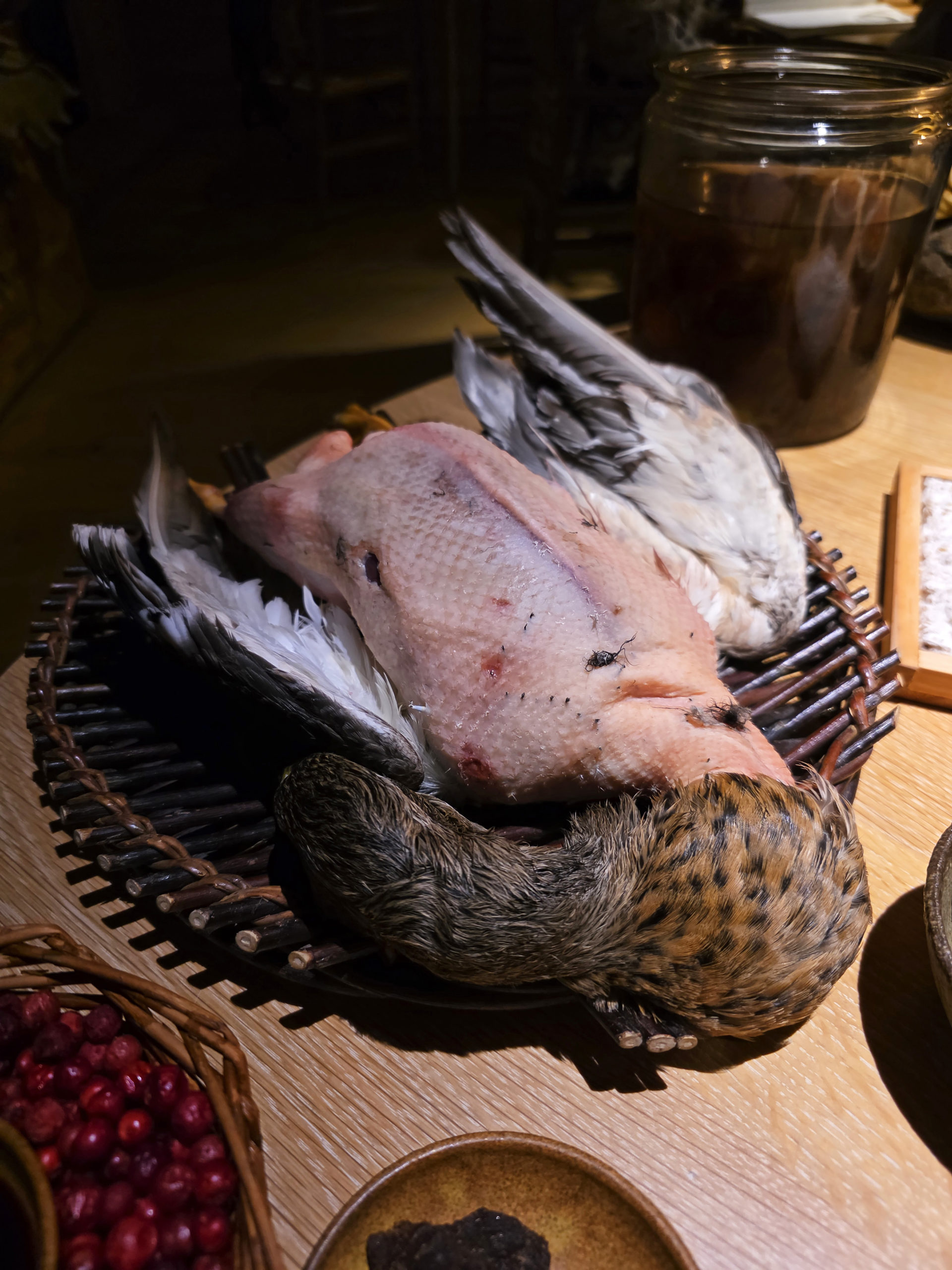
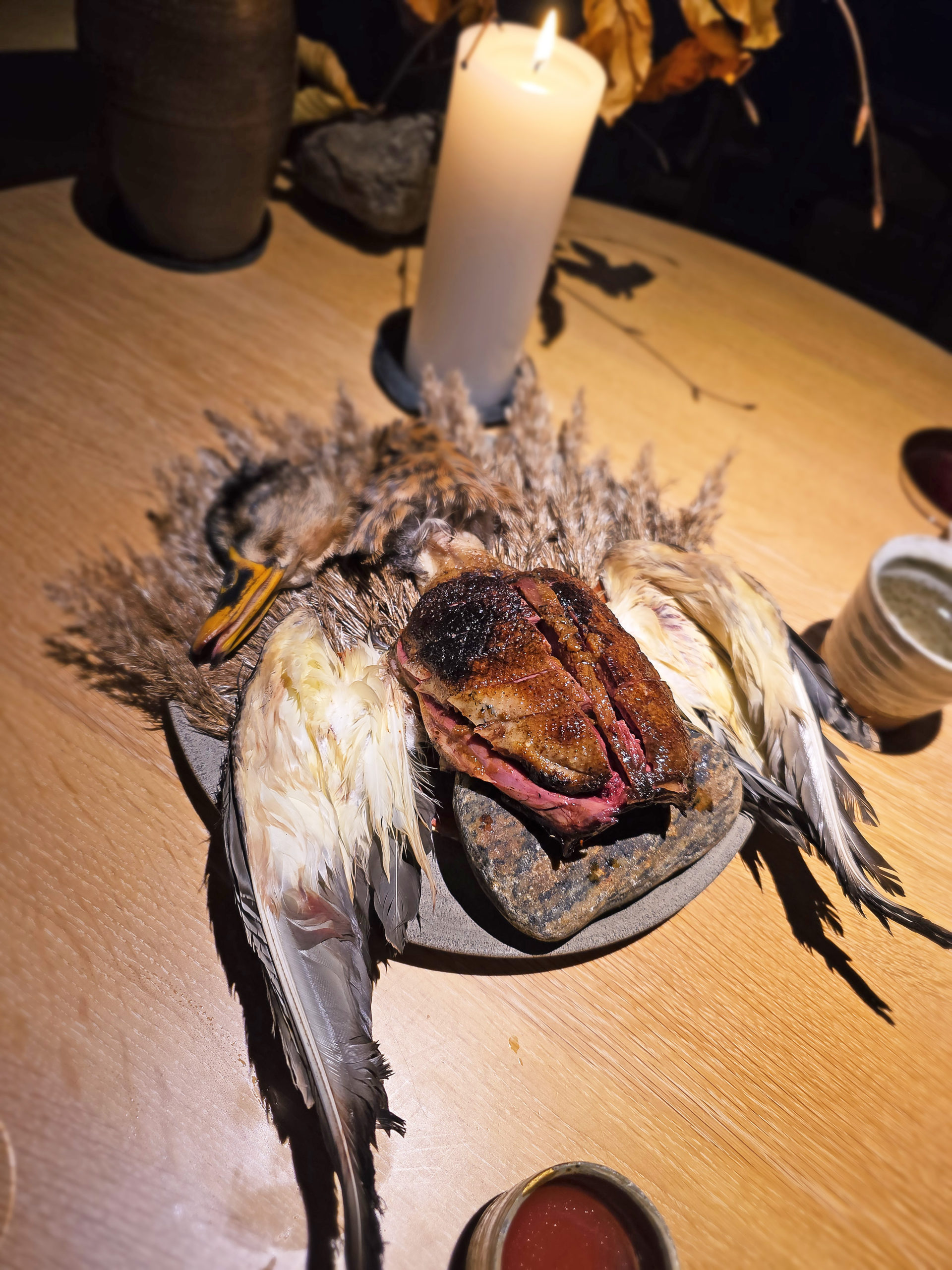
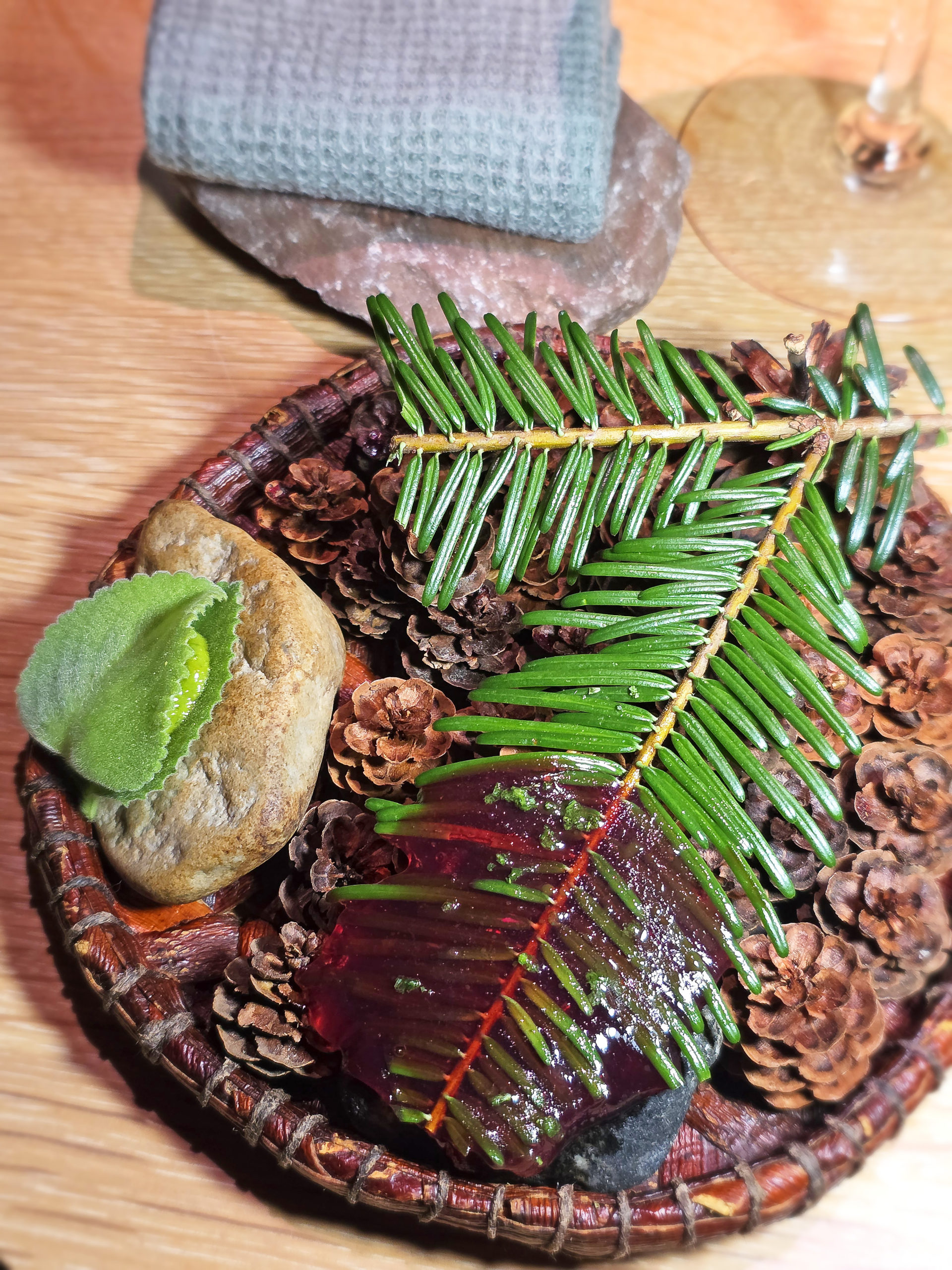
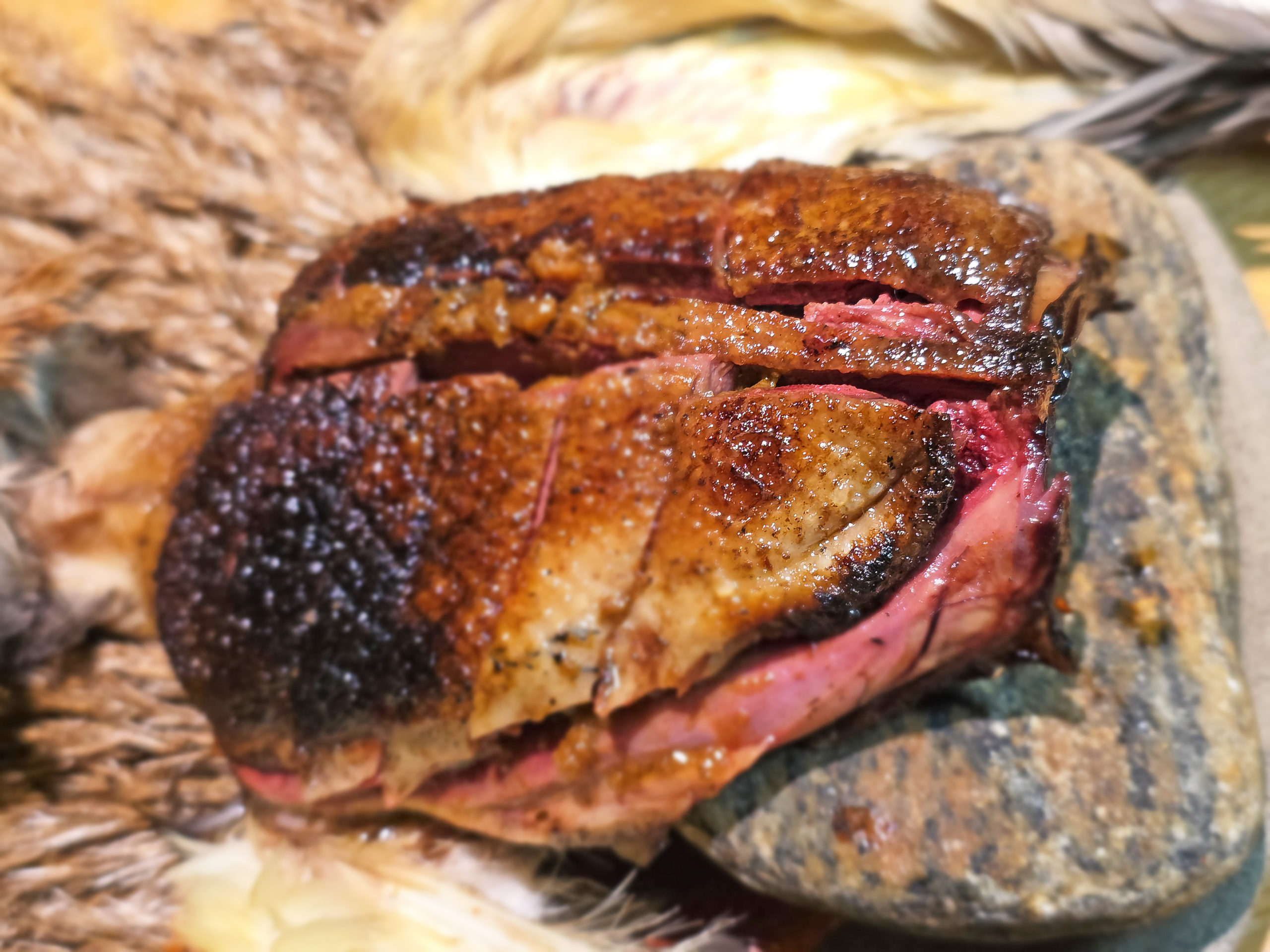
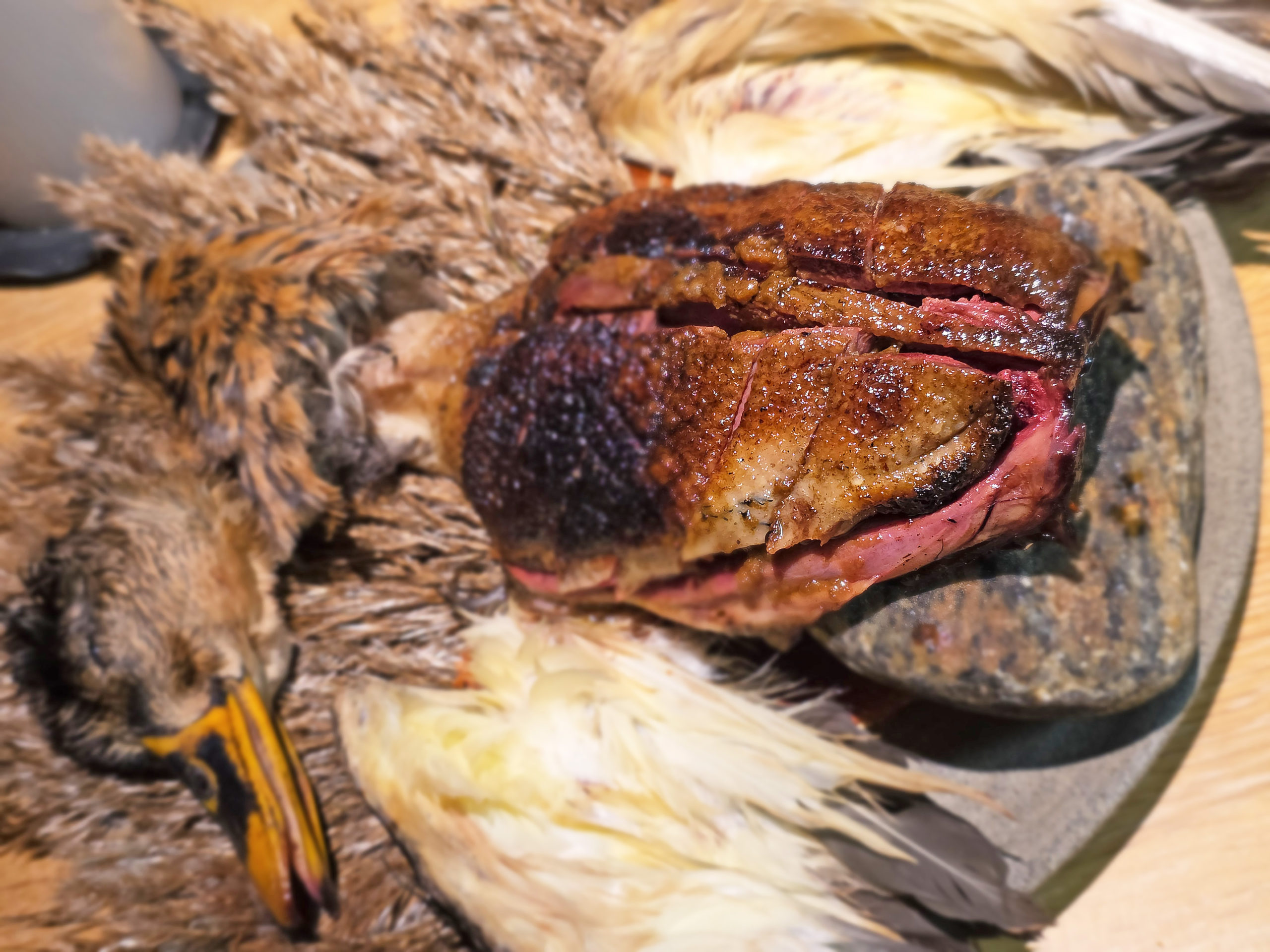
Time for kombucha made from plums and pears, rooibos tea and black pepper – a brilliant pairing with the wild mallard duck that appeared on the table shortly after. The duck had been hunted, hence the request to watch out for shot. The meat, dry-aged for about six days, was prepared over charcoal and served on a stone surrounded by the wings and the head with the beak of the duck (not to be eaten). Next to it was served the lower part of the duck’s back with crispy skin (dry and tough, nothing special). Additionally there was plum gel with a bit of rose set on a twig (sweet, an interesting curiosity). We were told that it was a pine twig, although it definitely looked like fir (perhaps the word pine was used as a synonym for a conifer branch, but we would definitely have preferred precision here). And additionally there was a leaf of Mexican oregano with gooseberry paste. The duck was intended to be eaten with the fingers (another dish eaten in this way). The meat was pink, aromatic, which is not surprising if wild duck is served and prepared over fire. Delicious. But unfortunately a discord appeared in this dish, because on the edges the skin was chewy, not very crispy, difficult to chew and additionally not cleaned of feathers. This was not what we expected from a three-star restaurant. If in another dish someone peels every piece of walnut, and here a duck with feathers is brought, then something is definitely wrong. Overall we considered the duck delicious and exceptional because of the beautiful presentation, aroma and ingredient, but technically not perfect.
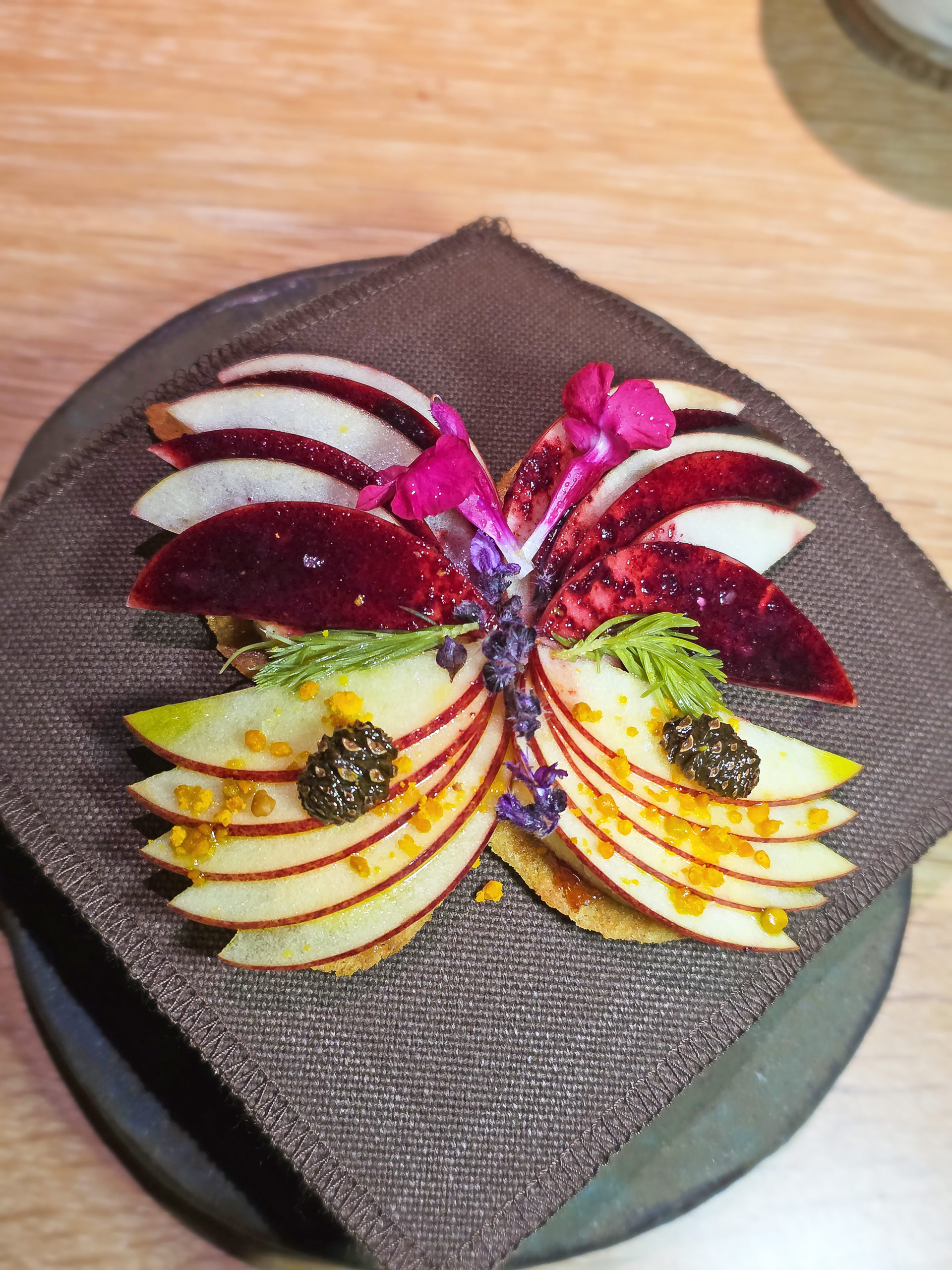
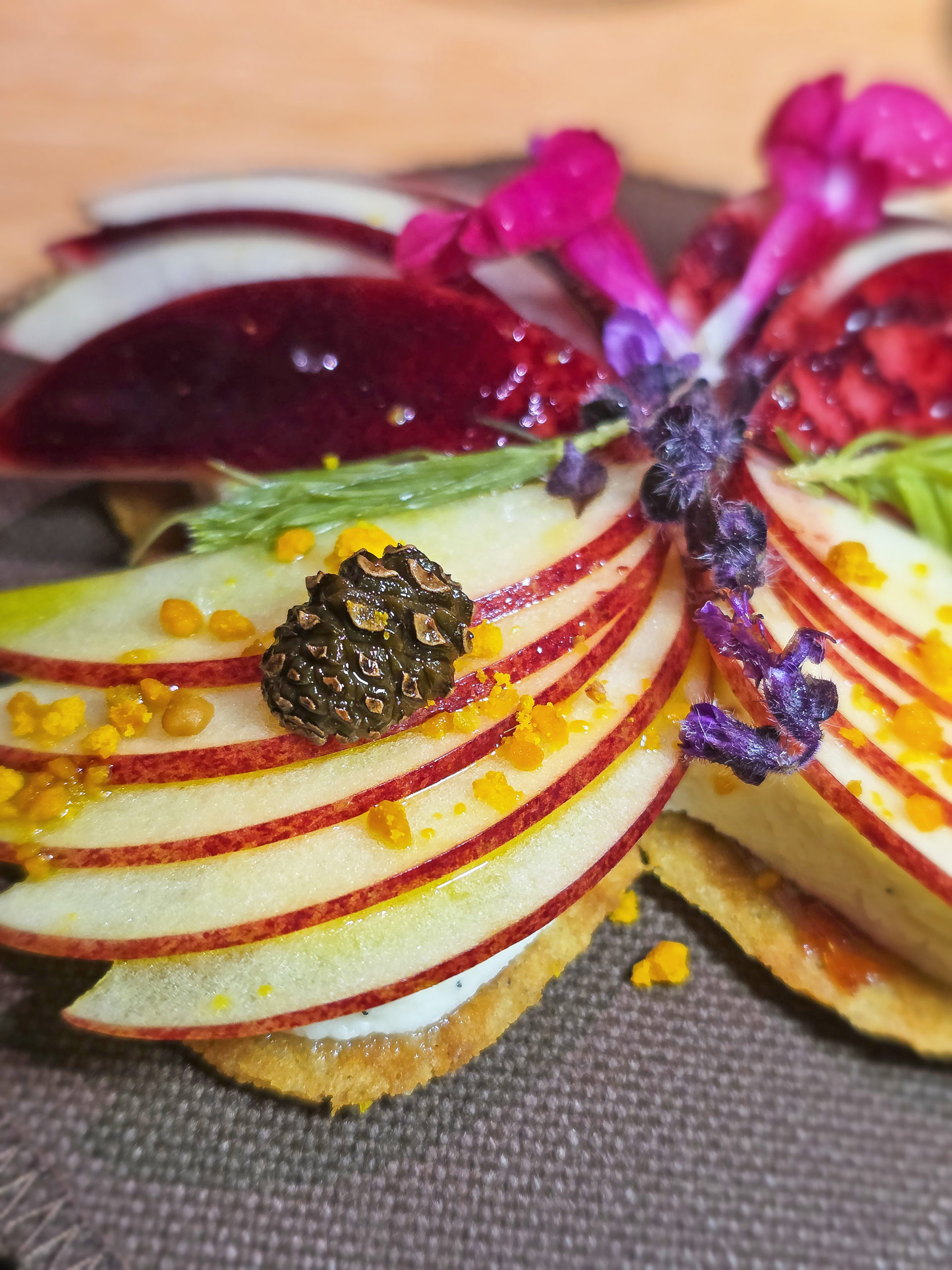
Unfortunately, with technique something was wrong until the end of the dinner… The first dessert appeared on our table in the form of a butterfly composed of various layers and beautifully decorated. There was a layer of crispy buckwheat wafer, yoghurt mousse from plum kernels, jellied blackcurrant juice, apple juice reduction, pine shoots, wood sorrel, basil and sage flowers, bee pollen, candied pine cones, sudachi, and slices of Danish apple arranged in the shape of butterfly wings covered with a wild berries praline. The flavour, thanks to the addition of plum kernels, was slightly marzipan-like, similar to the flavour of bitter almonds. The other additions refreshed and enriched the flavour. It is worth appreciating their multitude, the precision of the composition and the intermingling of aromas, because the flavour delighted. But it seems to us that assembling this dish takes so long that it does not allow one to appreciate its craftsmanship. One of the butterflies brought to our table was falling apart on the plate before we even touched it. The wafer was softened, without the desired crispness, and the whole was falling apart in the hands while eating. Again delight mixed with disappointment… But we appreciated the pairing in the form of a drink based on rooibos, hibiscus, oolong tea and liquorice.
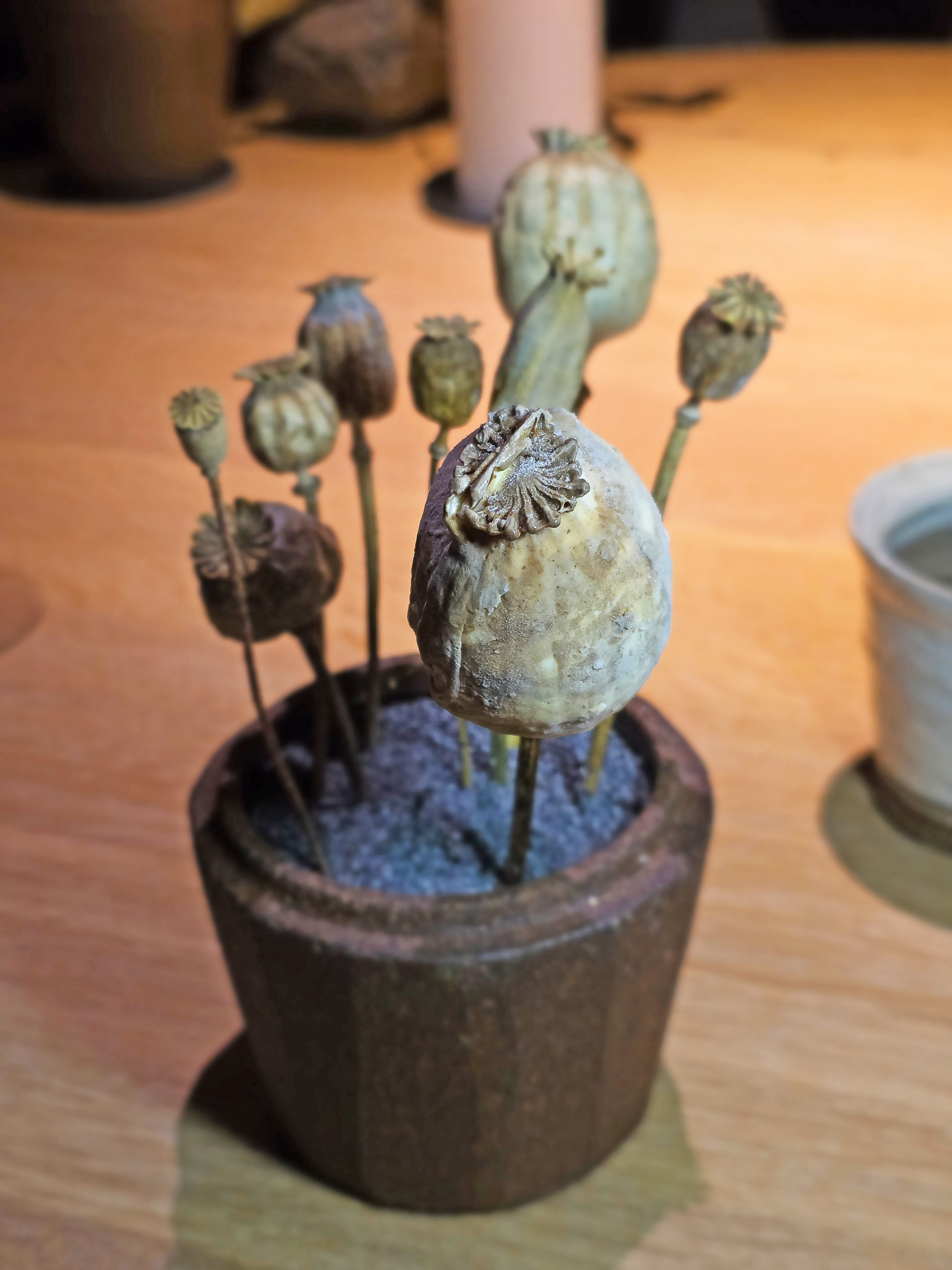
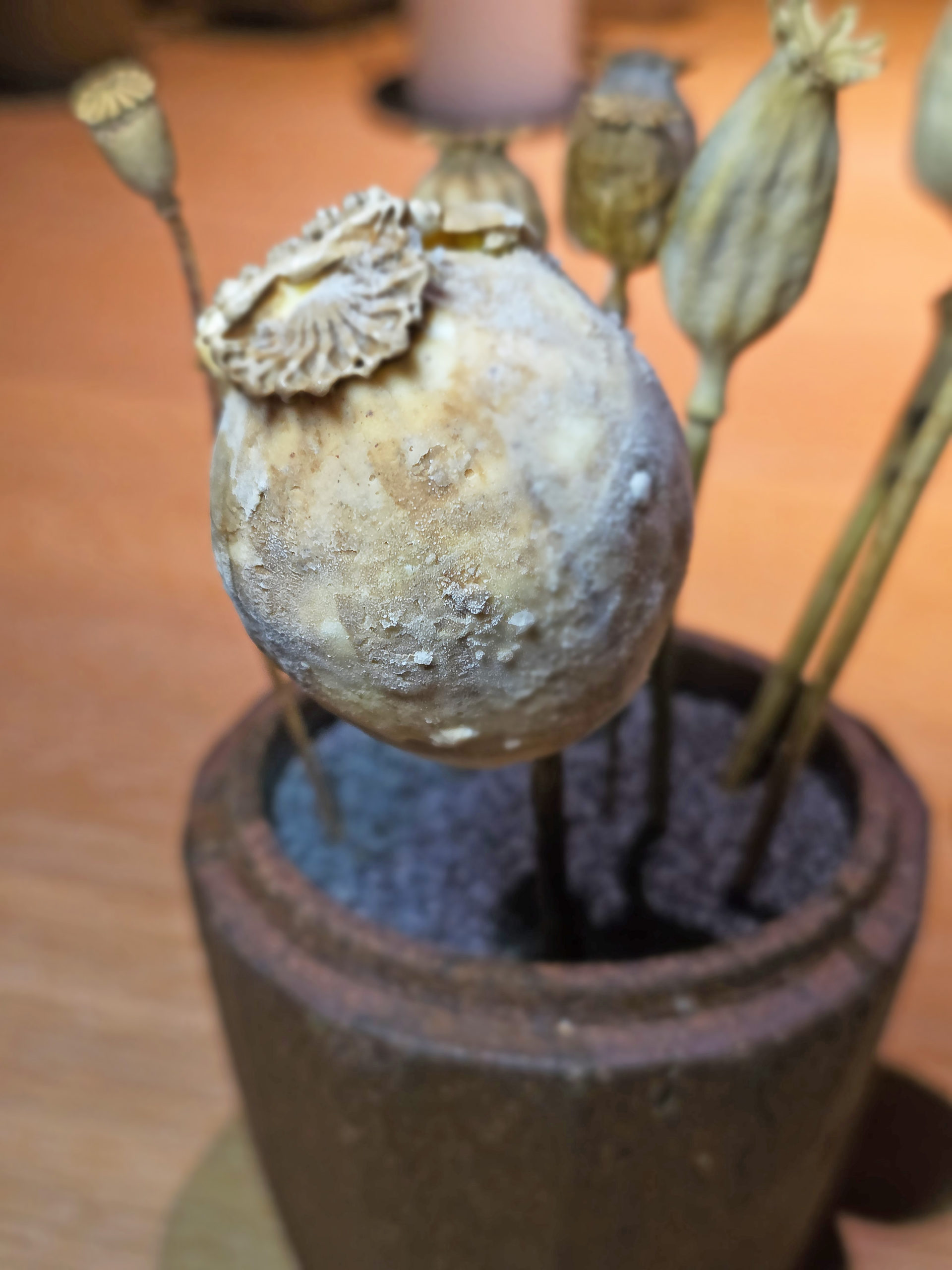
The peak of our disappointment came together with the next dessert. These were saffron ice creams shaped like poppy heads, painted with a glaze made from hazelnut, poppy and liquorice. Indeed one could confuse them with real poppy heads placed in the same vessel. But… the ice creams were already beginning to fall apart when they appeared on our table. When we began eating a catastrophe occurred – one of the sticks broke, the ice cream fell apart, slid off the stick straight onto our hands – because unfortunately not even a small plate was provided on which it could be put down. There was literally nowhere to put it, so we had to eat the whole thing while freezing our teeth just to get rid of the problem and not dirty ourselves and everything around. The flavour was interesting, but in the end it did not remain strongly in memory. Although it looked beautiful, the mess overshadowed everything. But the dessert definitely aroused emotions – anger combined with disappointment. We understand performance and reaching for primal ways of eating with the hands, but ergonomics should definitely prevail and at least a minimum in the form of a small plate should appear on the table.
The last dessert was an aerated chocolate mousse, shock-frozen. If we heard correctly, it contained the addition of reindeer blood and elderflower syrup. It was very light, cold, with a texture somewhat similar to Aero chocolate. In flavour slightly salty, with a mineral saltiness, slightly sweet, with noticeable acidity of the elder syrup. A successful combination.
At the end we decided on coffee and tea, this time in the form of pour-over (there is no espresso or any coffee from an espresso machine on offer…) and an infusion of herbs from the garden.
The entire dinner at Noma confirmed that it is a restaurant one enters for the experience, not only for the food. Every dish is a separate micro-world. Sometimes demanding, sometimes delightful, always original. This is cuisine that fully realises the idea of discovering flavours rather than repeating them. It is one of the few legendary restaurants that did not disappoint us in terms of meeting our expectations. What were they? We expected avant-garde, new flavours, surprising and bold combinations, creativity, discovery of nature, crossing boundaries. This is what we received in the best possible form. Here every dish is a challenge, a crossing of boundaries. The whole is incredible, but it is also a challenge. These are not familiar flavours, each one requires convincing oneself and may not necessarily appeal to everyone. It does not surprise us that today Noma is a laboratory rather than entirely a restaurant. Here flavours are created, and the guest comes to discover and try them. Not everything has to taste good. Other chefs draw inspiration from here for one or two dishes, for their elements. Here avant-garde is in the DNA of every dish. It is definitely a place for open minds, because not everyone will appreciate it and not everyone will like it. It is an adventure, not a comfortable elegant dinner. What else did we expect from Noma as a three-star restaurant? Impeccable technique. Here this was definitely lacking.
The service was exceptional, a very friendly atmosphere was created, something like Scandinavian everyday ease, without pretension. At the end we would like to express huge thanks to Ms Maria, who after dinner guided us through the entire kitchen and backstage of Noma, showing us the behind-the-scenes work of one of the most famous culinary teams in the world. Her stories and warm approach were a beautiful closing of this exceptional evening.