

Stellar Plates: You are the manager of one of the best restaurants in the world – Geranium, which in 2022 was named the best restaurant globally in the prestigious The World’s 50 Best Restaurants ranking. At the beginning, however, I would like to ask about your early career in the hospitality industry. Where did you start, and what did your first years in the profession look like? Could you say a few words about that?
Piotr Adamczyk: My adventure with gastronomy was a complete coincidence. I never planned to enter this industry – I treated it rather as a way to earn money for my studies. My first job was in a restaurant connected to a very small, boutique hotel. It was quite an exclusive place. A manor house adapted into a hotel with a restaurant, located a dozen or so kilometers from Łódź. I spent over three years there. In fact, I interrupted my studies because of that job.
SP: I see. I would like to ask a bit more, because today it may not seem so exceptional, but a few years ago, at the top of the gastronomic “Olympus” in Poland was Atelier Amaro. As far as I know, you also worked there.
PA: Yes. After a period of working on the opening of the first four-star hotels in Łódź, it was a time when hospitality and gastronomy in the city began to develop dynamically. Atelier Amaro itself was also, in a sense, a coincidence. I remember that Wojtek Amaro posted information on Facebook that he was looking for a waiter for Atelier Amaro. I simply sent my CV. I did not expect any response, but it worked out. However, the moment when I started working at Atelier was very special. It was about three months after the restaurant received the first Michelin star in Poland. It was a huge experience, and the very beginning was very stressful.
SP: Yes, because guests were already coming with completely different expectations. It was the first star in Poland, so the bar was set very high. And how long did you work at Atelier?
PA: Over three years.
SP: We are talking about the first location on Agrykola Street?
PA: Yes, exactly.
SP: Sorry, but I have to ask. From today’s perspective, how do you assess your cooperation with Mr. Wojciech Modest Amaro? Did you take anything from that experience that you still use today?
PA: For me, Atelier was the first real contact with fine dining and with this type of service. Wojtek introduced to Poland a style of service that abroad was already the norm at that time. I had observed him even earlier, probably since the days of Amber Room. I remember that even obtaining his first book was exciting for me. Working with Wojtek was something very special.
SP: The next question concerns your decision to leave Poland. What was the main reason for developing your professional career abroad?
PA: I think it was primarily the desire for further development. After three years at Atelier, I had the feeling that I was no longer learning anything new. Already during my work at Atelier, I went abroad for a short internship for the first time. One of such places was Geranium, where I spent a few days working in service. I was also in London, at The Clove Club, where I also spent a few days to see a completely different approach to service. And when someone sees something different, another level, the thought of leaving begins to germinate in their mind.
SP: Few people know that you took part in the opening of the first Michelin-starred restaurant in northern Poland, namely the Arco restaurant, which still holds a Michelin star today. How big a challenge is it to build a new concept from scratch?
PA: The opening of Arco was a huge challenge for me, primarily logistically. It was a very large concept – two restaurants. It was also the first restaurant in Poland with a foreign head chef holding two Michelin stars. I started working several months before the opening, which meant intensive cooperation with architects. I greatly valued the opportunity to introduce changes to the designs so that the restaurant would be better adapted to service. Cooperation with Paco Pérez and Antonio Arcieri was a process of mutual learning. They were learning Poland, I was learning Spain – culturally and professionally. A trip to the Miramar restaurant allowed me to better understand their philosophy and style of work. It was a very important time in my career.
SP: From what I understand, it was not just about one restaurant, but an entire complex?
PA: Yes, exactly. In practice, we are talking about two restaurants at the same time.
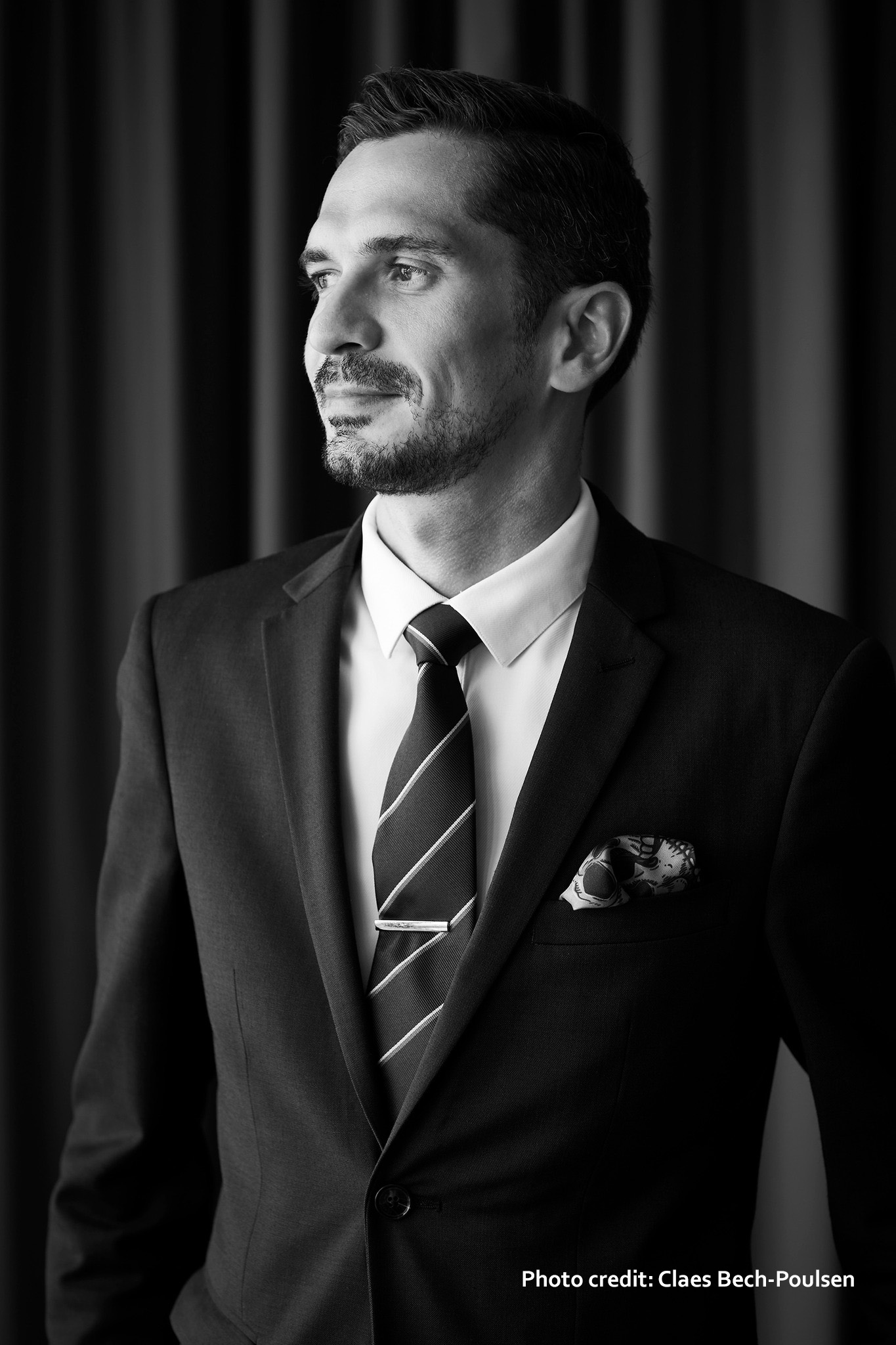
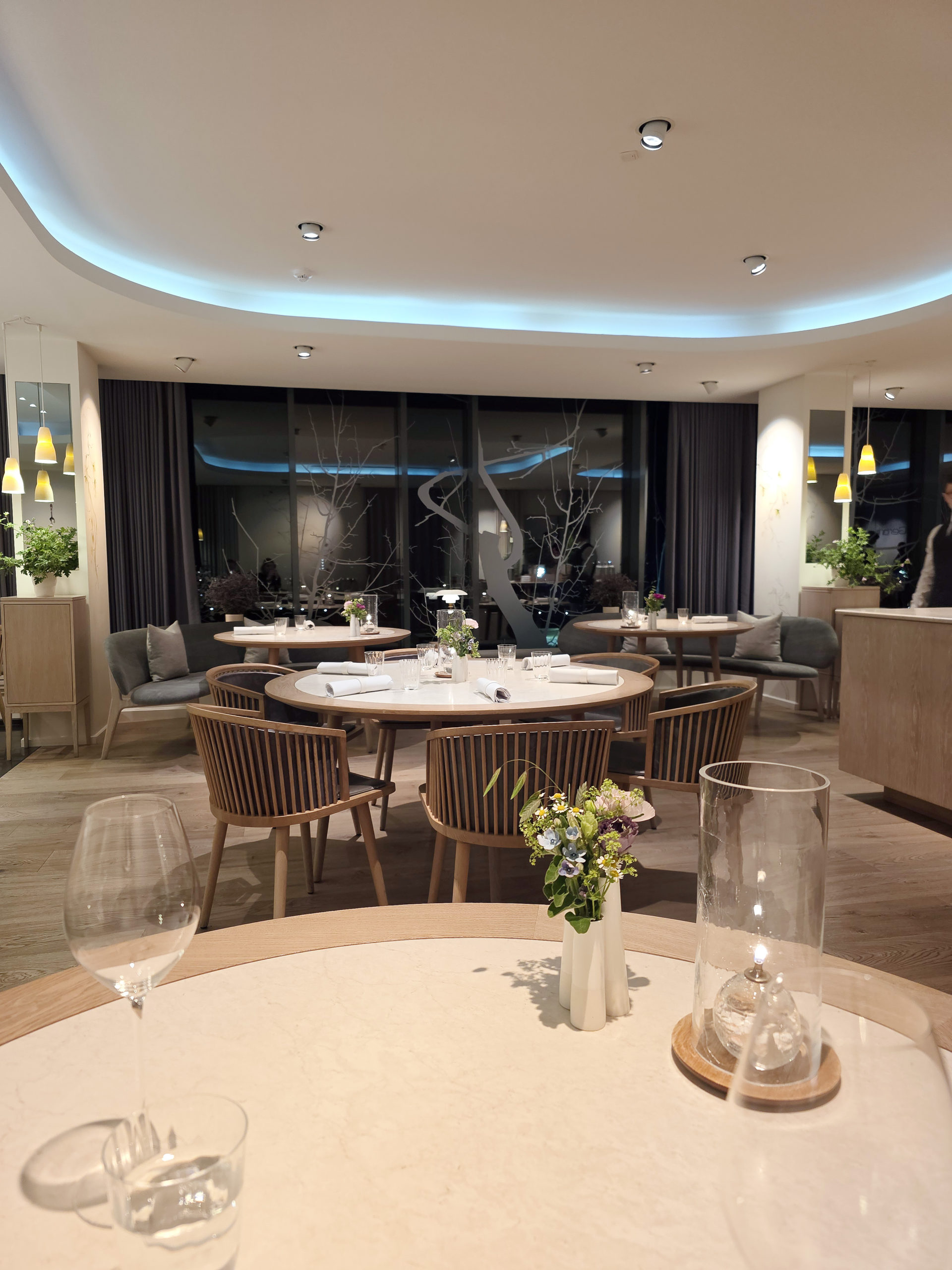
SP: Currently, you are the manager of one of the best restaurants in the world. What does everyday work at such a high level look like?
PA: Geranium is a place where I started as a waiter. I went through all the career stages. Over the following years, I built my position, working as a floor manager and developing in the direction of sommellerie. I began my sommelier career precisely at Geranium. Since June this year, when I was given the opportunity to take up the position of manager, I have had the feeling that this place has shaped me to a great extent. Both professionally and as a person.
SP: Has anything changed since you took over the position of head manager? Is this responsibility more strongly felt?
PA: I definitely feel greater responsibility, especially for the team. When changing a manager, a cautious approach to people is very important. Without sudden changes, so that the team feels safe and comfortable.
SP: We were at Geranium already when you were performing this function, and we can confirm that the service worked like clockwork. Everyone knew what they were supposed to do, and if there was any doubt, you reacted immediately.
PA: Thank you, that is very kind.
SP: Geranium is one of the few restaurants in Denmark awarded three Michelin stars. What does the everyday work of a manager of a restaurant with such a status look like?
PA: I usually start work around 10:00 a.m., because we also have lunch service. It is crucial to properly plan the team’s work and to finalize all elements of the mise en place. At Geranium there is no rigid division of roles. Everyone does everything. There is no situation where someone is “only” a waiter or “only” a sommelier. Every day we rotate tasks to avoid routine.
SP: And if a new item appears in the tasting menu, who decides on the order of serving?
PA: The menu is decided exclusively by Rasmus Kofoed. If a new dish appears, he informs me about it. We taste it together. The sommeliers select the pairing, and then everything is presented to the team during the briefing. The head chef discusses the dish in detail, and the sommeliers talk about the wine.
SP: What is the cooperation between the kitchen and the dining room like?
PA: Communication is absolutely key. Both with the kitchen and with the reservations department. We are one team, and the open kitchen further reinforces this. We have three briefings a day before each service. We spend a lot of time on analyses, both before and after service. The team is large. About 25 people in the kitchen and 14 people in the dining room – managing such a team requires efficient organization.
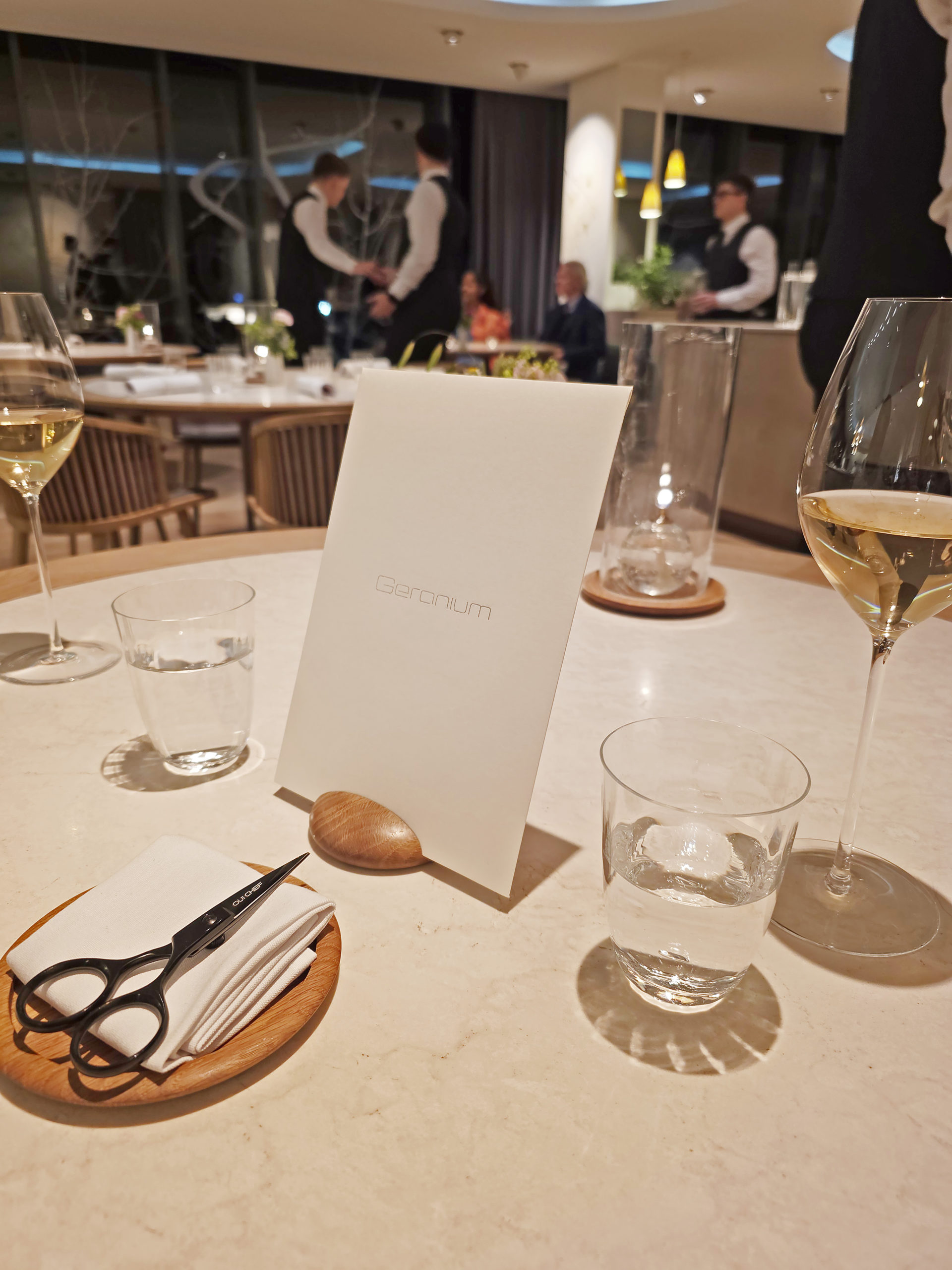
SP: What does preparing the dining room for service look like, especially with a full reservation book?
PA: Every day looks similar. We divide tasks – glassware, dining room, flowers. We have about one to one and a half hours to prepare. After lunch, we have a short break and immediately start preparations for the evening service, which is very intense.
SP: As a manager, have you had the opportunity to implement your own initiatives?
PA: Already as a floor manager, I shared my ideas. At Geranium, nothing happens overnight. We analyze ideas together. We consider whether they will improve guest comfort and the quality of service.
SP: Which competencies do you consider key for a manager working in the best restaurants in the world?
PA: Mental resilience, empathy – both towards guests and the team – and the ability to listen.
SP: And consistency?
PA: Of course. Paying attention to the smallest details is crucial, especially when working with someone as precise as Rasmus, who notices things that are invisible to most people.
SP: What advice would you give to people dreaming of working in Michelin-starred restaurants?
PA: Travel, visit other restaurants, even for a few days. Such a trip changes perspective and the way of thinking.
SP: Was there any restaurant that particularly stayed in your memory?
PA: One of the first was the Ancora restaurant in Kraków, many years ago. It changed my thinking about gastronomy. Later, El Celler de Can Roca, which influenced my understanding of work philosophy.
SP: What qualities are most important to you when selecting a team at Geranium?
PA: First of all, personality. Empathy towards the guest. The rest can be taught. We often hire young people without much experience.
SP: Are languages other than English required?
PA: English is sufficient. We work exclusively in English, but we care about the international diversity of the team.
SP: What nationalities are present in the team?
PA: We have people from Italy, Spain, Portugal, Poland, Germany, Malaysia, as well as from Australia and Canada.
SP: What are the biggest differences between the approach to hospitality in Denmark and in Poland?
PA: Above all, freedom. In Denmark, there is no barrier between the guest and the service. My first days at Geranium were a shock. Conversations with guests are very natural, almost friendly.
SP: Is there any anecdote that particularly stayed in your memory?
PA: Very moving are situations when guests choose Geranium for their last dinner in life. These are always enormous emotions. Among other moments, for example, there was the visit of the King of Denmark, who came for dinner in a very informal atmosphere. In Poland, this would be difficult to imagine.
SP: Finally, a personal question. Favorite restaurants in Copenhagen and in Poland?
PA: In Copenhagen, it is hard to choose one. Certainly Kadeau, as it is the quintessence of Scandinavia. I also really like Gasoline Grill. In Poland, I would gladly return to Bottiglieria 1881 and Przemek Klima’s Bufet, for farm dining to Wojtek Amaro, to Wandal by Adrian Bębna, and of course to Arco in Gdańsk, where the head chef is Antonio Arcieri.